
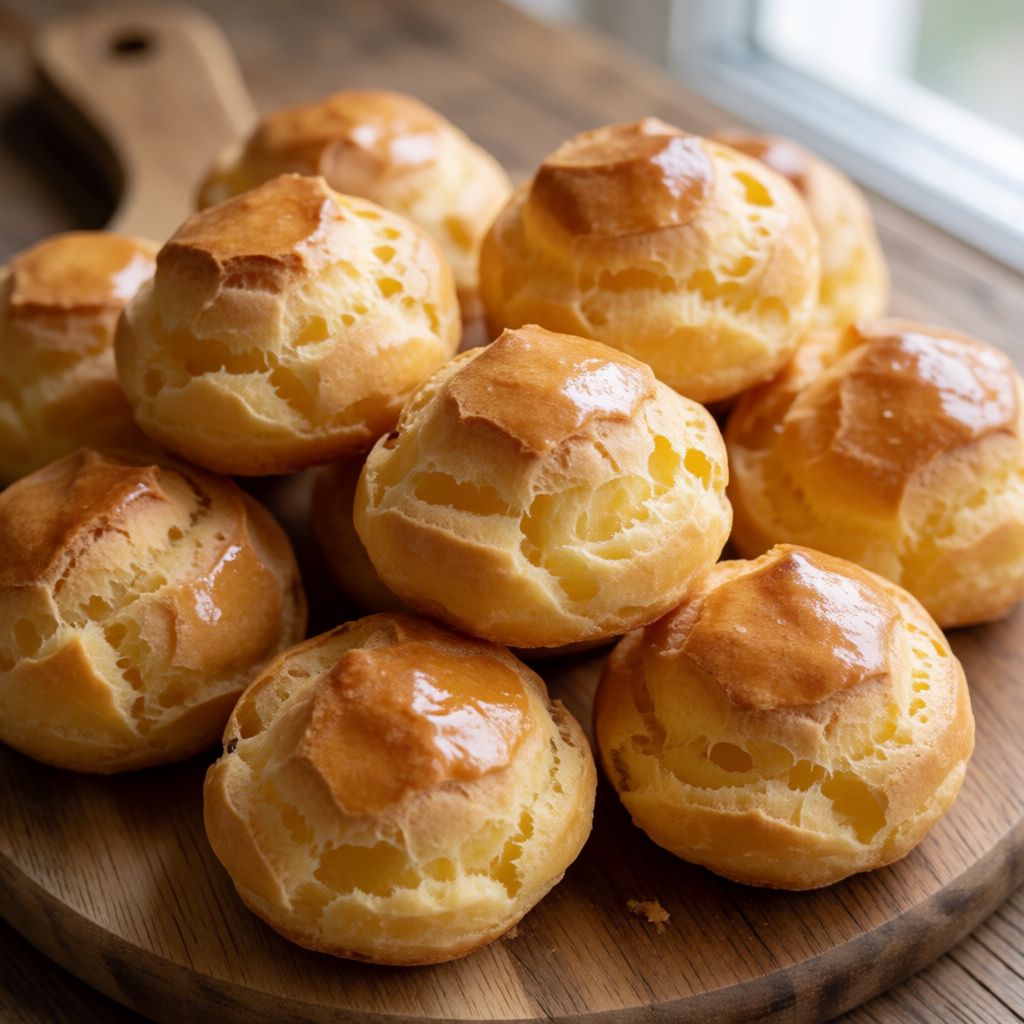
 AI photo
Choux Pastry for Profiteroles
Classic choux pastry for making profiteroles.
Labels are worked out automatically from the ingredients and can be wrong. Check the packaging if it matters to you.
Ingredients
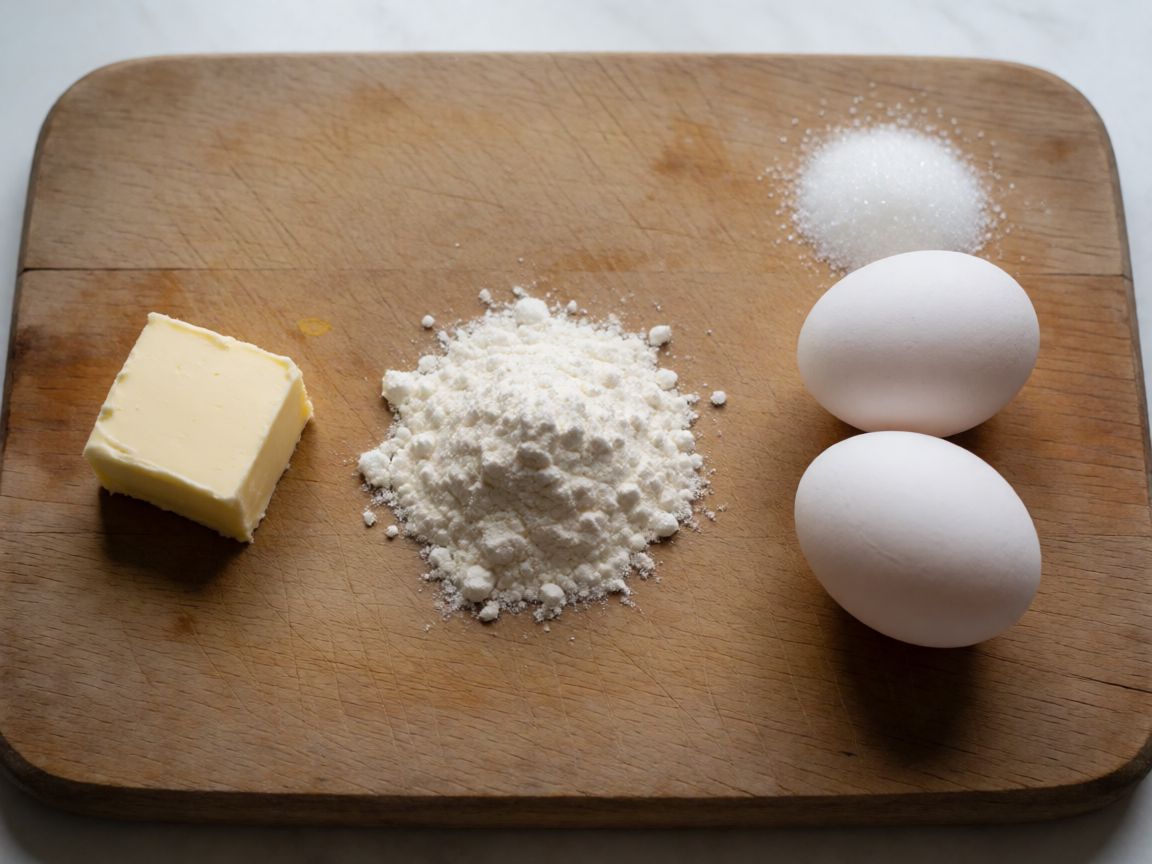
- 100 ml Water
- 50 g Butter
- pinch Salt a pinch
- 70 g Plain flour
- 2 pcs Eggs
- 1 tbsp Caster sugar






Steps
Take the eggs out of the fridge ahead of time so they can come to room temperature.
In a saucepan, combine the water and butter and heat until the butter melts and the mixture comes to the boil.
As soon as the mixture boils, add the salt.
Sift the flour together with the sugar and tip it into the saucepan.
Remove the saucepan from the heat and stir vigorously with a wooden spoon until the mixture comes together into a thick ball.
Return the saucepan to the heat and cook the mixture for a few minutes, until a thin crust forms on the bottom.
Remove from the heat and let the dough cool to room temperature.
Beat in the eggs one at a time, mixing thoroughly with a wooden spoon until the mixture is smooth.
If needed, add an extra yolk or a whole egg if the dough is too thick.
Make sure the dough has the consistency of thick cream, then transfer it to a piping bag.
Line a baking tray with baking paper and pipe small balls about 2 cm in diameter.
Preheat the oven to 220°C.
Bake for 15 minutes without opening the oven door.
15 minLower the temperature to 190°C and bake for a further 10 minutes or so.
10 minLeave the profiteroles in the oven for a while with the door slightly ajar.
Choux is the only dough in a normal kitchen that gets cooked twice before it ever sees the oven — once in the saucepan, once in the heat that puffs it up. That double cooking is the whole trick. Everything else — the piping, the little balls, the icing sugar dusting people imagine at the end — is decoration around a piece of chemistry: you're building a wet dough with just enough structure to trap steam, then blasting it hard enough that the steam blows the inside hollow while the outside sets before it can collapse.
What decides whether this works isn't a clever ingredient, it's two moments of judgement. First: when you dump the flour into the boiling water-and-butter, you're not making a batter, you're forcing the flour to gelatinise on contact — that's what gives choux its unusual, almost rubbery hold, strong enough to stretch around steam instead of just absorbing it like a scone would. Second: how many eggs you actually beat in. The recipe says two, then "add an extra yolk if needed" — that's not vagueness, that's honesty. Eggs vary, flour absorbs water differently depending on humidity, and a kitchen in December is drier than one in July. You're not following a number, you're chasing a texture: thick cream, something that holds a soft peak off the spoon but still wants to slump. Stop short of that and the buns bake into dense, bready knots. Go past it and they spread flat on the tray and never rise.
Water and butter together aren't just "the liquid" — the butter is doing a structural job. Fat coats the starch granules in the flour as they gelatinise, which is part of why choux doesn't turn into solid dumpling the second it hits boiling water. Use a butter with a proper fat content (the standard UK block, not a low-fat spread sold for toast) — spreads carry extra water and emulsifiers that throw off the ratio and give you a slacker, greasier dough. If you're out of butter, any flavourless hard fat will get you a passable choux, but butter also carries real flavour into a dough that otherwise tastes of almost nothing on its own, which matters once it's filled.
The pinch of salt isn't seasoning in the way you'd season a stew — it's there because unsalted choux tastes flat and slightly starchy, the way unsalted bread tastes wrong even in a sweet context. A pinch is genuinely a pinch; this isn't a dish where more is better, it's a background correction.
Plain flour, sifted, because what you're avoiding here is lumps that never break down — once that flour hits the boiling water it sets almost instantly where it touches, so any clump stays a clump forever, a little pale knot of raw flour inside your finished bun. Sifting is cheap insurance against a defect you can't fix later by stirring harder. Don't reach for self-raising: choux gets its lift from steam and egg, not baking powder, and extra raising agent here just makes an unpredictable, sometimes collapsing bake.
The eggs are the real engineering. They do three things at once: they loosen the thick paste back into something pipeable, they add the water that will turn to steam in the oven, and the protein in them sets around that steam to hold the hollow shape once it's blown. This is why you beat them in gradually, off the heat, into dough that's cooled to room temperature first — tip a hot paste straight into raw egg and you scramble it on contact, and scrambled egg has no stretch left in it to trap anything. Room-temperature eggs matter for the same reason tea with milk tastes different with cold milk straight from the fridge — a cold shock hits the whole mixture unevenly, and here "unevenly" means some of your protein sets before it's properly mixed in.
The caster sugar is a small, deliberate addition for sweet profiteroles specifically — it's not there for sweetness you'd actually taste, a tablespoon across a whole batch barely registers, it's there to help the outside colour and crisp slightly as it bakes, the way a touch of sugar helps any pastry brown. If you were making savoury choux (gougères, say) you'd simply leave it out — the dough doesn't need it to work.
Letting the baked buns sit in the switched-off oven with the door ajar at the end isn't an afterthought, it's finishing the drying-out that the second baking stage started. Pull them straight out into a cool kitchen and the steam still inside them condenses against the shell, and you get soft, slightly soggy little domes within minutes — all that careful puffing undone by trapped moisture with nowhere to go. A few minutes of residual heat with an escape route for the steam is cheap patience that protects the one thing you were baking for in the first place: the hollow.
If your hob and oven are ordinary — standard UK fan oven, no steam injection, no kazan-level heat — none of this needs special kit. A wide saucepan, a wooden spoon, and an oven that actually hits 220°C (worth checking with an oven thermometer once, because plenty of domestic ovens run cooler than the dial claims) will get you there. What won't get you there is impatience at any of the three waiting points: letting the eggs warm up, letting the dough cool before adding eggs, and leaving the door shut for the first 15 minutes no matter how good it smells. Choux punishes impatience specifically and visibly — a collapsed bun is not subtle.