
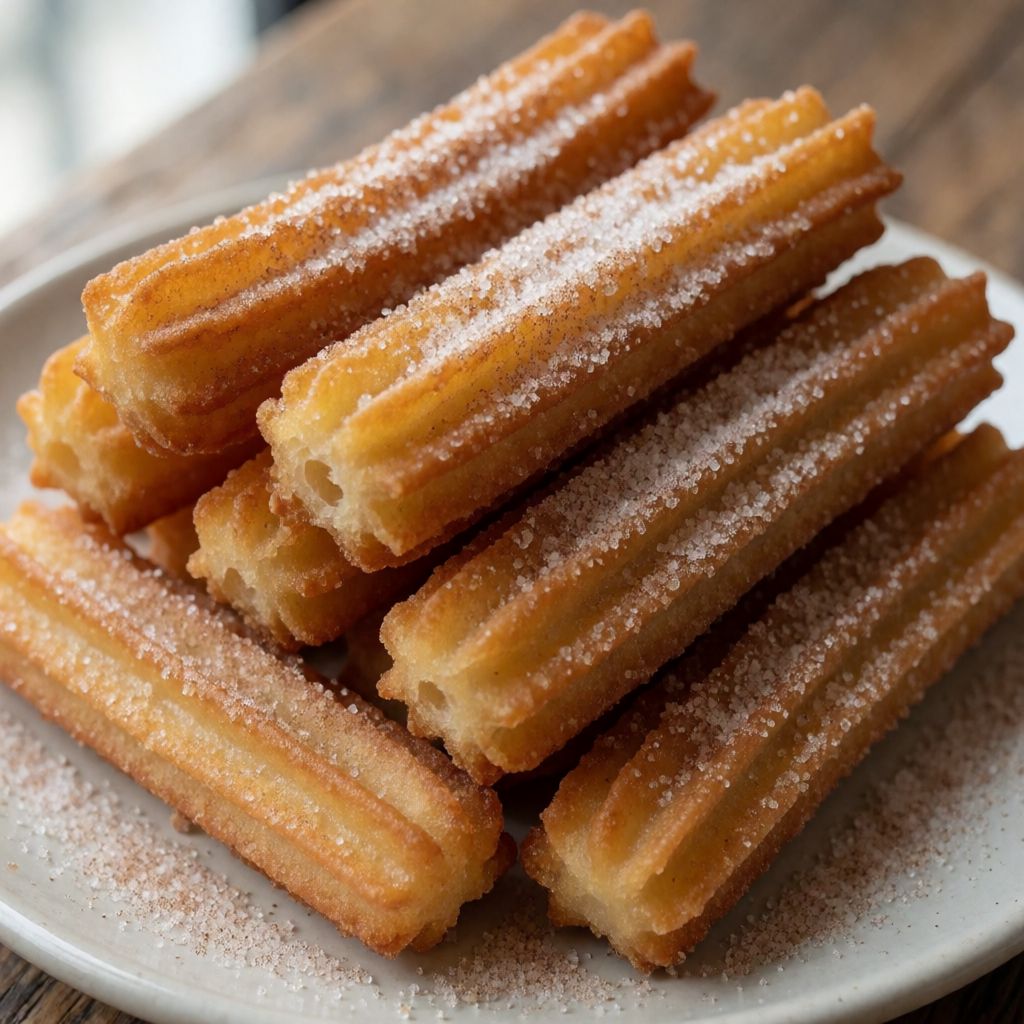
 AI photo
Churros
Crispy Spanish-style fried dough strips dusted with sugar, perfect for a sweet treat with coffee.
Labels are worked out automatically from the ingredients and can be wrong. Check the packaging if it matters to you.
Ingredients
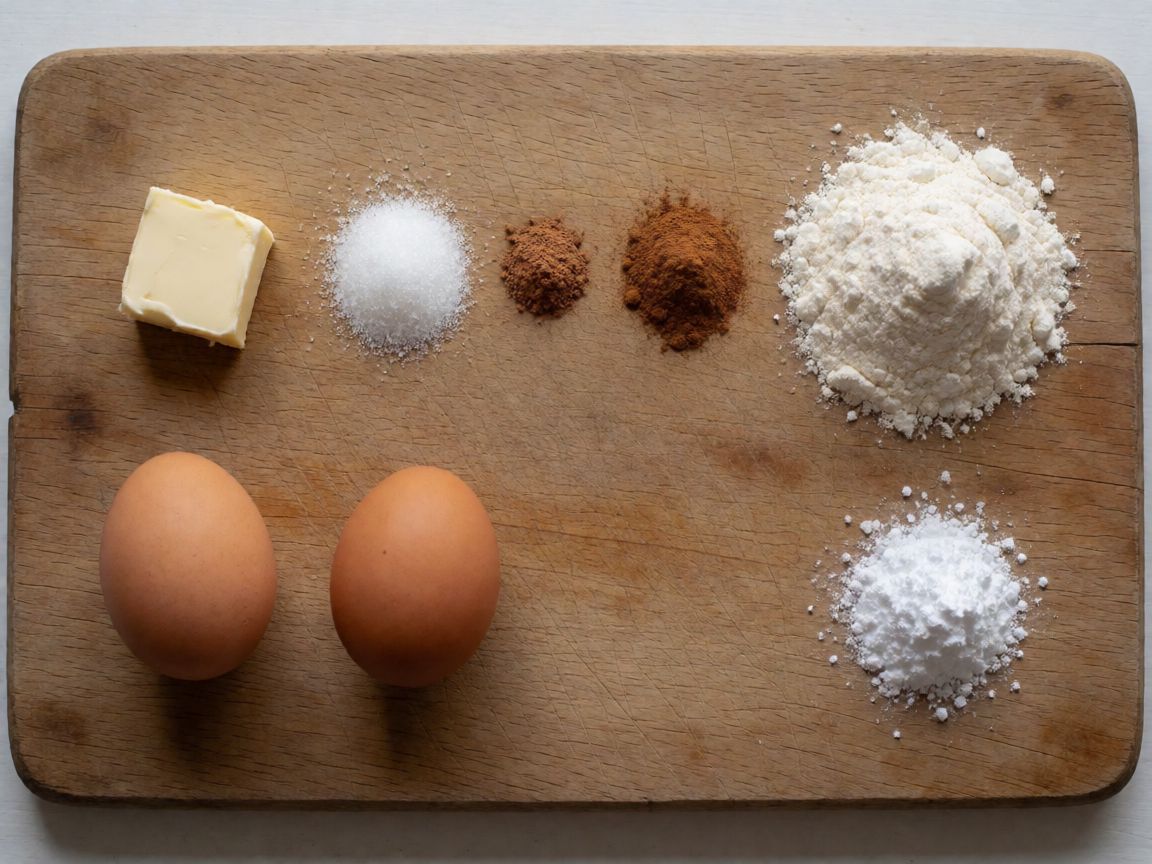
- 500 ml Water
- 50 g Butter
- 50 g Sugar
- ½ tsp Vanilla powder
- 1 tsp Cinnamon
- ½ tsp Salt
- 350 g Plain flour
- 2 pcs Eggs
- 1 l Vegetable oil for frying
- 100 g Icing sugar for dusting









Steps
Put the water, butter, sugar, vanilla, cinnamon and salt in a saucepan and heat to 90°C.
Remove the pan from the heat, tip the mixture into a mixing bowl and stir in the flour. Mix on low speed until smooth and elastic, letting it cool to 65-70°C. Add the eggs and mix for a few more minutes.
Let the dough cool to about 35°C, then transfer it to a piping bag fitted with a small star nozzle, about 9mm.
Heat the oil in a heavy-based saucepan to 175°C.
Pipe the dough into the hot oil in strips about 15cm long. Fry 4-6 churros at a time for a few minutes on each side until golden brown and crisp.
5 minLift the hot churros out with a slotted spoon and drain on a plate lined with kitchen paper.
Dust the hot, freshly made churros with icing sugar.
Churros are not fried yeast dough, whatever the smell at the fairground tells you. The dough you're piping is choux — the same base that makes profiteroles and éclairs — cooked once on the stove before it ever sees oil. That first cook is the whole trick: you gelatinise the starch in the flour so the dough holds its own shape, thick and pipeable, without needing yeast or baking powder to lift it. What lifts it in the fryer is steam, nothing more mystical than water trying to escape a hot paste and pushing the inside into air pockets while the outside sets into a shell.
Some say deep frying at home needs a proper fryer, a machine with a dial. No — a heavy-based saucepan holds heat steadily enough, which matters more than the gadget. What a domestic hob struggles with is recovery: drop six churros into oil and the temperature sags, so you fry a handful at a time, not a potful, and you let the oil climb back before the next batch. That's not fussiness, it's physics — crowd the pan and the oil cools below crisping point, the dough soaks instead of sealing, and you get pale, greasy sticks that taste of nothing but oil.
The star nozzle isn't decoration either. Ridges mean more surface touching hot oil, which means more crust per churro — that's where the crunch and the colour live. A smooth round nozzle gives you a soft tube with barely any bite to it.
Water and butter, heated together first, are there to carry heat into the flour fast and evenly — water alone would do it, but butter adds fat that coats the starch granules, which is why shop-bought choux-style pastries without butter taste thinner, drier. The sugar at this stage is small, 50 g against 350 g of flour — it's for flavour and a little browning help in the dough itself, not for sweetness; that job belongs entirely to the icing sugar at the end.
The 90°C in step one matters because that's roughly where starch fully gelatinises — below it the flour won't bind properly and the dough stays grainy and loose instead of smooth and elastic. You don't need a thermometer glued to the pan for this: once the butter's melted and the mixture is gently steaming with the first proper bubbles at the edge, you're there. If you have no thermometer at all, trust the visible shine and the way the dough pulls away from the spoon in one piece once you've beaten the flour in — that's the sense cue standing in for the number.
Eggs go in only once the dough has dropped to 65–70°C, because egg proteins start to set around 60°C — tip them in straight off the heat and you get sweet little flecks of scrambled egg through your dough instead of a smooth paste. The eggs are the real structure-builders here: they add the stretch that lets the dough hold a ribbon shape in hot oil and puff instead of just sitting flat.
Cooling further to about 35°C before piping isn't about taste, it's about your hands and your piping bag — hot dough softens the bag, makes it unworkable, and risks burning you at the nozzle. Flour: plain is correct: strong bread flour would build too much gluten for this and give you a chewy, bready churro instead of a light one.
Oil has to be something with no flavour of its own, so sunflower, rapeseed or a bland vegetable oil all work; olive oil will fight the cinnamon and vanilla and leave a heavy aftertaste. 175°C is the band where a churro seals into a crust before it has time to drink the oil — lower than that and it absorbs fat and goes soggy and pale, higher and the outside scorches before the middle cooks through. No thermometer, no bother: drop a small pinch of dough in — if it fizzes up and floats within a couple of seconds, the oil's ready.
Icing sugar goes on while the churros are still hot because the thin film of oil and residual steam on a hot surface gives the sugar something to cling to. Dust a cooled churro and most of the sugar will slide straight off the plate instead of the pastry — that's not a flaw in the sugar, it's just a surface with nothing left for it to grab onto.