
 AI photo
Churros
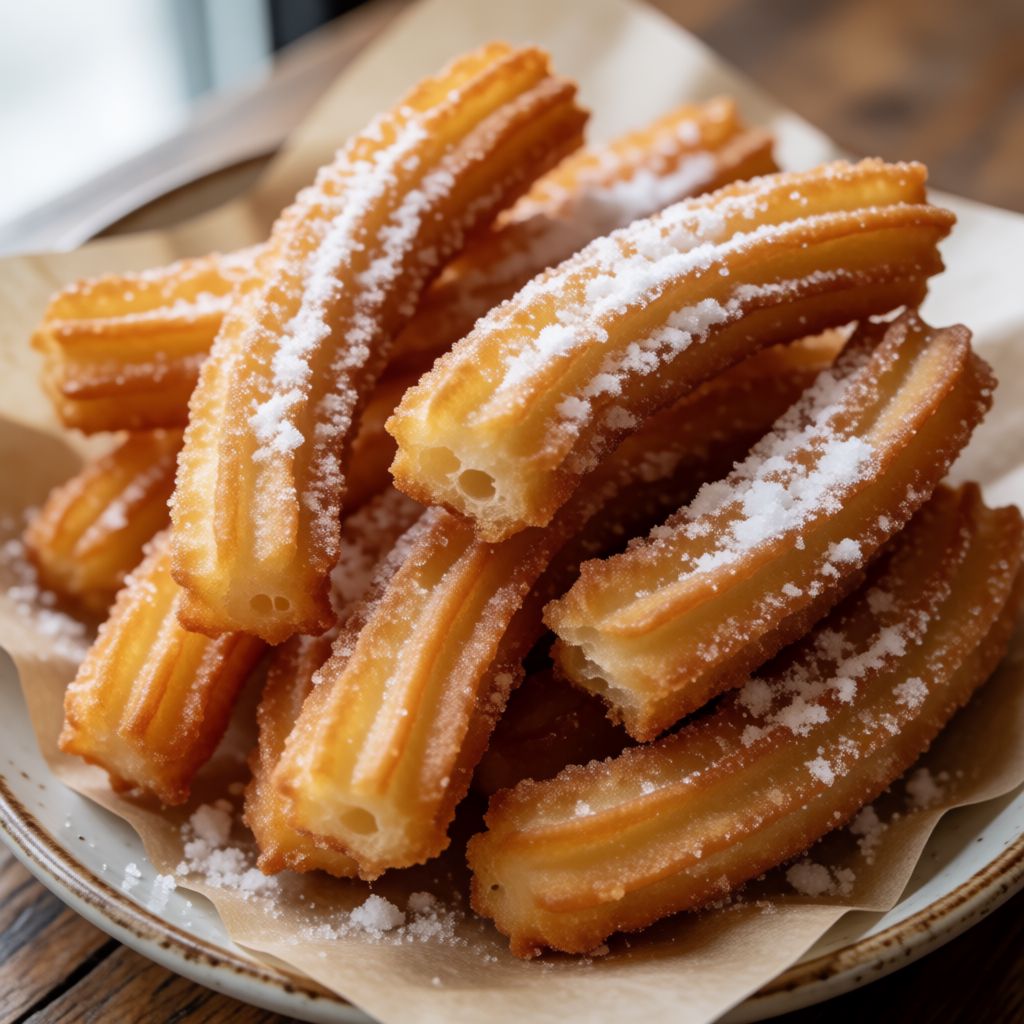
A classic fried-dough treat, piped into rings and dusted with sugar while still warm.
Labels are worked out automatically from the ingredients and can be wrong. Check the packaging if it matters to you.
Ingredients
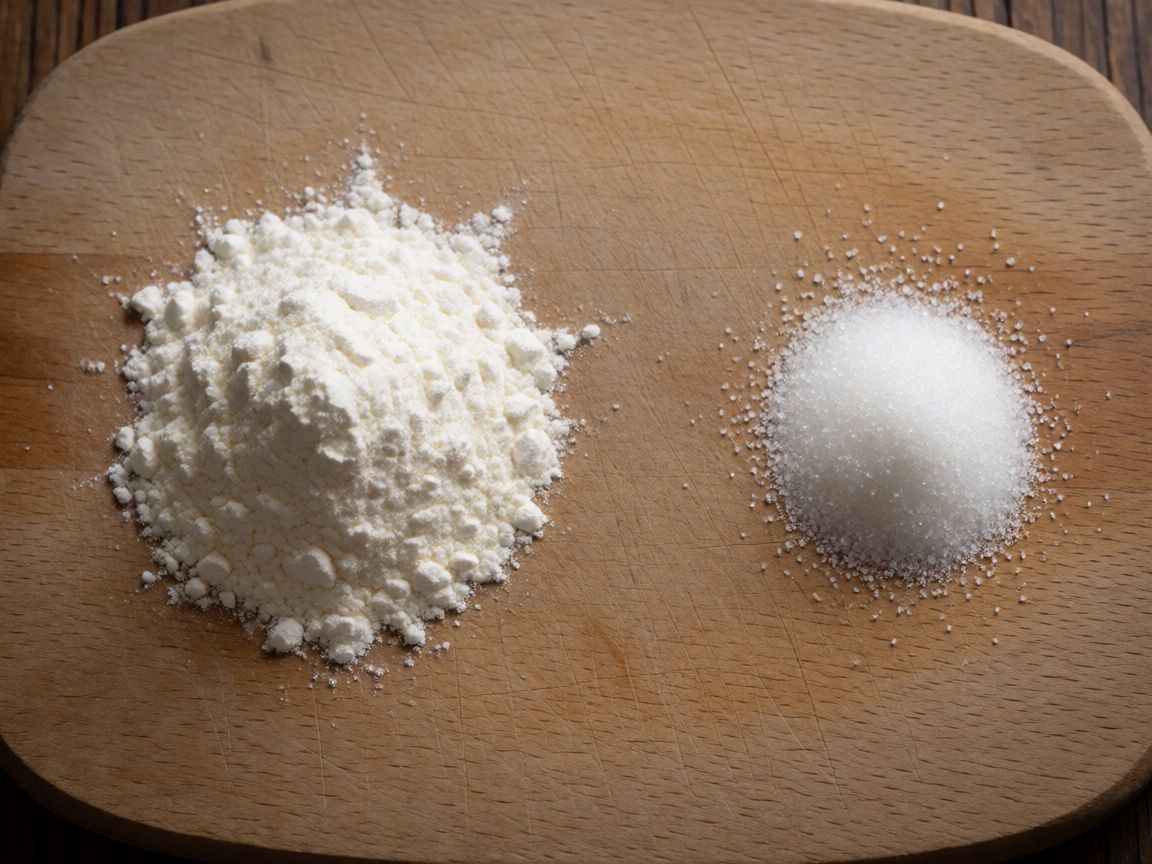
- 320 g Water
- Salt to taste
- 185 g Plain flour
- Olive oil for frying
- Sugar for serving





Steps
Pour the water into a saucepan, add a pinch of salt and bring to the boil.
Add all the flour at once and stir immediately with a wooden spoon or spatula. Cook for 2 minutes.
2 minTransfer the churro dough to a bowl, cover with cling film pressed directly onto the surface, and let it cool completely.
Fill a piping bag fitted with a churro nozzle with the cooled dough, press firmly and seal.
On a marble or aluminium surface, or on a sheet of baking parchment, pipe out the dough to shape the churros and cut them into equal-length strips.
Join the ends of each strip to form churro rings.
Heat a generous amount of olive oil to 165°C and fry the churros until golden and crisp.
Place the cooked churros on a paper towel and dust with sugar before serving.
Churros are choux pastry without the eggs, cooked on the stove and then fried instead of baked — and that swap is the whole mechanism. You're making a bald version of pâte à choux: flour tipped all at once into boiling salted water, stirred hard until the starch gelatinises and the paste turns from a liquid into something that holds a shape on a spoon. No eggs means no steam-and-protein lift inside the oven. What gives a churro its crisp shell and faintly hollow middle is starch that's been pre-cooked once on the hob and then shocked a second time in hot oil.
What actually decides whether this works is two things, and neither of them is a clock. First, how far you cook the flour paste before you take it off the heat — it needs to come away clean from the sides of the pan and start pulling into a mass, almost like it wants to climb the spoon. Stop too early and it's slack and gluey, it won't hold a ring when you pipe it, it tears. Second, how hot the oil is the moment the dough meets it. Too cool, and the churro drinks the oil like a biscuit left in tea — pale, heavy, greasy through to the middle. Too hot, and the outside goes dark before the inside has had its second cooking. There's no dial for either of these: the paste tells you by pulling away from the pan, the oil tells you by hissing hard and throwing up a proper flurry of bubbles the instant a pea-sized bit of dough goes in.
Water is only there to carry heat into the flour fast enough that the starch gelatinises all at once — that's why you add the flour in one go, not gradually. Milk would brown faster in the fryer because of its sugars, and can scorch before the inside's cooked through, which is why the street-stall version has always used water: not virtue, just reliability under a hot pan.
Salt in the dough isn't about making it "savoury" — it's contrast. A churro dusted in sugar with no salt underneath tastes flat and one-note, like sweetness with nothing to push against. A pinch, dissolved in the water before the flour goes in, is enough.
Plain flour is right here on purpose — not strong bread flour. Bread flour has more gluten, and more gluten means a tougher, chewier bite once fried, closer to a doughnut than a churro. Plain flour gives you just enough structure to hold the piped shape and no more, so the fry stays light and the crumb inside stays a little airy rather than dense.
Olive oil for frying is the Spanish habit, and it does leave a faint fruitiness you'd miss with a neutral oil — but it's not sacred, and at UK prices, deep-frying in a litre of good olive oil is a real cost, not a small one. The actual criterion for a frying oil here is: no smell of its own, and a smoke point comfortably above the 165°C you're frying at. Sunflower oil, groundnut oil, a cheaper light olive oil — any of these will do the job the fat is actually hired for, which is heat transfer, not flavour.
Sugar goes on at the end, never into the dough and never into the oil. Sugar in hot fat burns and turns bitter almost instantly; sugar tossed over a just-fried churro sticks to the thin film of oil still on the surface and melts slightly from residual heat, which is the only "glaze" this dish needs.
In a flat without a churrera, a thermometer, or a deep-fat fryer: a wide, heavy pan with oil coming maybe five centimetres up the side works fine, and you test readiness with a scrap of dough rather than a number — it should surface and fizz hard straight away. A sandwich bag with a star nozzle pushed into a cut corner is a proper piping bag for this. And the step people are tempted to rush — letting the cooked paste go completely cold before piping — isn't fussiness, it's safety and structure both: hot dough burns your hand through a bag, and it also won't hold the ring shape until the starch has firmed up on cooling. Patience there is doing real work, not just filling time.
At these quantities — 320g water, 185g flour — you'll get enough dough for four as an afternoon treat, not a meal, which is exactly the scale churros have always worked at: street food, eaten standing up, not a course.