
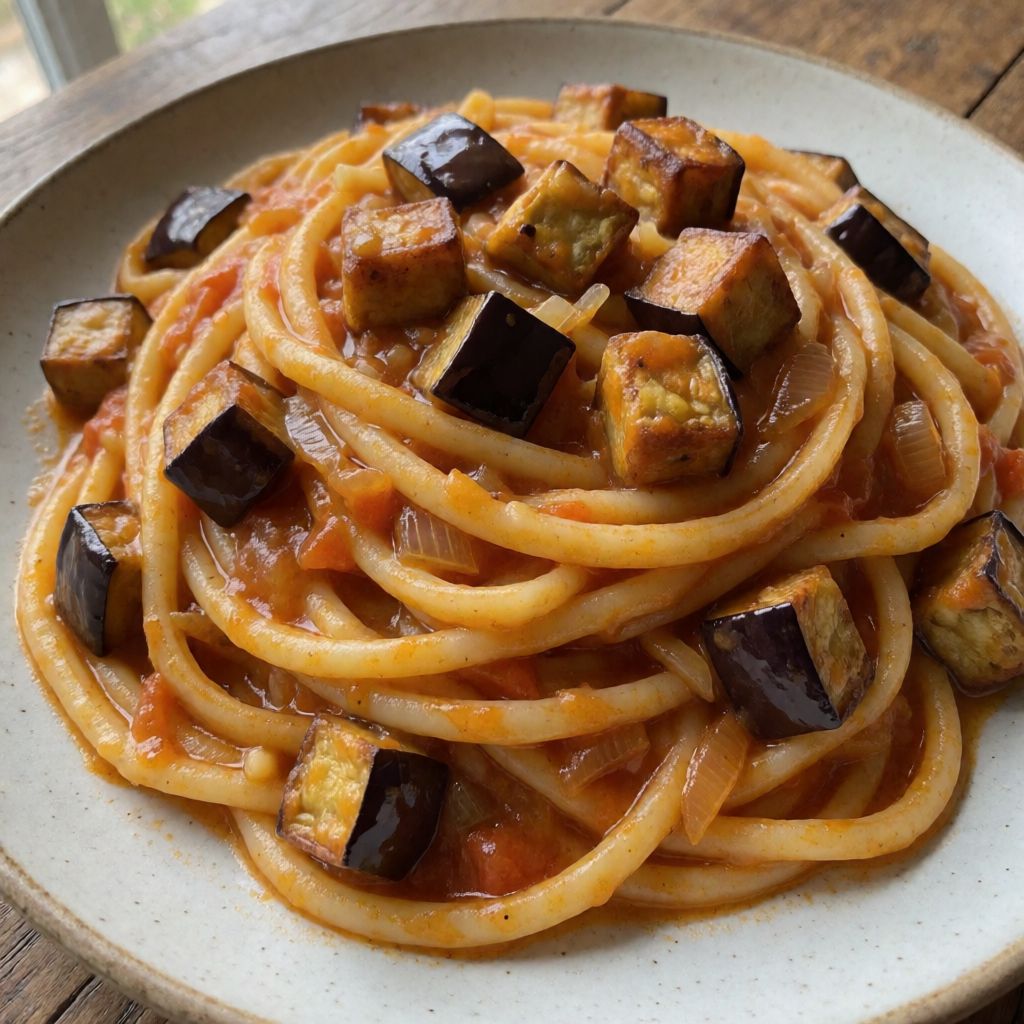
 AI photo
Scialatielli with Provolone and Aubergine
A hearty pasta dish combining scialatielli with melted provolone and tender aubergine in a rich tomato sauce.
Labels are worked out automatically from the ingredients and can be wrong. Check the packaging if it matters to you.
Ingredients
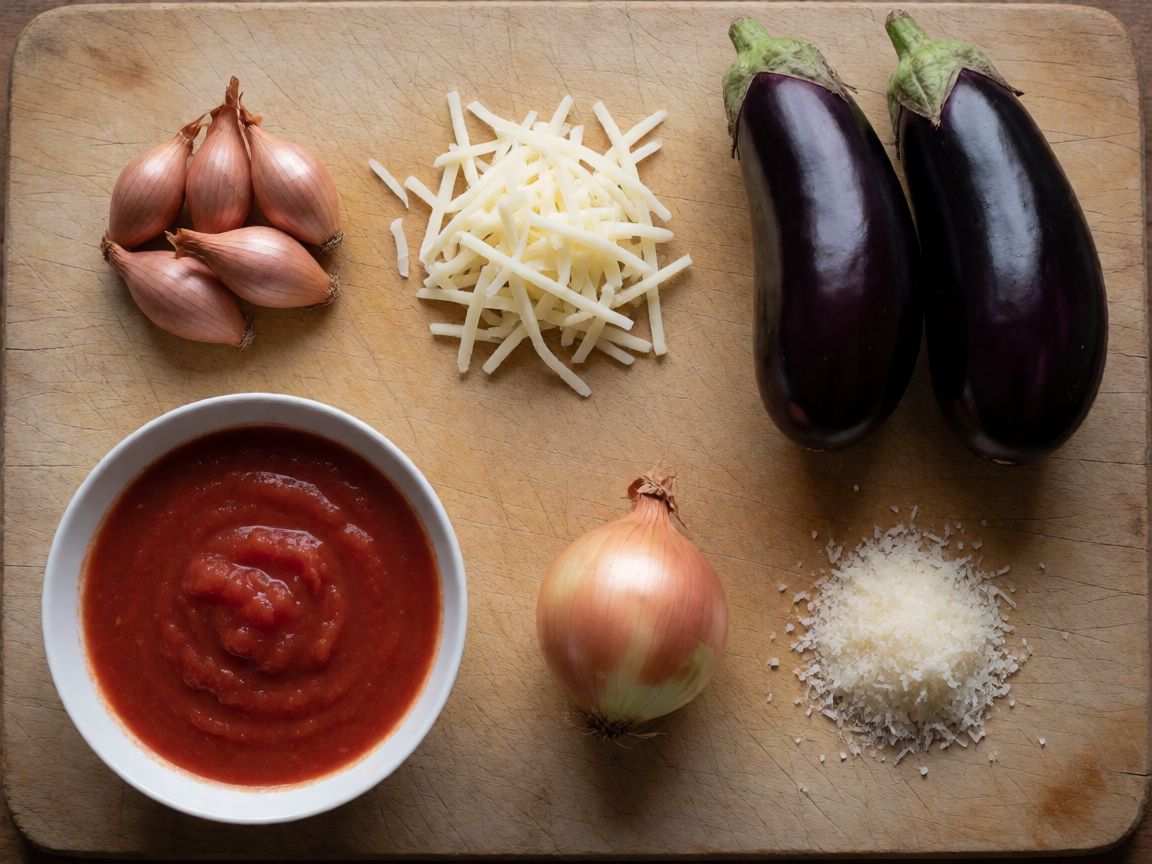
- 500 g Scialatielli
- 350 g Provolone
- 2 pcs Aubergine
- 700 g Tomato Passata
- 1 pcs Onion
- Vegetable Oil for frying
- Salt to taste
- Parmesan to taste







Steps
Dice the aubergines and fry them in hot oil until golden brown, then set aside.
In a large pan, fry thinly sliced onion in oil until soft.
Add the tomato passata and cook for about 15 minutes.
15 minAdd the aubergines and cook for another 5 minutes.
5 minSeparately boil the scialatielli until done, drain and transfer into the sauce, adding the provolone.
Add the parmesan, mix well in the pan and serve hot.
This is eggplant parmigiana rethought as a pasta sauce — same cast (aubergine, tomato, melting cheese), different stage. Scialatielli, the thick ribbon pasta from the Amalfi coast, is built to carry weight: a rough, uneven surface that grips a chunky sauce instead of letting it slide off, the way a smooth spaghetti would.
What decides whether this works is the aubergine, and it's decided before the tomato ever goes in the pan. Fried hot and fast, the diced flesh seals on the outside while the inside collapses into something creamy. Fried slow in lukewarm oil, it just drinks the oil like a sponge and turns heavy, greasy, sad. You want oil that's actively rippling, a piece dropped in hisses on contact — that's your cue, not a number on a dial most hobs don't even show you.
Myth to break: people still salt and weep their eggplant for half an hour "to draw out the bitterness." Skip the drama — most eggplant sold now is bred mild, and the real reason to salt it, if you ever do, is water, not bitterness: it pulls moisture out so the dice fries instead of stewing in its own liquid. Here the hot oil does that job faster, no salting needed.
The other hinge is the provolone, thrown in once the flame is off, so the heat left in the sauce and the pasta does the melting. Add cheese to a sauce still roaring and it breaks — fat weeps out, protein tightens into little rubber beads, and no amount of stirring brings it back together.
Scialatielli itself isn't some medieval relic, whatever the trattoria menus imply. The honest history: it was put together on the Amalfi coast around the late 1970s, a thick egg-and-milk dough cut into short rough ribbons, designed to look hand-made but be quick to produce for a tourist trade that wanted rustic without the labour. If you can't find it, any thick fresh pasta with a rough-cut edge follows the same logic — tagliatelle, pappardelle, or a ridged dried shape like rigatoni, something that can hold a sauce this chunky. A smooth dried spaghetti will let the sauce sit on the plate instead of on the noodle.
Aubergine: buy it firm, heavy for its size, skin tight and glossy with no give when you press a thumb into it. A soft one has already gone spongy inside and will collapse in the oil instead of browning. Dice it even, not too small, or it vanishes into the sauce and you've paid for aubergine while tasting mostly onion and tomato.
Provolone: look for provolone dolce, the mild version, not piccante — piccante is aged harder and sharper and sits in stringy lumps rather than melting into the sauce. No provolone in the shop, scamorza or a mild mozzarella does the same stretching job, though you lose the slight tang provolone brings. Parmesan at the end is there for salt and a dry, grainy contrast to all that stretch — pecorino is the fair swap if that's what's open in the fridge.
Passata is tomato already blended smooth, and that's the point — don't swap it for chopped tinned tomatoes unless you blitz them first. A sauce this busy, with aubergine chunks and melting cheese already competing for space in the bite, needs the tomato part to be the smooth, binding element, not another lump fighting for attention.
Frying, on a British hob: a wide domestic pan rarely holds its heat the way a professional ring does once you drop cold aubergine into it, so fry in two batches rather than crowding the pan. Crowd it and the oil temperature drops the second the pieces go in — straight back to the sponge problem the hot oil was meant to avoid. Drain on kitchen roll, not just a plate; the paper is standing in for the rack you'd have in a bigger kitchen.
On proportions: the card claims this "serves 1," which is arithmetic nonsense — 500g of pasta, 350g of cheese and two aubergines is a Sunday-dinner-sized pot, enough for four or five people at a normal 100–125g of pasta each. And give the onion its unhurried few minutes before the tomato lands — patience here isn't decoration, it's the difference between a sauce with raw onion still biting at the edges and one that's actually settled into itself.