
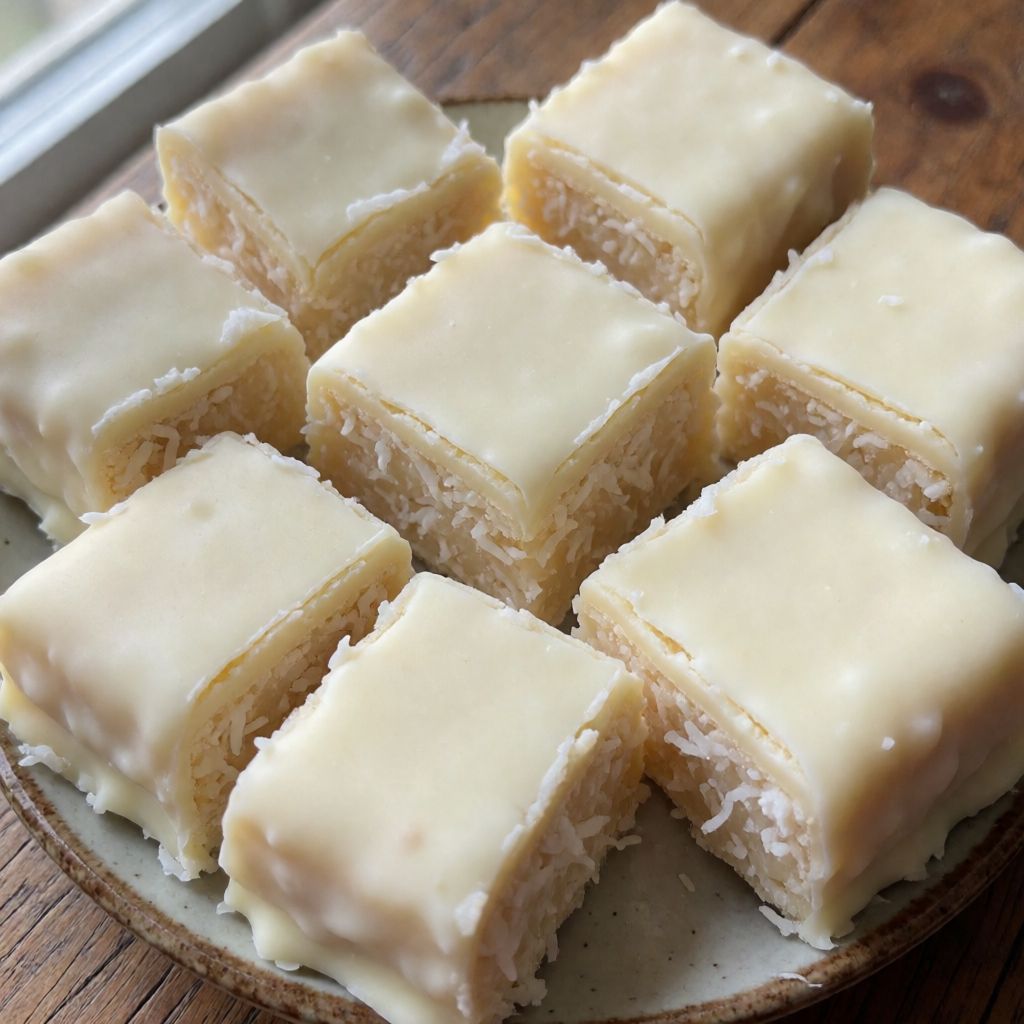
 AI photo
Bounty-Style White Chocolate Coconut Bars
Homemade coconut and white chocolate bars inspired by the classic Bounty bar.
Labels are worked out automatically from the ingredients and can be wrong. Check the packaging if it matters to you.
Ingredients
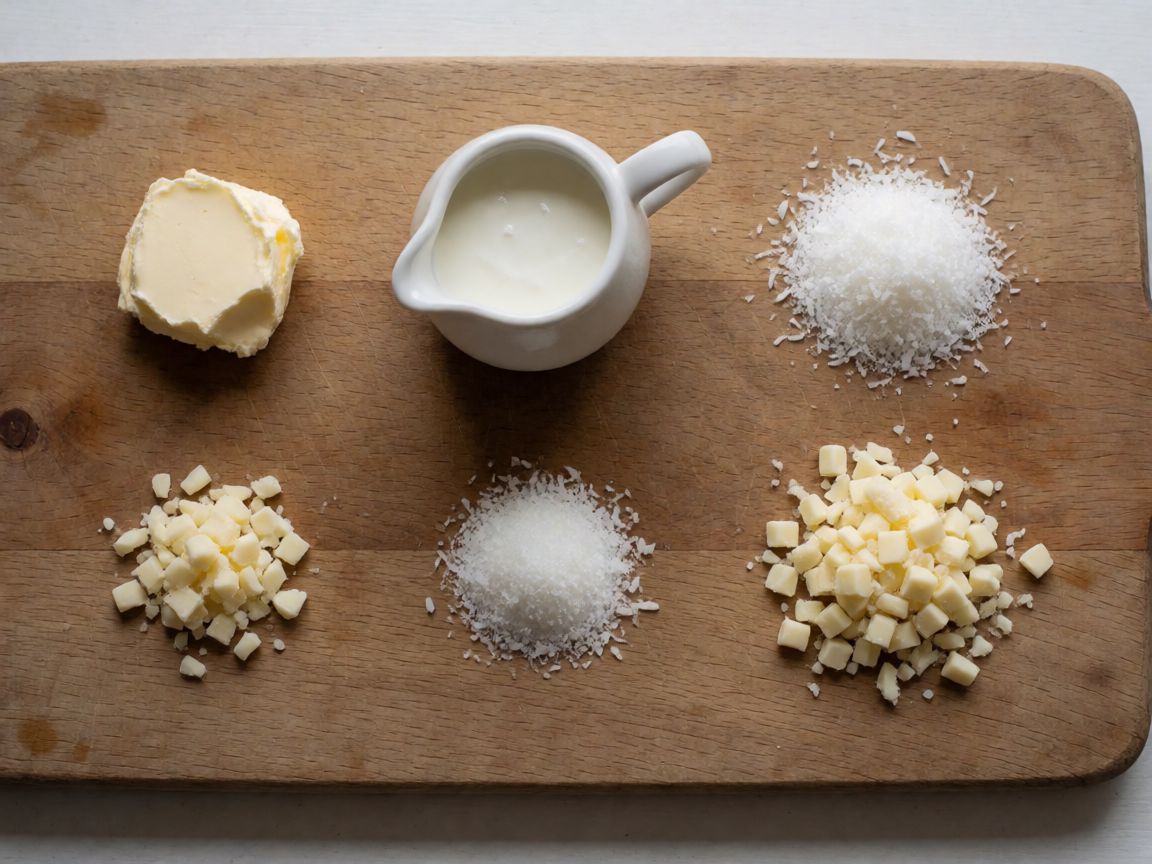
- 60 g Butter
- 100 ml Double cream
- 80 g Sugar
- 220 g Desiccated coconut
- 300 g White chocolate




Steps
In a small saucepan, combine the butter, double cream and sugar, and melt over low heat, stirring.
Add the desiccated coconut and mix well.
Chill in the fridge for 15 minutes.
15 minSpread the mixture onto a baking tray, smoothing it to about 2cm thick to form a rectangular block.
Let it cool completely in the fridge.
Cut the block into small rectangles with a knife.
Melt the white chocolate in a bain-marie, then pour it into a separate bowl.
Let the chocolate cool to a warm temperature.
Shape each rectangle by hand, rounding the edges, dip it into the chocolate, and coat it using a fork.
Place the bars on a tray and chill in the fridge until the chocolate sets.
This is the home cook's answer to a Bounty bar: a coconut filling bound into a block, cut into fingers, then dipped in melted white chocolate. It's not baking in the oven sense — nothing here gets baked. The whole trick is in two separate mechanisms: making a filling that holds its shape when sliced, and making a chocolate coat that sets thin and even instead of cracking or sliding off.
The filling works because sugar dissolves into the warm cream and butter, making a syrup, and that syrup soaks every strand of coconut. When it cools, the butterfat goes solid again and locks the coconut shreds together — that's what gives you a block you can cut cleanly, not a pile of damp coconut. Chilling isn't a ritual, it's the fat doing its one job: going from liquid to solid. Rush this and you'll have sticky crumbs instead of bars.
What decides whether it works is the ratio, not the clock. Too much cream against the coconut and the block stays soft, won't hold an edge when you cut it. Too little and it crumbles under the knife. The 15 minutes in the recipe is a floor, not a target — the real test is whether a cut edge stays sharp and doesn't slump.
Some people think tempering is non-negotiable for any dipped chocolate, the way you'd temper a bar meant to sit in a shop for months. No — for something you're eating within a few days, straight from your own fridge, a gentle melt and a controlled cool is enough. You're not fighting bloom over weeks, you're fighting five minutes of your own impatience while the chocolate is too hot.
Butter and cream together are doing one job: carrying fat into the coconut so it can set hard later. Use an unsalted butter with real fat content, nothing spreadable or watered down — a low-fat butter won't firm up enough in the fridge and your bars will stay soft at the core. Double cream is standard in a UK kitchen already, around 48% fat, and that's exactly why it works here: enough fat to help the set, enough water to dissolve the sugar smoothly instead of leaving grit. If you only have single cream, it'll still work, but compensate with a touch more butter or the block will be noticeably softer.
Sugar's job in that saucepan is to dissolve, not to brown. Keep the heat low for exactly that reason — the moment sugar starts colouring, you've made toffee, and toffee against coconut gives you something chewy and sticky instead of a soft, bite-through filling. Low heat, stirred, until it's just gone from grainy to smooth — that's the cue, not a number of minutes.
Desiccated coconut is the skeleton of the bar — fine, dry shred, unsweetened. The cream-butter-sugar syrup is the mortar between those strands. If you can only find sweetened coconut, cut the sugar in the pan by a third or the bars turn cloying. Coarser coconut flakes will make a rougher, less compact bar — fine if you don't mind texture, but harder to cut cleanly, since big strands don't pack as tight.
White chocolate is the one place where quality actually matters here, because white chocolate has no cocoa solids to hide behind — its only character comes from cocoa butter, milk solids and sugar. Check the ingredients: if it says vegetable fat instead of cocoa butter, it won't melt the same way and won't set with any shine — it goes waxy, sometimes grainy, and never quite hardens properly. Real cocoa butter is what lets it melt smooth over a bain-marie and reset with a clean snap.
The bain-marie isn't fussiness — direct heat scorches white chocolate faster than dark, because there's more milk sugar in it to catch and burn. A water bath spreads the heat so you're melting, not cooking. And letting it cool to warm before dipping matters for the same reason the chilled block matters: chocolate that's still hot will melt the surface of your coconut bar and slide off thin and patchy; chocolate that's properly warm — not hot to the touch — coats evenly and sets without hairline cracks.
Rounding the corners by hand before dipping isn't decoration. Sharp corners are where a chocolate coat is thinnest, and thin chocolate is where it cracks first when you bite in. Round the edges, and the coat has somewhere even to sit. This recipe for 8 needs nothing beyond a saucepan, a baking tray and your fridge — no kazan, no oven, no equipment a UK flat doesn't already have. Good with a cup of tea, and patient enough to survive a Sunday afternoon between the roast and whatever's on telly after.