Nuts & seeds
Coconut
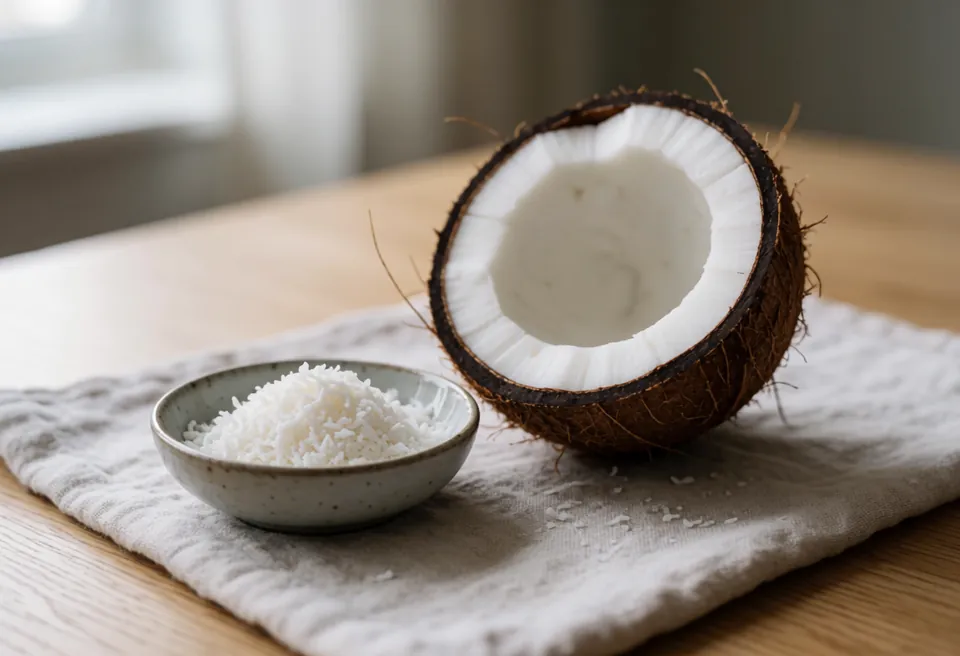
Shredded, dried coconut flesh. Added to baked goods and desserts, or sprinkled on top for flavor and texture.
660 kcal per 100 g
Nutrition per 100 g
660 kcal
| Protein | 6.9 g |
|---|---|
| Fat | 64.5 g |
| Carbs | 23.6 g |
| Fiber | 16.3 g |
Source: USDA FoodData Central, 2026-09-21. Per 100 g dried product (per USDA FDC).
Good to know: Coconut
Come closer, let's talk about coconut. Not the fruit you crack open with a machete — the shredded flesh sitting in a bag on your shelf. Look at it. It should be white, maybe a touch cream-colored, never dull or discolored. Flakes that look tired or spotted have been sitting too long. Smell it — real coconut smells sweet and faintly milky, almost like fresh cream. If it smells sharp or waxy, put it back.
Coconut is mostly fat, more than half its weight, and you can feel it the moment it touches your tongue — rich, almost melting. Put it in a dry pan and watch: white turns gold, gold turns brown, and the kitchen fills with a warm, nutty smell. Turn away for a moment and it's ash.
Now, some people say coconut needs no special care, that it's tough and keeps forever. No! Leave the bag open on a shelf and sooner or later that sweet, milky smell fades. Take a pinch and taste it — it's gone flat, dull, saying nothing to you. That's the mistake this thinking leads to — cooks leaving coconut loose and forgotten until it's not worth cooking with. Keep it sealed, keep it cool, and always smell before you cook.