
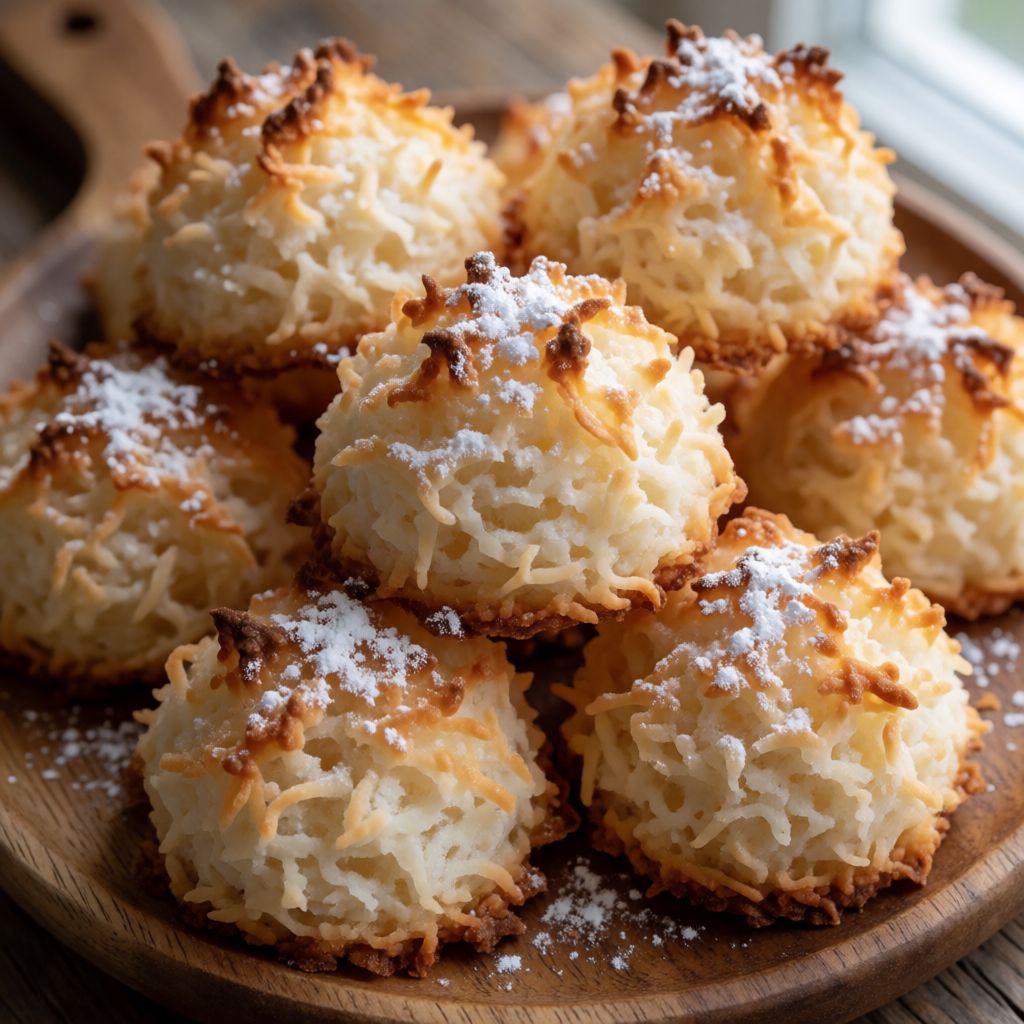
 AI photo
Coconut Macaroons
Light, chewy macaroons made from whisked egg whites, sugar and desiccated coconut.
Labels are worked out automatically from the ingredients and can be wrong. Check the packaging if it matters to you.
Ingredients
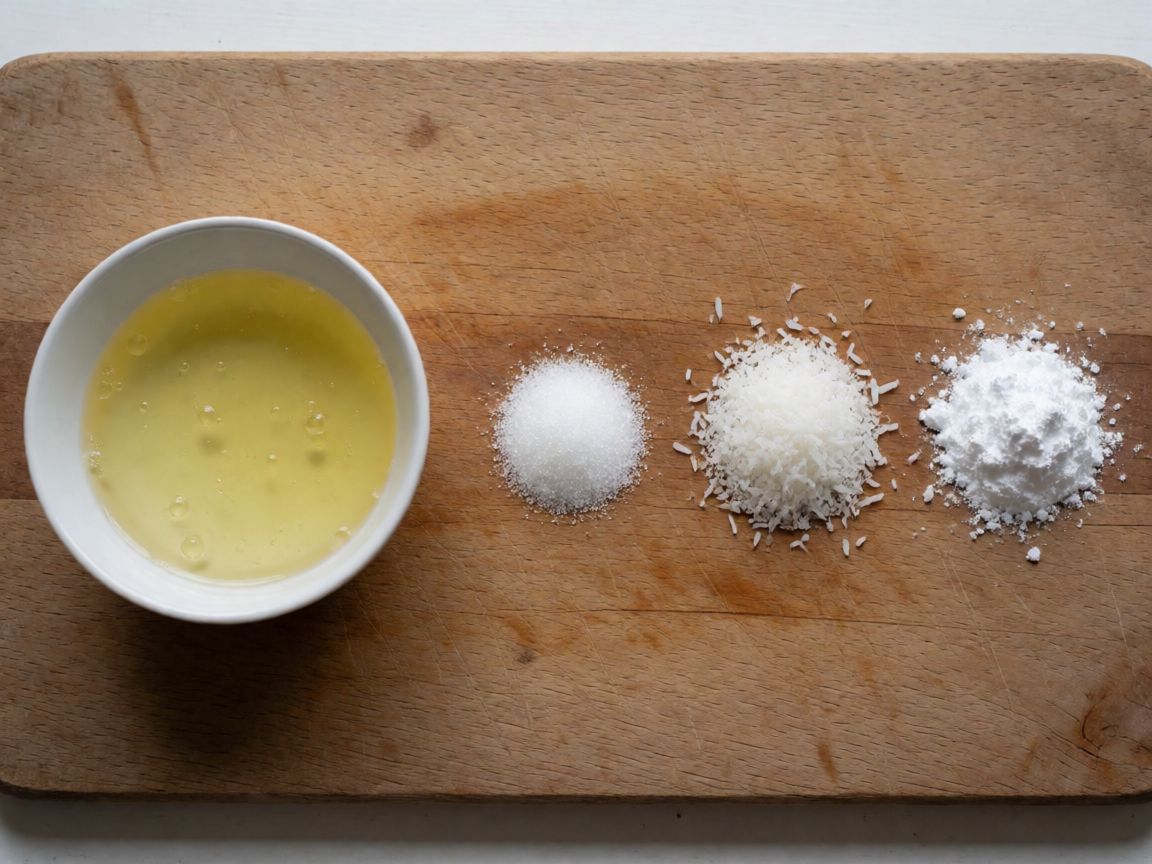
- 3 pcs Egg whites
- 1 pinch Salt
- 100 g Caster sugar
- 160 g Desiccated coconut
- Icing sugar to taste




Steps
Whisk the three egg whites with a pinch of salt until light and fluffy.
Add the caster sugar and continue whisking.
Fold in the desiccated coconut, gently mixing with a spatula until combined.
Spoon small mounds onto a baking tray lined with parchment paper.
Bake at 180°C for about 20 minutes.
20 minDust the finished macaroons with icing sugar.
Forget the French macaron with its fussy feet and resting skins — this is a different creature entirely: three egg whites whipped into a foam, sweetened, then loaded with coconut until the foam is barely holding its shape together. No flour, no butter, no raising agent. What holds a macaroon up is egg protein, set by heat, nothing more.
So everything comes down to two things: how much air you get into those whites, and how much of that air survives being mixed with 160 grams of coconut. Underwhip and the mixture is wet and heavy — it spreads flat on the tray and the inside stays gluey because there isn't enough structure to trap steam and let it escape evenly. Overwork the coconut in and you knock the air back out just the same — a gentle fold, not a stir, is the whole point of step three, and it's there to protect the very air you just spent minutes building.
The oven does one more job beyond drying the mixture out: it browns the coconut on the outside before the centre fully sets, which is what gives you a shell with a bit of crunch and a middle that stays soft and chewy rather than one uniform dry biscuit. That's a colour change you're watching for, not a timer — pale gold at the tips of the coconut shreds, not yet the deep brown that means the sugars have gone past caramel into bitter.
Done right, this is a kitchen-cupboard dessert in the truest sense — the kind of thing that exists because someone had egg whites left over from a custard or a lemon curd and coconut going spare in the tin, and didn't want to waste either.
Egg whites are the entire architecture here, so treat them with a bit of respect. Room-temperature whites whip to a bigger, more stable foam than fridge-cold ones straight out of the carton — the proteins unfold and link up more easily when they're not stiff with cold. And the bowl matters more than people think: any trace of grease — a plastic bowl that's carried oil before, a yolk speck in the whites — coats the proteins and stops them bonding, so your three whites never get past a loose froth. That's the real reason bakers reach for glass or metal, not superstition.
The pinch of salt does two honest jobs: it seasons, lightly, against all that sugar and coconut sweetness, and it speeds up how fast the egg proteins unwind, so the foam builds a touch quicker. It isn't holding the foam together for hours the way it might in a pavlova shell left to dry overnight — this mixture is in the oven within minutes, so don't go reaching for cream of tartar or vinegar thinking you need extra insurance. You don't. That trick earns its keep when egg whites have to survive a long, slow dry-out; here they barely have time to collapse before the heat sets them.
Caster sugar goes in once the whites already have some body, not before — sugar is hygroscopic, it pulls moisture and slows the proteins from linking up, so whisking it in too early just means you're fighting the foam instead of building it. Caster is chosen over ordinary granulated because the smaller crystals dissolve into the foam almost at once; granulated would leave you with a gritty bite, little undissolved crystals you'd feel on the tongue. Icing sugar, at the other extreme, is too fine and too eager to dissolve — it can flood the foam with moisture and flatten it before it's even whisked in properly, which is exactly why it's saved for dusting at the end instead.
Desiccated coconut is dried on purpose, and that's not incidental — it's doing a structural job. Fresh coconut carries its own water, and that water would turn your mixture sloppy, stop it holding a mound shape on the tray, and leave you needing a much longer bake just to drive the extra moisture off, by which point the outside's gone past golden into tough. If desiccated coconut isn't to hand and only fresh is, you'll need to dry it out in a low oven first, spread thin, until it loses its glossy wet look — otherwise you're baking a pudding, not a macaroon.
Icing sugar at the finish is cosmetic and nothing more — a light sweetness on the tongue before the coconut hits, with no job in setting or structure, since it goes on after baking. Skip it, if you like things a shade less sweet with your tea; nothing here depends on it.
A word on the tray and the heat, since a domestic oven isn't a bakery deck oven: ovens run hotter or cooler than their dial admits, and a fan oven will colour these faster at the edges than a conventional one will. Watch the coconut, not the clock — the tips of the shreds turning from white to pale gold is your real signal, and twenty minutes is only where to start checking, not where to stop looking.