
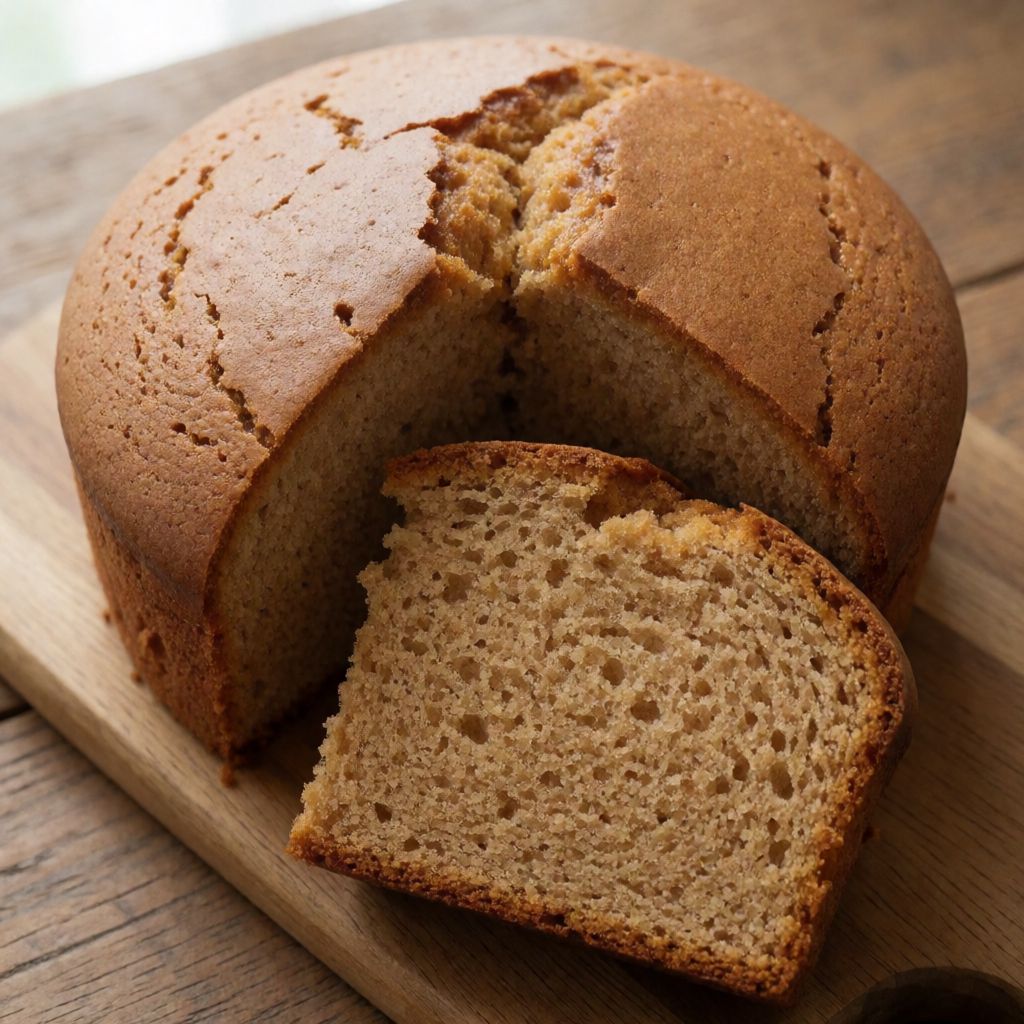
 AI photo
Hot Milk and Coffee Cake
A light sponge cake made with hot milk and coffee, whipped eggs and sugar for a soft, airy crumb.
Labels are worked out automatically from the ingredients and can be wrong. Check the packaging if it matters to you.
Ingredients
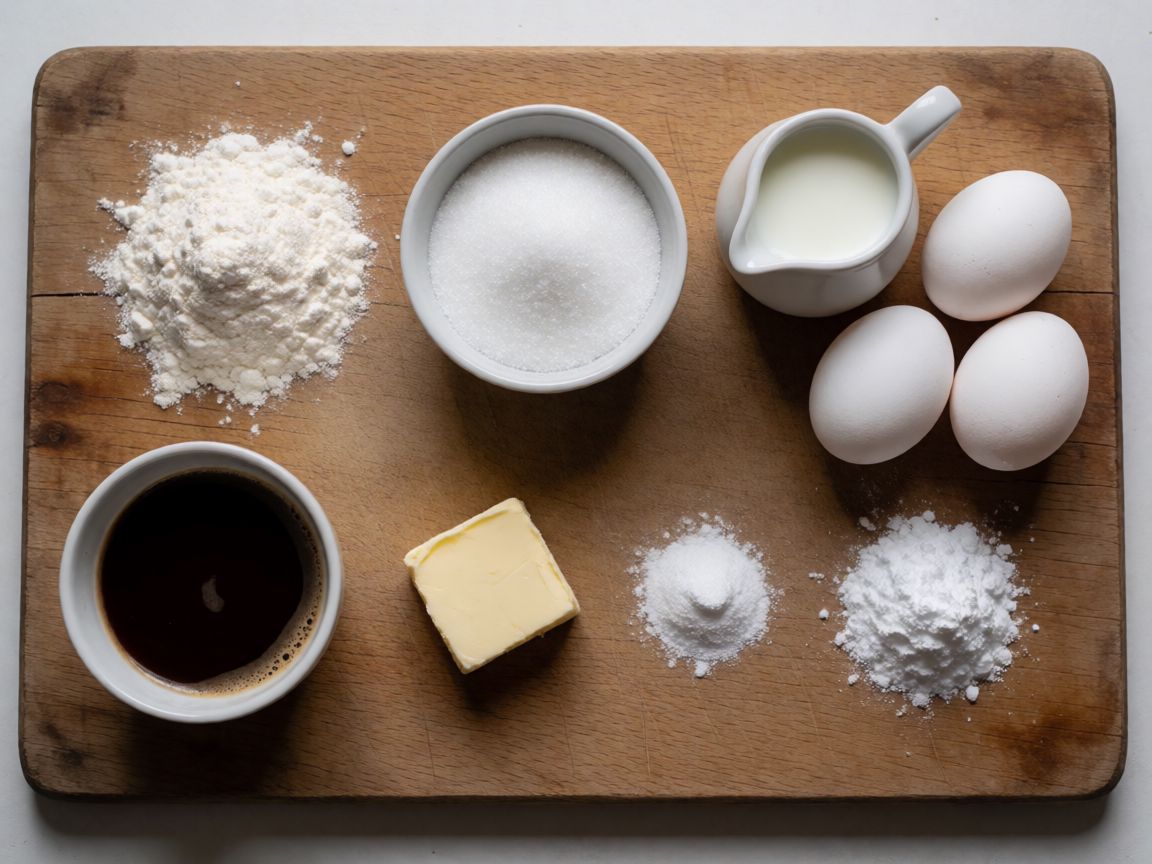
- 175 g Plain flour
- 150 g Caster sugar
- 100 ml Milk
- 3 pcs Eggs
- 30 ml Coffee strong brewed
- 60 g Butter
- 16 g Baking powder
- Icing sugar to taste








Steps
Brew a strong espresso using a moka pot or coffee machine.
Whisk the eggs with the sugar vigorously until the mixture becomes light and fluffy.
Warm the milk in a small saucepan over a medium heat.
Cut the butter into pieces and add to the milk, stirring with a spoon until fully melted.
Remove the milk from the heat and stir in the coffee.
Pour the hot milk and coffee in a thin stream into the whisked egg mixture, continuing to whisk with a mixer.
Gradually add the sifted flour and baking powder, mixing thoroughly with a spoon.
Pour the batter into a 22 cm tin, lined with baking paper or greased with butter.
Preheat the oven to 170°C and bake the cake for about 25 minutes, then check it is done.
25 minRemove the cake, let it cool slightly, take it out of the tin and cool on a wire rack.
Dust the top with icing sugar and serve.
This is a genoise-adjacent sponge built on a trick, not a ritual: you shock whisked eggs with hot milk instead of folding in cold butter. The heat does two jobs at once — it half-cooks the egg foam so it sets rather than deflates, and it melts the butter into the milk so you never have to cream anything. No creaming, no resting, no "room temperature butter" fuss. That's the whole point of the method, and it's why this cake belongs in a flat with one oven and no stand mixer sitting idle on the worktop.
What decides whether it rises or sits flat is the whisking in step 2 and the pouring in step 6. Eggs and sugar whisked properly go from yellow and liquid to pale, thick, and holding a ribbon when you lift the whisk — that's the air you're banking on, because there's so little flour and no extra leavening beyond the baking powder to save you if the foam is thin. Some say you can skip the mixer and do it by hand for a cake this size — no, because by the time your wrist whisks in enough air, the milk you poured earlier has gone cold and started to set the eggs unevenly instead of gently.
The milk has to go in hot and in a thin stream, whisk still running. Dump it in all at once and you scramble the eggs — you'll see curds, not batter, and no amount of flour fixes that afterwards. A thin stream gives the egg proteins time to warm gradually instead of seizing. This is the same logic as tempering egg yolks into a hot custard; nobody in a British kitchen blinks at that move when making custard for a trifle, so trust it here too.
Flour and baking powder are added last, by hand with a spoon, for a reason that has nothing to do with gentleness for its own sake — it's about not knocking out the air you just worked for. A mixer on flour develops gluten fast and toughens the crumb; a spoon, folded in gradually, keeps the structure loose. Use plain flour, not self-raising — the 16 g of baking powder here is already calculated against plain flour's lack of rise, and self-raising on top gives you a cake that domes hard in the middle then collapses as it cools, because it ran out of structure before the oven finished setting it.
Caster sugar matters more than people think for a whisked sponge. It dissolves into the eggs during whisking instead of sitting as grit; granulated sugar takes longer and can leave your foam thinner before it dissolves, costing you volume. If caster isn't in the cupboard, blitz granulated sugar for a few seconds in a food processor — not as fine as icing sugar, just finer than it was.
The butter's job is moisture and that soft, non-dry crumb a sponge made purely of egg foam and flour wouldn't have — eggs alone would bake dry and bouncy, closer to a biscuit base than cake. Melting it into warm milk rather than creaming it with sugar is the economy of this whole recipe: one pan, one step, no separate creaming stage, no butter left out on the side to soften while you wait. Any neutral butter works; if you're out, a flavourless oil like sunflower will melt into the milk just as easily, though you lose a little of the buttery edge on the crust.
Coffee: strong and brewed is non-negotiable in character, not in method. A moka pot gives you a thick, bitter shot that holds up once diluted into milk and batter; instant coffee dissolved extra-strong in a splash of hot water works nearly as well, because what you need is concentration, not origin. Weak filter coffee will just vanish into the crumb — you'll taste cake, not mocha, and wonder why you bothered.
The tin: 22 cm is a specific size doing a specific job — a wider tin spreads this amount of batter thinner and it'll overbake at the edges before the centre sets; a narrower one does the opposite and you'll pull a cake with a raw middle at the stated 25 minutes. If your tin is a different size, treat 25 minutes as the floor, not the answer — the cake tells you it's done when a skewer comes out clean and the top springs back instead of leaving a dent.
Icing sugar on top is doing cosmetic and practical work together — it hides a surface that was never going to be glossy (whisked sponges don't shine) and it adds a last touch of sweetness without you having to make icing, which, with a cake this moist already, would be too much. Dust it just before serving; sitting under sugar for hours, the cake's own moisture wicks up and dissolves it into damp patches instead of a clean white layer. Patience here isn't about waiting longer in the oven — it's about waiting to dust until the last minute, and letting the cake cool enough on the rack that you're not fighting steam under the paper when you turn it out.