
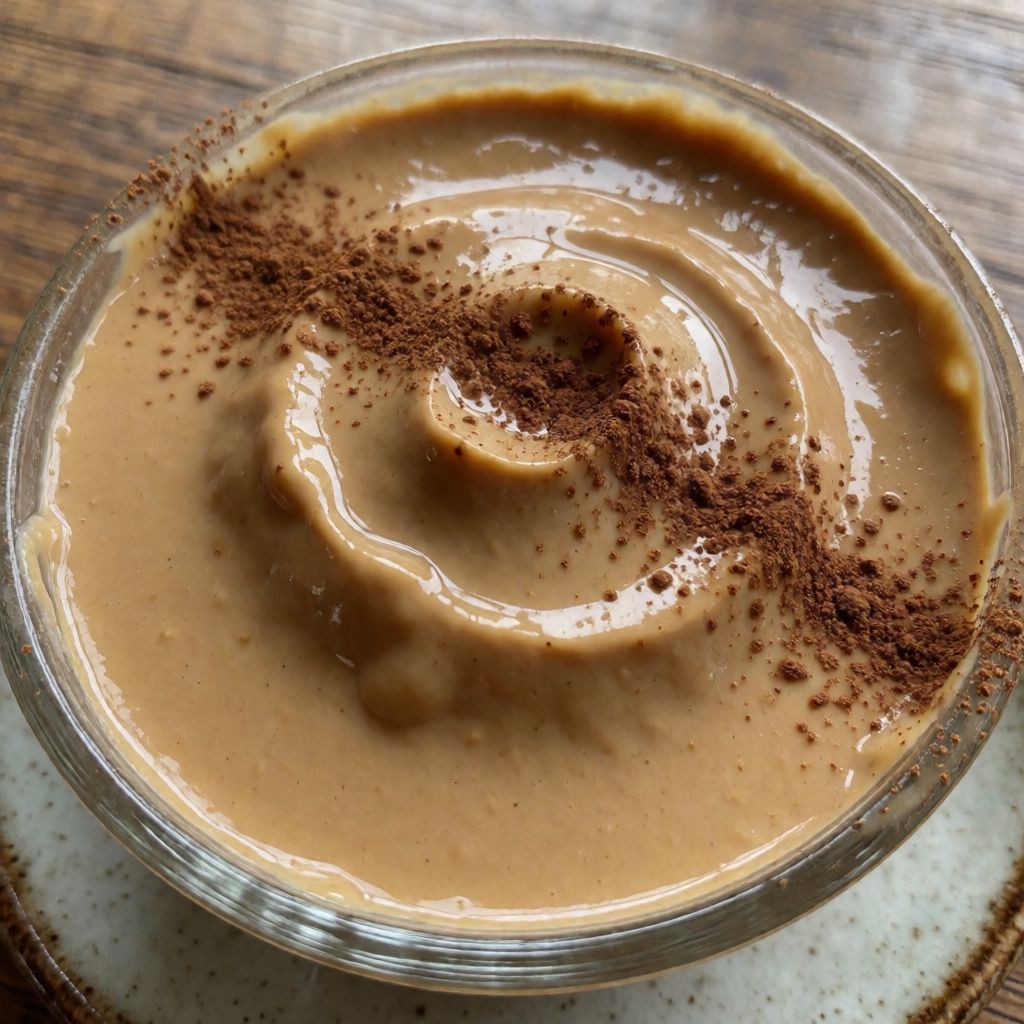
 AI photo
Coffee Crème Pâtissière
A silky coffee-flavoured pastry cream, perfect for filling tarts or enjoying on its own.
Labels are worked out automatically from the ingredients and can be wrong. Check the packaging if it matters to you.
Ingredients
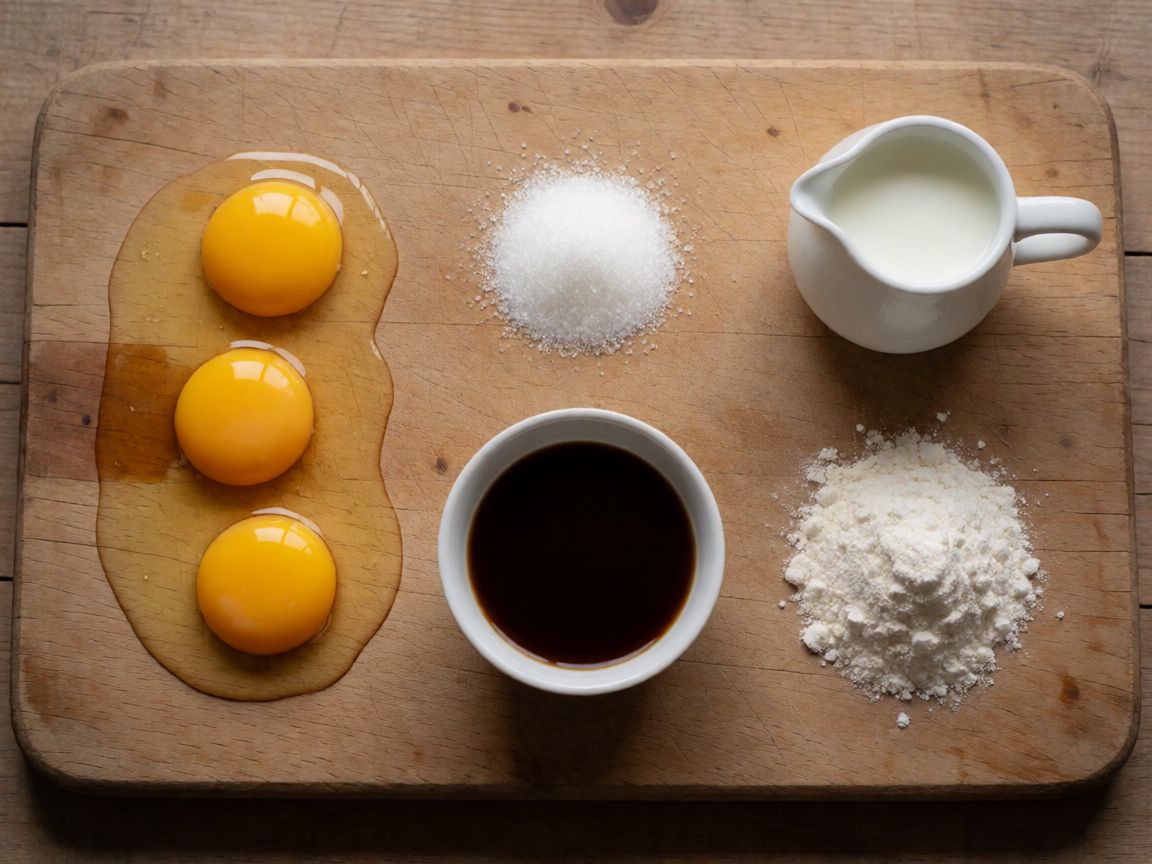
- 3 pcs Egg yolks
- 80 g Caster sugar
- 450 ml Milk
- 50 ml Espresso coffee unsweetened
- 50 g Plain flour





Steps
Pour the milk and espresso coffee into a steel saucepan. Warm gently over low heat, without letting it come to the boil.
Separate the eggs, keeping the yolks in a fairly roomy bowl.
Lightly beat the yolks with a fork, add the sugar and whisk with an electric mixer until pale and fluffy.
Add the sifted flour and mix energetically until the mixture is smooth and free of lumps.
As soon as the coffee milk is hot enough and about to simmer, remove from the heat and pour it in a thin stream into the egg mixture, stirring constantly.
Pour the mixture back into the saucepan and bring it to the boil over low heat, stirring constantly.
As soon as the cream comes to the boil, cook for a further 5-6 minutes, then remove from the heat.
6 minCool the finished crème pâtissière to room temperature before serving.
This is a cooked custard, not a chilled one — the thing that makes it crème pâtissière rather than crème anglaise is the flour. Flour means you can actually bring this to a full boil without the eggs scrambling into granules, because the starch sets up a kind of scaffolding around the yolk proteins before heat can seize them. That's the whole engineering of the dish, and once you see it, the steps stop looking fussy and start looking necessary.
What decides whether it works is the tempering — pouring the hot coffee milk into the egg mixture in a thin stream while you keep whisking, not the other way round. Do it fast or in one go and the yolks nearest the heat cook before the rest of the liquid has a chance to cool them down; you get scrambled flecks suspended in custard, which no amount of sieving fully rescues. Thin stream, constant movement, that's the whole defence.
Some say custard must never boil, full stop — no, that's true for egg-only custards like crème anglaise, which curdle past about 80°C because there's nothing protecting the proteins. Here the flour changes the rules: you need the boil, because starch granules only swell and thicken properly at that heat. Skip the boil and you'll have sweet coffee milk with a slightly thick memory of pudding, not pudding.
The yolks do two jobs — they thicken and they carry flavour — and that's exactly why you use yolks and leave the whites out. Whites add water and a rubbery set when heated; yolks bring fat and lecithin, which is what makes the finished cream feel silky on the tongue instead of merely thick. Whisking them with the sugar until pale and fluffy isn't decoration — the sugar dissolves into the yolk and starts coating the proteins, which buys you a few extra degrees of heat tolerance before they'd otherwise seize. Skip that whisking stage and your tempering has less of a safety margin.
The flour is doing the real thickening, and plain flour is the right choice because it brings a little body along with the starch — the custard sets soft, slightly dense, properly spreadable rather than glassy. If you only have cornflour, you can use it, but use less of it — it thickens harder and clearer and sets more like a jelly than a cream, so start with two-thirds the weight and judge by the spoon test rather than by the number.
Milk here isn't neutral — it's half the liquid and all the body, so whole milk gives you a rounder, less watery result; semi-skimmed works, it'll just taste a touch thinner, which in a cup of English tea-and-milk kitchen is probably the milk you already have open, and that's fine.
Coffee is where people cut corners and it shows. The brief is simple: it has to be strong and it has to be unsweetened, because the sugar is already measured in from the yolks' side. A proper espresso shot gives you concentration without excess liquid; if you don't have a machine, a moka pot pull or a very strong instant coffee — a couple of teaspoons in that same 50ml of hot water — will do the job, since what the custard actually wants is the bitterness and aroma, not the brewing method.
The pan matters more than people expect. A thin aluminium pan develops hot spots, and a hot spot under custard means the egg at that one point cooks before the rest — tiny scrambled grains again, this time from the second cooking rather than the tempering. A heavier steel or enamelled pan spreads the heat and gives you a more even boil; if yours is thin, compensate by keeping the heat low and dragging the pan slightly off the heat if you see it catching at the base.
Last thing, and it's not in the ingredient list but it belongs there: patience. Rushing the pour curdles it, rushing the boil leaves it under-thickened, and rushing the cooling gives you a skin on top from evaporation — press cling film straight onto the surface, no air gap, and that problem disappears on its own.