
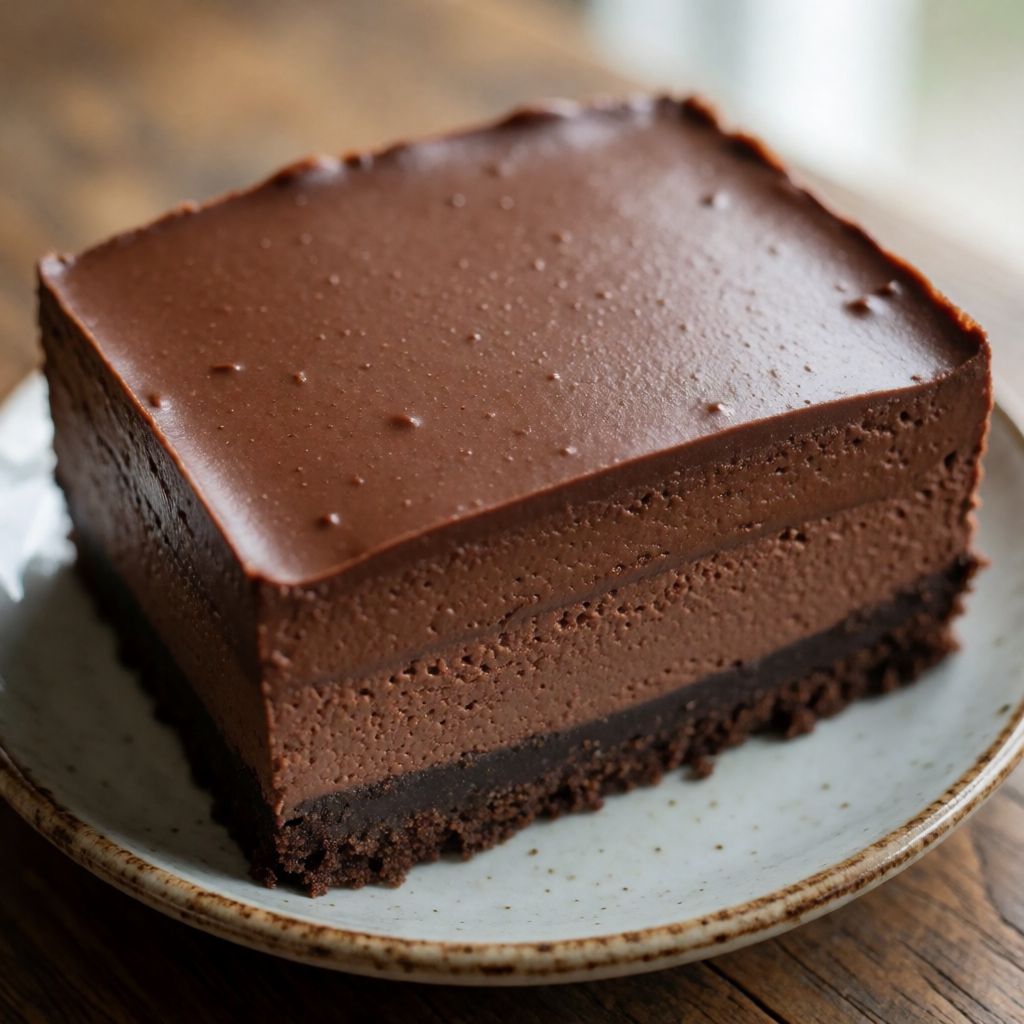
 AI photo
No-Gelatine Chilled Chocolate Cake
A chilled chocolate cake with a buttery biscuit base, mascarpone cream and whipped cream, set without gelatine.
Labels are worked out automatically from the ingredients and can be wrong. Check the packaging if it matters to you.
Ingredients
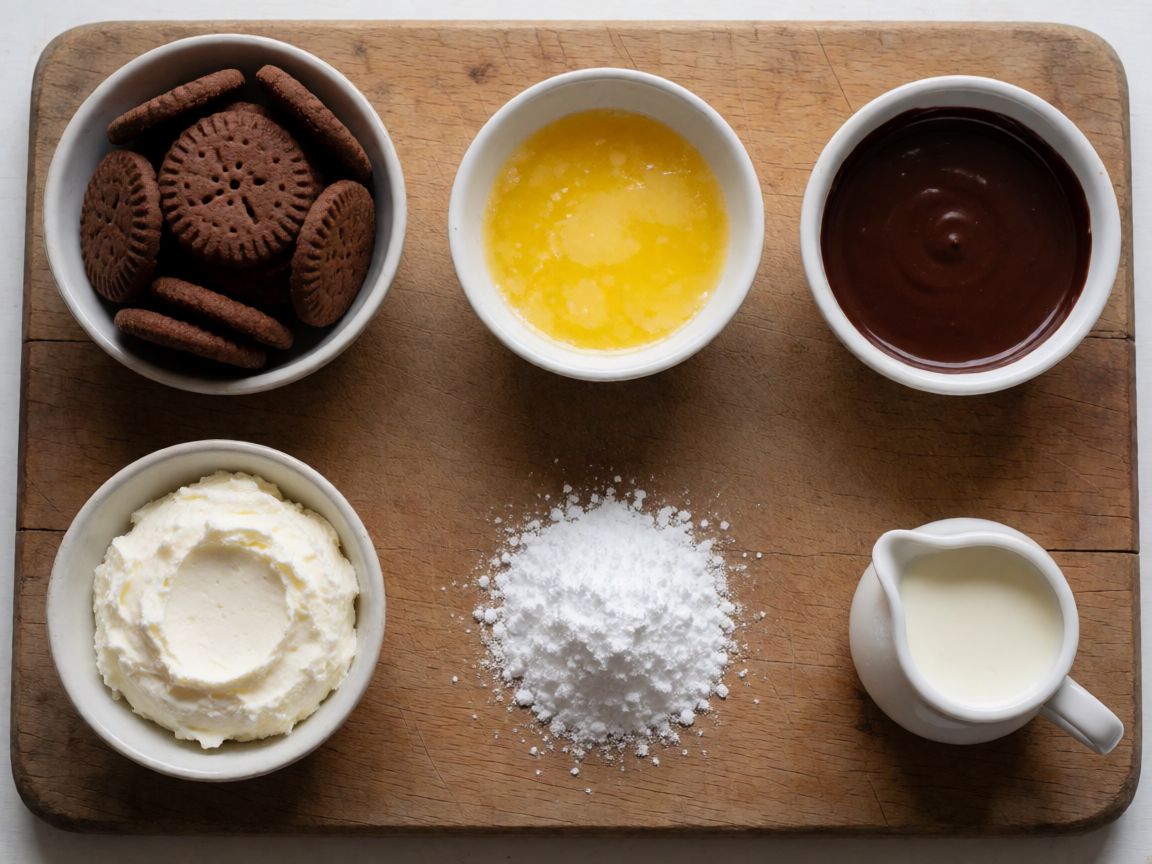
- 300 g Gluten-free cocoa biscuits
- 150 g Butter melted
- 250 g Dark chocolate melted
- 250 g Mascarpone
- 100 g Icing sugar
- 200 ml Double cream






Steps
In a blender, crush the biscuits into fine crumbs, then transfer to a bowl and mix with the melted butter until you get a uniform, sandy texture.
Press the mixture into a greased tin, firmly packing down the base with the back of a spoon.
Place the tin in the fridge for about 30 minutes.
30 minMelt the dark chocolate in a bain-marie or in the microwave, then let it cool.
In a bowl, combine the mascarpone with the icing sugar and mix until smooth.
Add the melted chocolate and mix until you get a smooth, even cream.
Separately, whip the double cream with a mixer until thick and fluffy, then gently fold it into the cream mixture.
Transfer the fluffy cream into a piping bag, or spread it over the base with a spatula.
Place the cake in the fridge for 3-4 hours.
240 minCarefully release the cake from the tin and transfer it onto a serving plate.
Decorate the top with chocolate shavings and chopped nuts.
This is a cheesecake wearing a chocolate cake's clothes — no oven, no gelatine, and the set comes entirely from fat going cold. Two fats are doing the work: butter gluing the biscuit crumb into a base, and cocoa butter inside the dark chocolate hardening in the fridge to turn a loose cream into something you can slice with a knife, not spoon out of a bowl.
Some say a no-bake cake needs gelatine to hold its shape. No — because proper dark chocolate already carries enough cocoa butter to do that job on its own, once it's cold. That's exactly why the recipe tells you to let the melted chocolate cool before folding it in: warm chocolate poured straight into mascarpone would melt the cheese's own fat structure, and instead of a cream you'd get a warm, sliding mess that never really sets, no matter how long you leave it in the fridge.
What decides whether this works is patience, twice over. Rush the first chill and the base is still soft when you spread the filling — press down with a spatula and you'll break through into loose crumbs scattered through your cream. Rush the second, long chill and you get a cake set hard at the edges but loose in the middle, because cocoa butter crystallises slowly and from the outside in — the same physics that makes tempering chocolate a game of patience, not force.
On the biscuits: the job isn't flavour, it's structure, so pick anything dry and crumbly that turns to fine sand under a blender blade — no cream filling, no soft centre, because that moisture will keep the base tacky instead of firm. Gluten-free cocoa digestives work because UK supermarkets stock them easily; if you can't find a chocolate one, use a plain gluten-free biscuit and stir a spoonful of cocoa powder into the crumbs before adding the butter, for colour and a bit of bitterness against all that sugar later.
Butter is only glue here — melted so it can coat every crumb evenly. Too little and the base crumbles the moment you lift a slice; too much and it turns greasy, heavy, and slides when you cut into it. Use unsalted if you want control, but don't be afraid of a small pinch of salt worked in — it sharpens the chocolate on top rather than making the base taste salty.
Dark chocolate is the real engineer of this cake, not just the flavour. It needs to be proper chocolate, with cocoa butter as its fat — cheap bars that list vegetable fat instead won't harden the same way in the fridge, and your cake will stay soft and sulky no matter how long you wait. Go for something around 60–70% cocoa: high enough to set firmly and to hold its own against the sugar, not so high that the whole cake turns bitter and heavy.
Mascarpone gives the cream its body — full-fat, soft, almost buttery on its own. If you've none in the fridge, cream cheese loosened with a splash of extra double cream will stand in, though it brings a tang mascarpone doesn't have, so you'll taste the difference, just not a bad one. Icing sugar is chosen over caster sugar for one reason: it dissolves cold, into cold fat, with no grittiness — caster sugar needs heat or moisture to disappear, and here you have neither.
Double cream matters more than its name suggests — you need that higher fat content, something in the high thirties percent at least, to whip up and hold air at all. Single cream simply won't whip; it'll stay a thin liquid forever, however hard you beat it. Whip it to soft peaks that just hold their shape rather than stand stiff — overwhipped cream turns grainy and buttery once folded into the chocolate base, and you'll see little flecks of butter instead of a smooth set.
On the tin: most flats don't have a proper springform standing idle in a cupboard, so line whatever tin you've got — loaf tin, cake tin, even a deep dish — with cling film, leaving enough overhang to lift the whole thing out once it's set. This feeds eight comfortably as a dessert slice, less if you serve it after a Sunday roast where everyone's already full, and it keeps in the fridge for a few days under cling film, the set only getting firmer, never softer.