
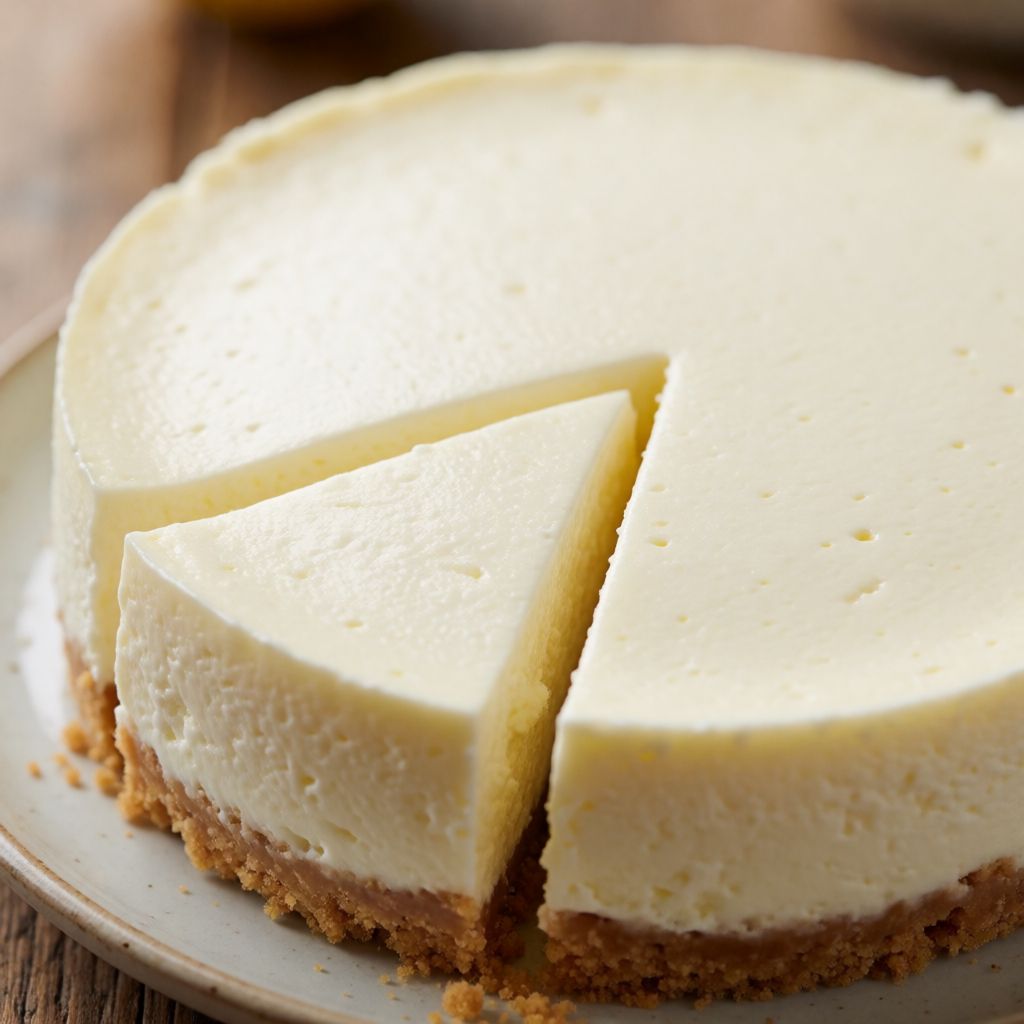
 AI photo
No-Bake Lemon Cheesecake
A creamy no-bake lemon cheesecake with a buttery biscuit base, set in the fridge rather than baked.
Labels are worked out automatically from the ingredients and can be wrong. Check the packaging if it matters to you.
Ingredients
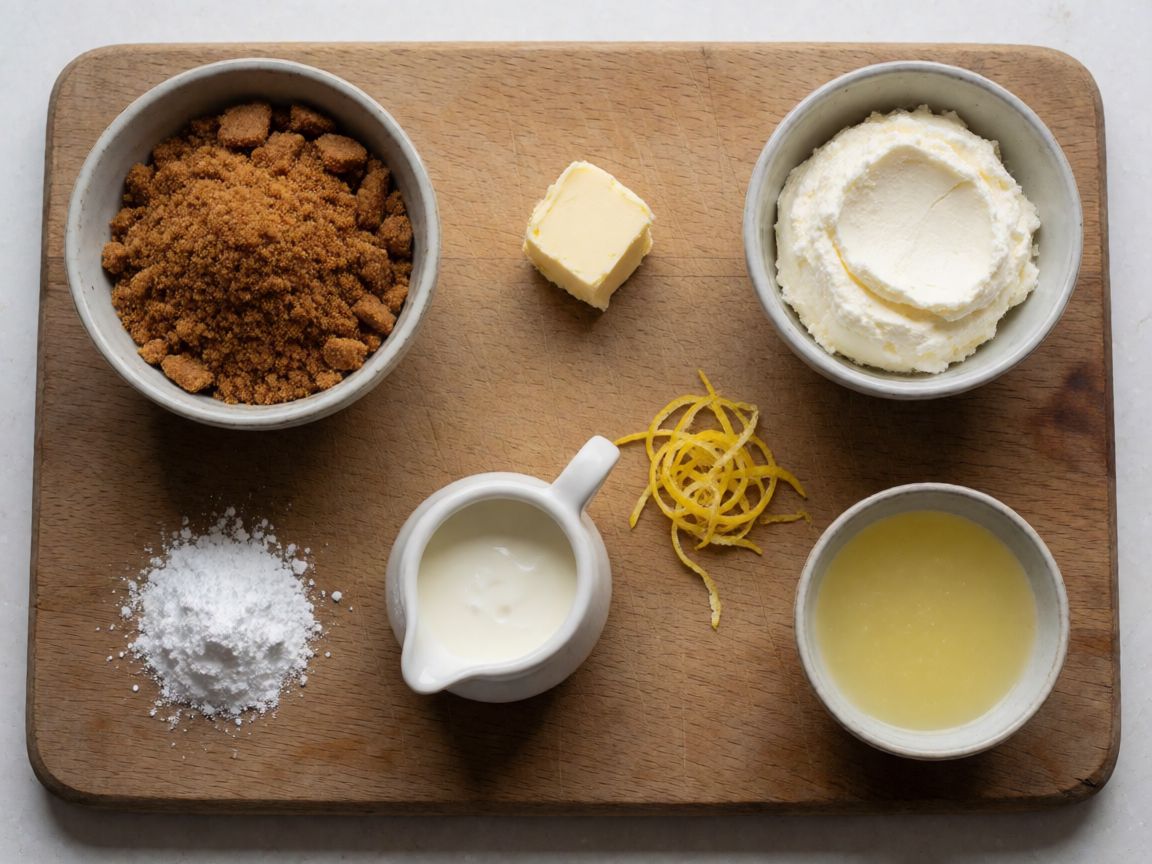
- 300 g Digestive biscuits
- 150 g Butter
- 100 g Mascarpone
- 100 g Icing sugar
- 250 ml Double cream
- 50-60 ml Lemon juice
- 1 pcs Lemon zest







Steps
Melt the butter in a bain-marie and blitz the digestive biscuits in a food processor until fine crumbs.
Combine the melted butter with the crushed biscuits and mix well until evenly combined.
Press the mixture into a rectangular tin with a removable base, flattening it firmly with your fingers or the back of a spoon.
Chill the tin in the fridge so the base can set.
30 minBeat the mascarpone with the icing sugar using an electric mixer.
Add the lemon zest and lemon juice, and mix well.
Whip the double cream separately until stiff peaks form, then gently fold it into the mascarpone mixture.
Spread the cream over the set biscuit base, smooth with a spatula, and chill in the fridge.
120 minBefore serving, decorate the top with lemon zest and mint leaves.
This isn't cheesecake in the oven sense of the word — no eggs, no bain-marie for the filling, no custard setting into curd. What you're building is a cold mousse sitting on a biscuit crumb, and the whole structure is held together by two things only: solid fat and trapped air. Take either away and it collapses, literally.
The base works because melted butter, once it cools back down in the fridge, goes rigid again and glues the crumbs into something you can cut with a knife. That's the entire mechanism — not magic, just butter doing what butter does when it gets cold. Which is why pressing it down hard with a spoon matters: air pockets in that layer are exactly where it will crack and crumble under the fork later. Firm now means intact on the plate.
The filling is the same idea in reverse. You whip air into double cream until it holds its own shape, then fold that air, carefully, into the mascarpone mix — not the other way round, not all mixed with a beater at once. Fold too roughly, or fold a weak whip, and the air escapes before it sets; you end up with something closer to lemon soup than lemon cream. The fridge then just slows the cream down and lets the fat re-firm around the air pockets, so the mousse holds a slice shape instead of sliding off the biscuit.
Digestive biscuits are the right crumb for this because they're dry, only lightly sweet, and break into fine even grit rather than big shards — that even grit is what packs tight under the butter instead of leaving gaps. Any firm, not-too-sweet biscuit will do the same job: oat biscuits, graham crackers, even ginger nuts if you want the lemon to have something to argue with. Avoid anything soft or cream-filled — it won't take the butter, it'll just go soggy.
Butter here is doing a structural job, not a flavour job, so don't reach for a fancy cultured one — ordinary salted or unsalted, melted and cooled back to solid, is the mechanism. Any solid fat with a reasonably neutral taste that firms up in the fridge would technically work; butter just also tastes of something, which is a bonus, not the point.
Mascarpone is chosen for being thick, high-fat and mild — it holds its shape once beaten with sugar but brings almost no tang of its own, leaving the lemon to do the talking. Full-fat cream cheese is the usual stand-in, but it's wetter and sharper, so you'd want to cut back the lemon juice a touch or the filling turns thin and over-sour. Icing sugar, not granulated, because it dissolves into the fat without leaving grit — granulated sugar in a cold, uncooked mix just sits there crunching.
Double cream is specified because its fat content (around 48%) is what lets it whip to genuinely stiff peaks and hold them under the weight of the mascarpone; ordinary whipping cream (around 35% fat) will whip, but softer, and the finished mousse will slump rather than stand. If double cream isn't to hand, whipping cream works at a pinch — just know the slice will be a little less upright.
Lemon zest and lemon juice are doing two separate jobs, which is why the recipe asks for both and why you shouldn't treat them as interchangeable. The juice brings sourness and a little extra liquid; the zest brings the fragrant oil that juice alone doesn't carry — grate it straight from the fruit over the bowl, not from a jar, because that oil fades fast once exposed to air. If you've only got juice, you'll get a sour cheesecake with none of the lemon smell that makes people notice it before they taste it.
And on patience: the long rests are not downtime you can shortcut by rushing the fridge with a warmer freezer blast. Fast-chilling under power won't let the fat crystallise evenly through the mousse — you'll get a soft middle and a hard rim. Let it sit where it's meant to sit, as long as it's meant to sit.