
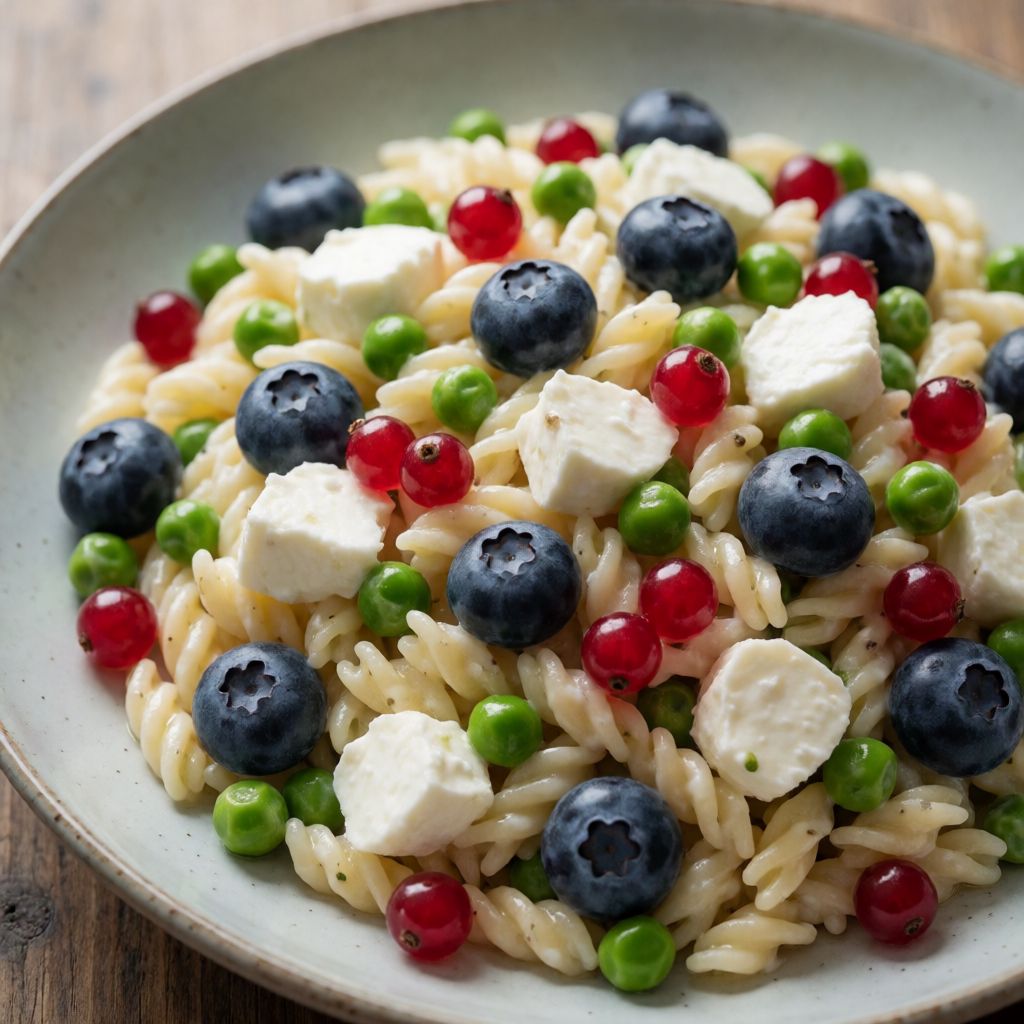
 AI photo
Cold Pasta Salad with Redcurrants and Blueberries
A refreshing cold pasta salad with blueberries and redcurrants, mozzarella, peas and mint-infused oil.
Labels are worked out automatically from the ingredients and can be wrong. Check the packaging if it matters to you.
Ingredients
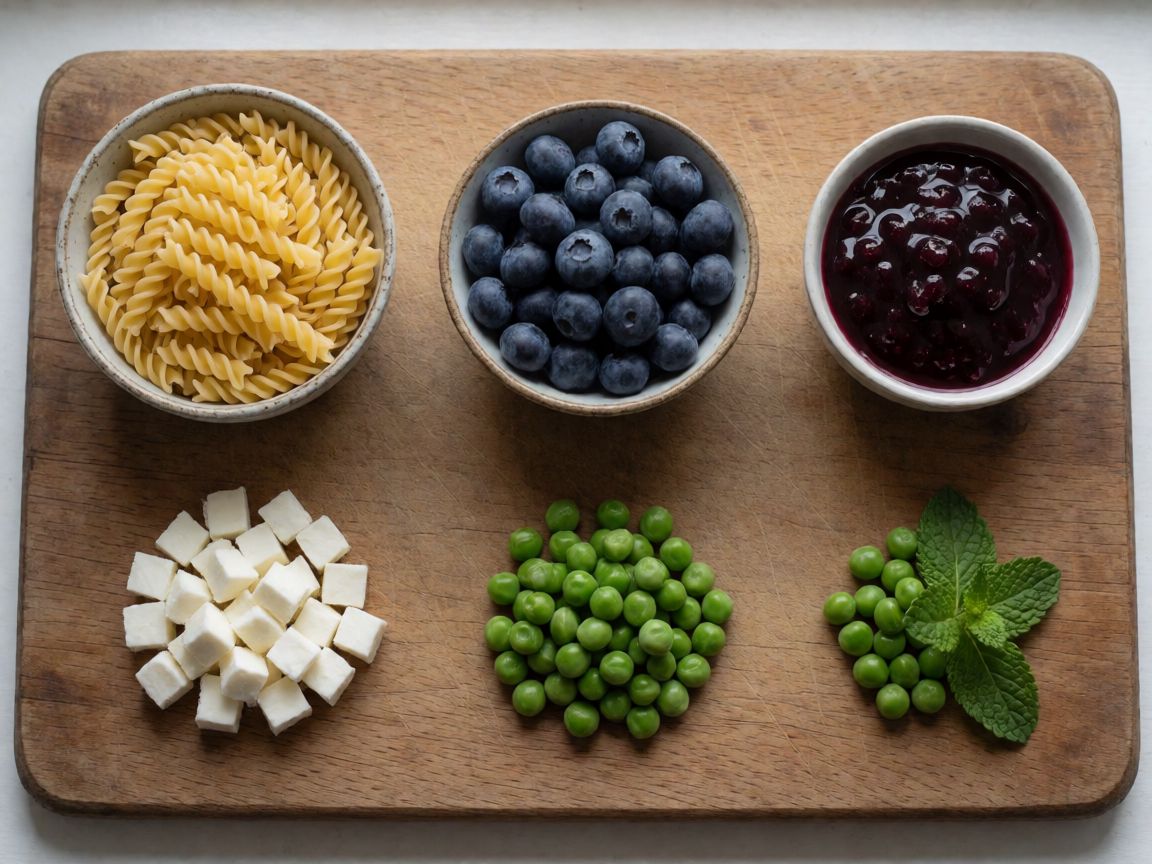
- 320 g Pasta
- 240 g Blueberries
- 240 g Redcurrants
- 150 g Mozzarella cut into cubes
- 150 g Peas
- 3 tbsp Olive oil
- 1 bunch Mint to taste
- Salt to taste
- Black pepper freshly ground, to taste







Steps
Flavour the oil: add the mint, crushed by hand, a pinch of salt and black pepper, and leave to infuse.
Bring water to the boil with a pinch of salt and cook the peas.
6 minDrain the peas and transfer to a bowl to cool.
Cook the pasta in plenty of salted boiling water until al dente.
Drain and rinse the pasta under cold water.
Transfer the pasta to a bowl, dress with half of the flavoured oil, mix and leave to cool.
Pick the redcurrants from their stems and rinse together with the blueberries.
Pat the berries dry with a towel.
Add the blueberries, redcurrants, cubed mozzarella and the cooled peas to the pasta.
Dress the pasta with the remaining oil, mix all the ingredients together and serve.
Let's get the obvious objection out of the way first: pasta with berries. Not a dessert dressed up as lunch, not a prank — it's a cold composed salad, the kind where each piece keeps its own identity and the oil is the only thing that argues they belong together. Think of it as a plate where pasta plays the role bread usually plays in a berry-and-cheese spread: it's there to carry, not to dominate.
What decides whether it works is temperature management, not flavour balance. You're cooling three separate things — pasta, peas, berries — and if you skip the cooling, the heat residue cooks the mozzarella into rubber and turns the berries to jam on contact. Rinsing the pasta under cold water isn't a timid habit some cooks have, it's the thing that stops starch from going on gelatinising after the pot — "al dente" is a moving target until you shock it still.
The mint oil is doing double duty: it's the dressing, and it's also the bridge between a savoury pasta and fruit that has no business near salt. Infusing it rather than just chopping mint straight into the bowl means you get the aromatic oils dissolved into fat, which carries flavour across your tongue far better than wet leaf matter does. Skip this step and you get mint as decoration, not as a flavour that reaches the blueberries.
Nothing here is cooked to a point you need a thermometer or a clock watched closely — the peas go from raw-green to sweet in the time it takes water to come back to a boil after you drop them in, and that's your cue, not the six minutes on the packet.
Pasta: 320 g for four people is a light main, not a Sunday-roast-sized plate — this dish reads more as a warm-weather lunch than dinner. Use a short shape with some surface texture — fusilli, conchiglie, something with grooves or a hollow — because it needs to hold tiny bits of dressing and the occasional burst berry juice in its folds. A smooth tube or a long strand like spaghetti will just let the oil run off and pool at the bottom of the bowl.
Blueberries and redcurrants: these aren't interchangeable with "any berry you have," because the whole point is one sweet-soft (blueberry) against one tart-firm (redcurrant) — contrast, not repetition. If you can't get redcurrants, which barely show up outside a greengrocer's with a proper fruit counter or a garden, use something else with that sour snap: pomegranate seeds, or a handful of underripe raspberries. Pat them dry properly — wet berries bleed colour into the pasta and you end up with a lilac-grey dish instead of a speckled one.
Mozzarella: the job here is cool, mild, slightly rubbery contrast against the fruit's sweetness — a counterweight, not a flavour. Buffalo mozzarella is too wet and will weep milky liquid all over your salad; the firmer cow's-milk block mozzarella, the kind sold in a vacuum pack rather than a tub of brine, holds its cube shape and its bite. If mozzarella's not to hand, a young, mild feta or a fresh goat's cheese works on the same logic — mild, cool, holds shape — though feta brings salt the oil has already supplied, so go lighter on seasoning the mint oil if you swap.
Peas: frozen is completely fine, in fact better, because they're already blanched before freezing and just need warming through and shocking cold — no raw starchy taste to cook out. Fresh peas from a pod need that water-to-boil cue to look right: bright green, no longer matte, and they'll yield when you bite rather than squeak.
Olive oil: "any oil with no smell of its own" is exactly the wrong brief here — you want the opposite, an oil with enough personality to carry the mint and stand next to fruit. A grassy, peppery extra virgin is right. A neutral vegetable oil would leave the salad tasting of nothing but what you put in it, and the mint would have nothing to lean on.
Mint: crush it by hand rather than chopping with a knife — bruising releases the oil from the leaf cells without the bitter chlorophyll tang a sharp blade edge can draw out, especially from softer herbs. If mint isn't around, basil does a similar cooling, green job, though it leans more savoury-Italian than fresh-herbal; either way, let it actually sit in the oil rather than just stirring it through at the end, because infusing takes minutes of contact, not seconds.
Patience here is less about waiting and more about sequencing — cool the pasta, cool the peas, dry the berries, and only then combine. Rush that order and you don't get a failed dish exactly, you get a warm, sweating, slightly sad one. Give it the time to come properly cold and it holds together as something genuinely worth the odd look when you put the plate on the table.