
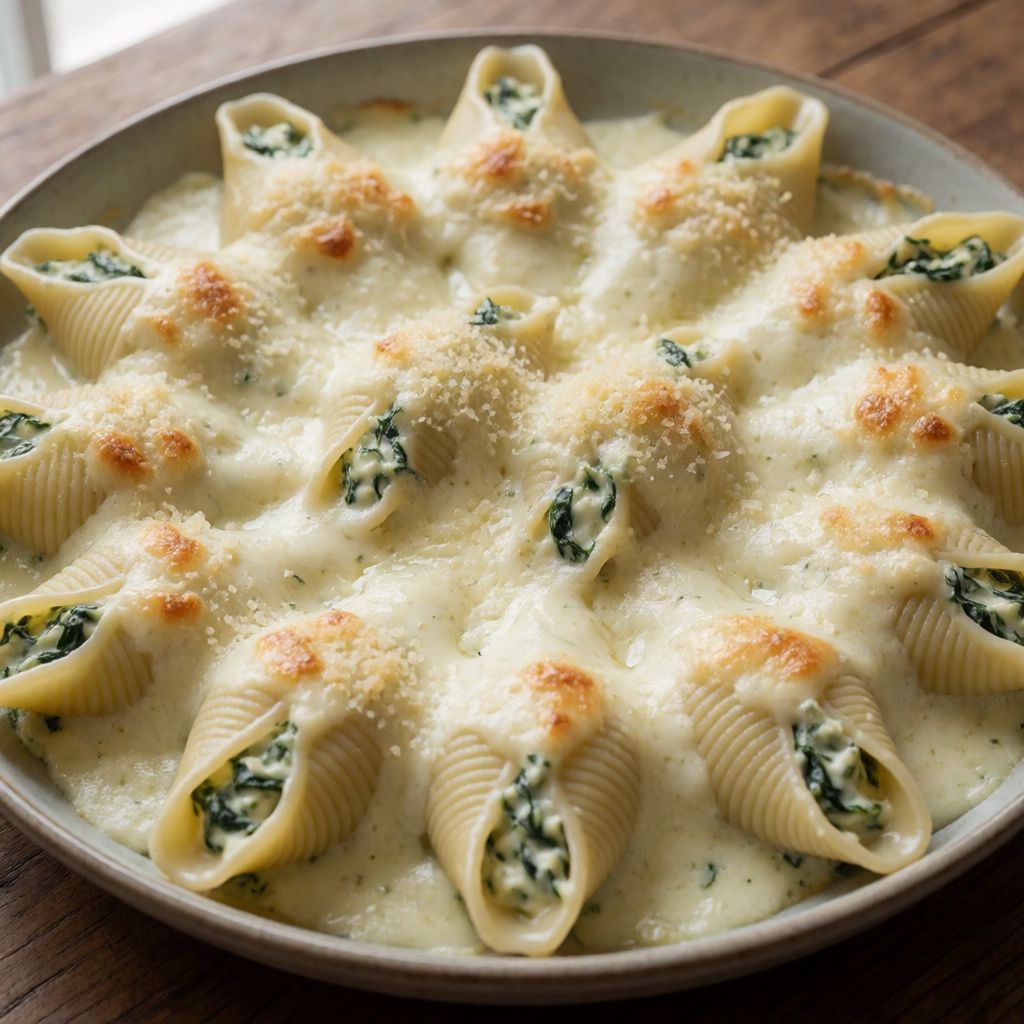
 AI photo
Conchiglioni with Ricotta and Spinach
A comforting baked pasta of large shells filled with spinach and ricotta, topped with béchamel and baked until golden.
Labels are worked out automatically from the ingredients and can be wrong. Check the packaging if it matters to you.
Ingredients
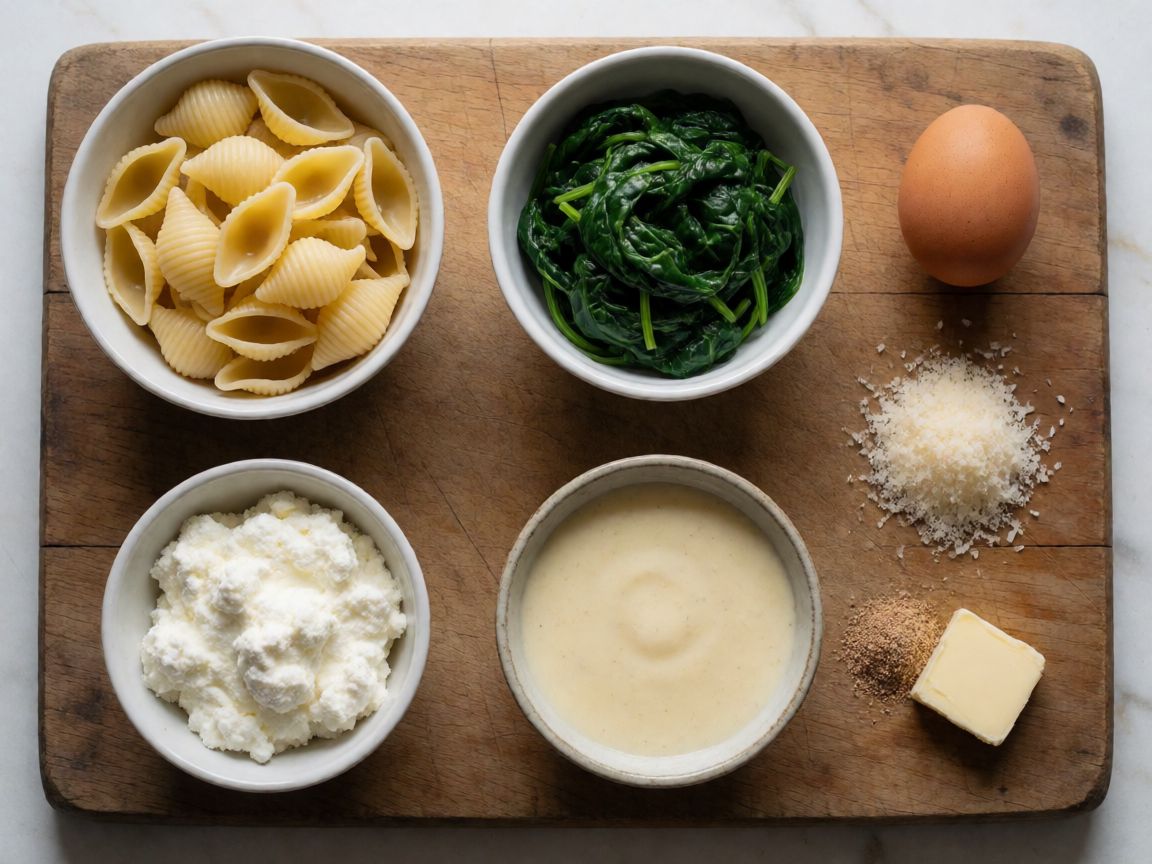
- 300 g Conchiglioni
- 500 g Spinach
- 300 g Ricotta
- 1 pcs Eggs
- 30 g Grana Padano
- 1 l Béchamel sauce
- Salt to taste
- Black pepper to taste
- Nutmeg to taste
- 1 pcs Butter a slice
- Butter to taste
- Vegetable oil for frying, to taste










Steps
Trim the spinach stalks, rinse well, then sauté in a pan over high heat until all the moisture has evaporated.
Add a knob of butter and a pinch of salt, and cook for a further 5 minutes.
5 minTransfer to a board and chop finely with a knife.
Put the still-warm spinach into a large bowl, add the ricotta, egg, Grana Padano, salt, black pepper and nutmeg.
Mix well, then stir in 3-4 tbsp of the béchamel to soften the filling. Combine thoroughly.
Cook the conchiglioni in plenty of salted boiling water.
6 minDrain them very al dente after about 6-7 minutes and drizzle with oil.
Fill each shell with a generous spoonful of the filling.
Arrange them snugly side by side in a baking dish brushed with béchamel.
Pour the remaining liquid béchamel generously over the conchiglioni and sprinkle with Grana Padano.
Bake at 200°C for about 25 minutes.
25 min
This is a baked pasta where the shell does a job cannelloni can't: it holds the filling without you having to pipe anything into a limp, tearing tube. Conchiglioni are stiff-walled and open on one side — you spoon the mix straight in, no bag, no fuss. What decides whether this works isn't the baking, it's everything that happens before the oven: how dry the spinach is, how underdone the pasta is, and whether the béchamel is thin enough to still move once it's poured.
Spinach holds a shocking amount of water for something that looks like nothing in the pan — 500g of raw leaves will throw off most of its bulk in liquid alone. If you stop cooking it the moment it wilts, that water is still in there, and it will leak into the ricotta filling, then into the béchamel in the oven, and you get a watery dish sitting in its own puddle instead of something that holds its shape on the fork. Cooking it hard until the pan is dry again, then chopping it, is what keeps the filling a filling and not a sauce.
The pasta goes in very underdone — six or seven minutes, well short of eaten-off-the-fork tender — because it finishes cooking in the oven, inside the béchamel, surrounded by moisture it will keep absorbing. Some say you should cook pasta "al dente" and stop there for everything, no exceptions — no, because a shell destined for 25 more minutes in a hot, wet dish needs a head start in the other direction, or it collapses into mush by the time it reaches the table.
Ricotta is the filling's body, but it varies a lot tray to tray — some tubs are properly dry and crumbly, some are closer to thick cream. If yours is wet, you'll feel it when you mix: the filling will slump rather than hold a spoonful. Drain it in a sieve for an hour if that's the case; don't try to fix it by adding more Grana Padano, that just changes the saltiness, not the texture. If you can't get ricotta at all, curd cheese or a well-drained cottage cheese blitzed smooth will do the same structural job — it needs to be a cheese that holds a shape, not one that pours.
The egg is glue, nothing more romantic than that. It sets slightly in the oven's heat and keeps the ricotta from weeping back out once it's hot, the same reason you'd put egg in a quiche filling. Grana Padano gives salt and a long, nutty back-note — Parmesan works exactly the same way if that's what's in the fridge, they're close enough cousins that swapping them changes nothing you'd notice.
Nutmeg is traditional with spinach and béchamel for a reason that's more habit than magic: it was one of the few spices that made it reliably into northern Italian and British kitchens centuries ago, and it genuinely does cut through the flatness of cooked spinach and dairy — a few scrapes, not a spoonful, it turns bitter fast if you're heavy-handed.
Butter in the spinach pan, right at the end rather than the start, coats the leaves after they've already released their water — add it too early and it just helps steam the spinach instead of flavouring it, you'd be cooking fat and water together for no gain. A knob, not a slab.
Béchamel you can make from scratch — butter, flour, milk, the usual — or buy ready-made if you're not in the mood for standing at the hob stirring; nothing about this dish demands you prove anything by making it yourself. What matters is consistency: it should pour, not dollop. If yours has gone thick and gluey sitting in the fridge, loosen it with a splash of warm milk before you use it, both in the filling and over the top, or it won't reach down between the shells and you'll get dry patches on bake.
On an ordinary hob, "high heat until the moisture has evaporated" for the spinach means watching the pan, not the clock — you're listening for the hiss to stop and the leaves to start properly moving instead of stewing in their own liquid. A domestic ring won't give you the fierce, even heat of a professional stove, so give it longer rather than turning it up past where your pan can cope — scorched spinach tastes bitter and you can't fix that later.
For the bake itself, 200°C is hot enough to colour the top béchamel and get everything bubbling at the edges within the 25 minutes, but ovens lie about their own number more than any other appliance in the kitchen — if yours runs cool, look for the sauce blistering gold at the rim of the dish rather than trusting the dial, that's your real signal it's done, not the timer.