
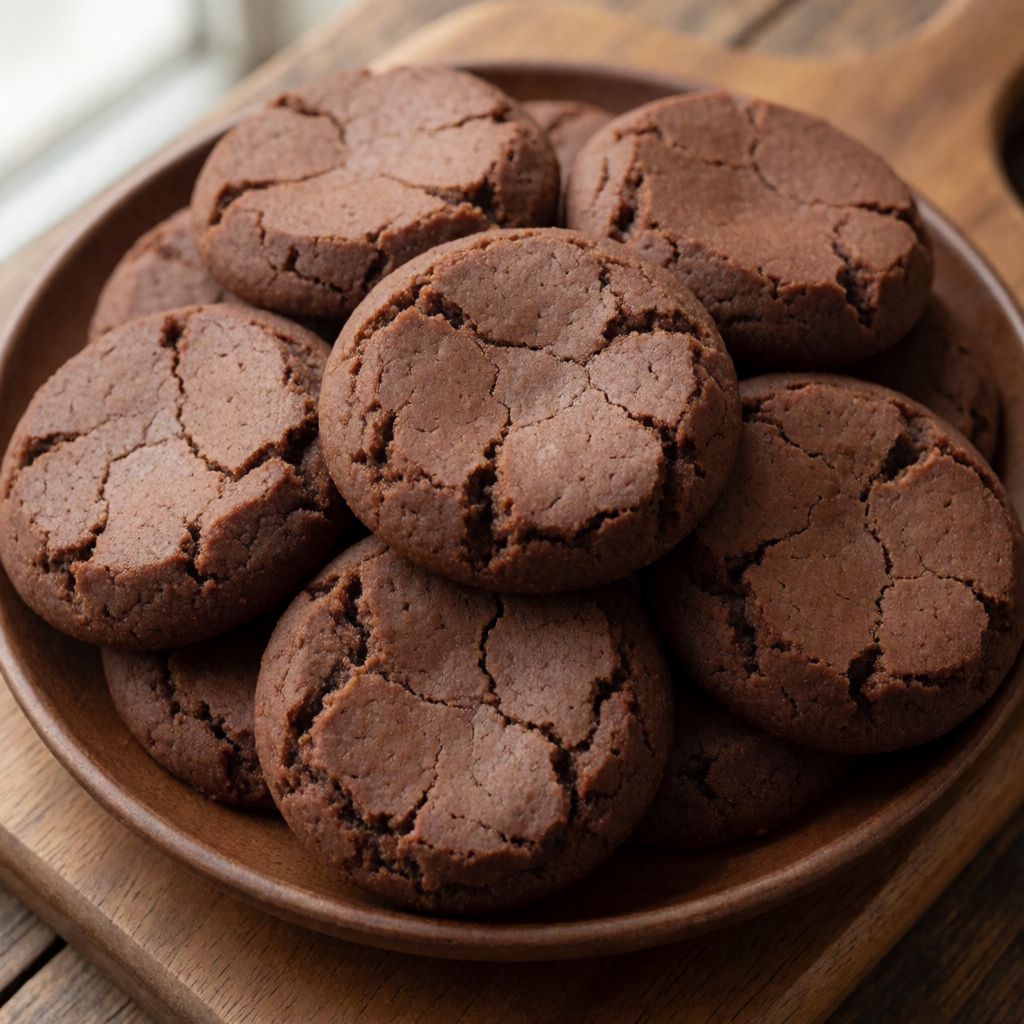
 AI photo
Cookies in a Jar — a Tasty Homemade Gift
A layered cookie-in-a-jar gift that mixes into a soft cocoa dough and bakes into crisp cookies.
Labels are worked out automatically from the ingredients and can be wrong. Check the packaging if it matters to you.
Ingredients
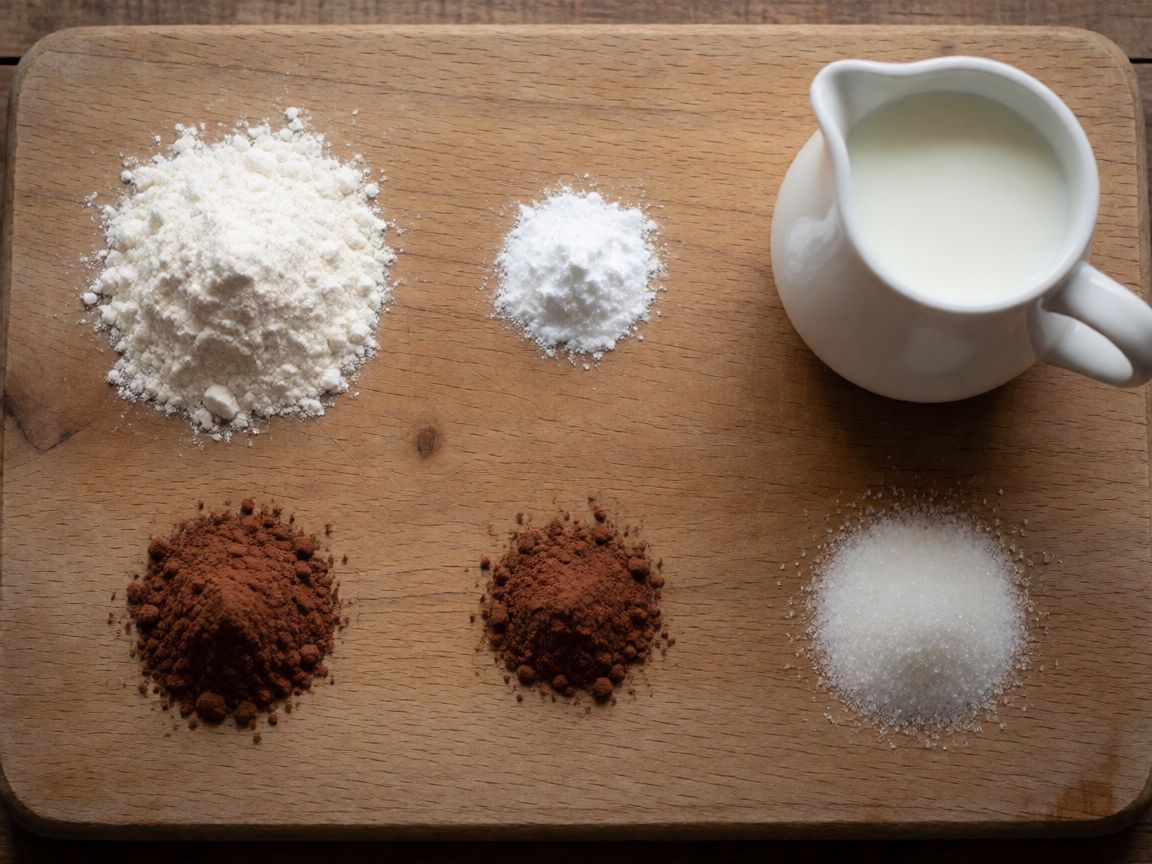
- 180 g Plain Flour
- 5 g Baking Powder
- 20 g Cocoa Powder
- 40 g Caster Sugar white or cane
- 40 ml Vegetable Oil
- 100 ml Milk






Steps
Sterilise the jar in advance; in a bowl combine the sifted flour with the baking powder and mix thoroughly.
Spoon half of the flour and baking powder mixture into the bottom of the glass jar, level it and press down gently.
Add a layer of cocoa powder, press it down lightly, then add the rest of the flour mixture and the sugar.
Seal the jar tightly with an airtight lid.
Mix the contents of the jar with the vegetable oil and milk until you get a smooth dough.
Bake at 180°C for about 15 minutes.
15 min
This is a kit, not a cake. What you're actually building is a dry mix dressed up to look pretty in a jar, meant to sit on a shelf until someone decides to bake it. The cocoa stripe sandwiched between two scoops of flour isn't flavour architecture, it's a window display — the moment oil and milk go in, every layer collapses into one dark batter, so don't grieve over a wobbly line. Nobody sees it again once it's dough. Three servings is the right scale to think of it at: a small batch for a pot of tea, not a showpiece for Sunday lunch.
What decides whether it works has nothing to do with the layering and everything to do with two later moments: the mixing, and the oven. Stir oil and milk into the dry mix only until it's smooth, no longer — every extra turn of the spoon builds gluten, and gluten is what turns a soft cookie into something tough and bready instead. At 180°C the real question isn't "how many minutes", it's whether the centre has gone from wet-shine to matte and firm when you press it. Fifteen minutes is where you start checking, not where you stop — ovens in an ordinary flat rarely hold the dial's number exactly, so trust your thumb over the clock.
Start with the flour. This recipe wants plain flour, not self-raising, because it's already dosing you a measured amount of baking powder separately. Self-raising flour carries its own raising agent baked into the bag — stack a second dose on top and the dough puffs fast, over-expands, then sinks, with a faint soapy, metallic edge where the excess baking powder has nowhere useful to go. Any flour with nothing already added for rising will do the same job as "plain".
Cocoa powder here is doing two things: colour and bitterness, both there to balance the sugar. Use plain unsweetened cocoa, not a drinking-chocolate tin — that already carries sugar and milk powder, which throws off the exact flour-to-sugar balance the layering was built around. Whether it's natural cocoa (mildly acidic) or Dutch-processed (closer to neutral) barely matters here, because baking powder, unlike bicarbonate of soda, already carries both halves of its own chemical reaction — it doesn't need an acid partner to work. That's also the real reason this jar can sit mixed on a shelf for weeks without going flat: soda would start reacting the moment it met the faintest trace of damp in storage, baking powder waits.
Sugar is caster for a reason — its fine grain dissolves into the oil and milk instead of sitting as gritty pockets in a dough that only gets a short mix and a short bake, not enough time or liquid to melt a coarser sugar properly. Light brown sugar is a fair swap and brings a little molasses depth, but it holds more moisture than caster, so expect a denser, chewier result — not a fault, just a different cookie.
Oil instead of butter isn't a diet choice, it's a method choice. Butter needs creaming with sugar to trap air for lift; oil traps nothing, it simply coats the flour and keeps gluten short, which is exactly why you can stir this together fast without the dough toughening on you. The criterion for choosing one is simple: anything with no smell of its own — sunflower, rapeseed, a plain vegetable oil. Keep olive oil out of it; it will argue with the cocoa instead of staying quiet.
Milk supplies the rest of the water the dough needs, plus a little fat and protein that helps the top brown rather than just dry out. Whole milk colours better than skimmed for that reason. Oat or another plant milk will still bake into a cookie, just a paler one on top — it's missing milk's own sugars and proteins doing the browning work.
On sterilising the jar: it isn't about killing anything dangerous, there's no water for bacteria to work with in a jar of flour, cocoa and sugar. It's about keeping moisture out. A jar that's even slightly damp traps humidity against the dry mix, and that's what turns a pretty striped gift into a clumped, faintly musty one by the time someone opens it weeks later. The patience in this recipe isn't in the bake — fifteen minutes is fifteen minutes — it's in resisting the urge to pack the jar while it's still warm from washing, and in waiting for it to dry properly first.