
 AI photo
Crispy Waffles
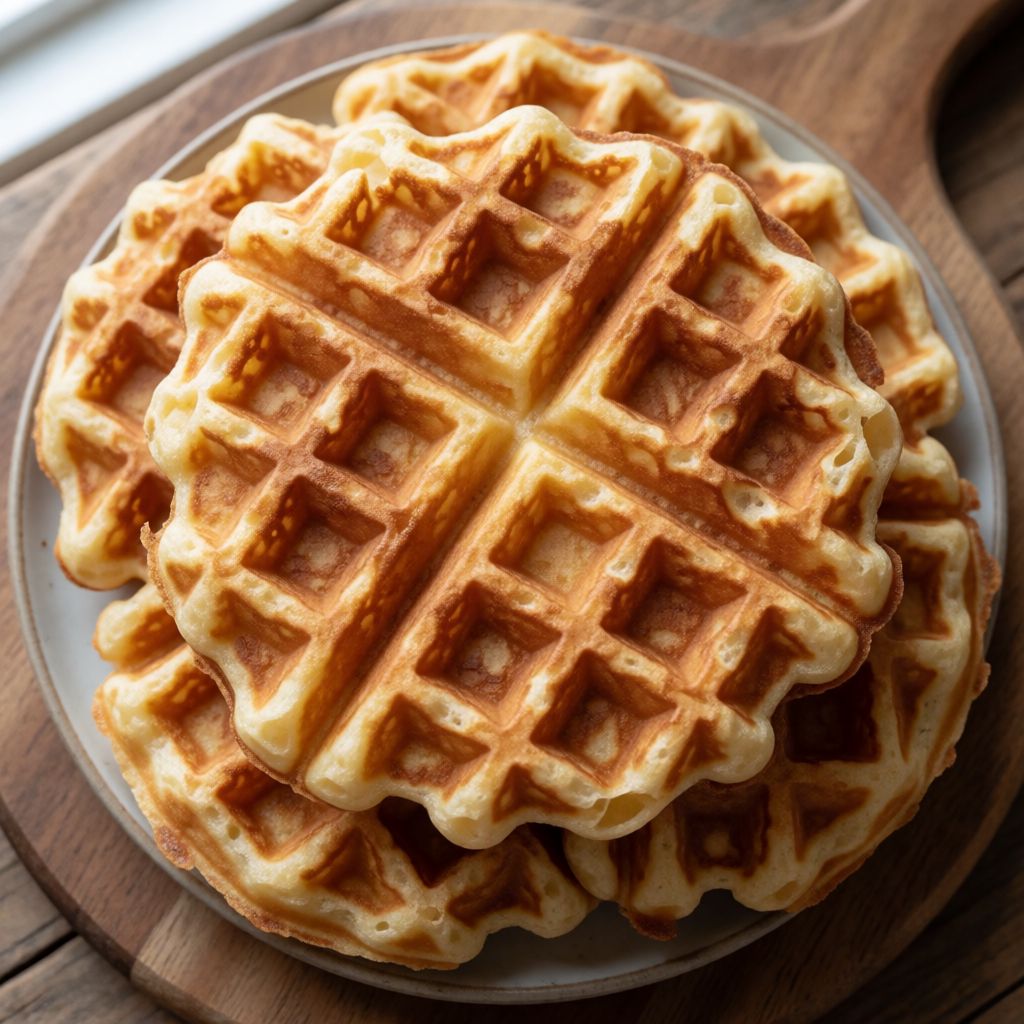
Light, crisp homemade waffles made with a simple butter batter, served warm with jam and a dusting of icing sugar.
Labels are worked out automatically from the ingredients and can be wrong. Check the packaging if it matters to you.
Ingredients
- 1 tbsp Sugar
- 1 pcs Egg
- 200 ml Milk
- 250 ml Water
- 225 g Flour
- 2 tsp Baking Powder
- 125 g Butter melted
- 1 pinch Salt
- 0.25 tsp Vanilla Powder or seeds from half a vanilla pod
- 30 g Butter
- 200 ml Jam
- 100 ml Icing Sugar











Steps
Beat all the ingredients together in a bowl using a mixer.
Heat the waffle iron well and melt a little butter on it. Pour in a few spoonfuls of batter once the waffle iron is hot and ready. Close the lid and bake the waffles until crispy and golden.
Place the cooked waffle on a wire rack. Don't stack the waffles on top of each other, as this traps steam and makes them go soft.
1 minServe the waffles freshly baked, while they're still warm and lovely and crisp.
A waffle is a thin batter forced to cook between two hot iron plates at once — top and bottom — so instead of one crust you get two, and a crumb in between that's effectively steamed by its own trapped moisture. That's the whole logic of the ridged shape: channels for steam to escape, not just grooves to hold jam later.
Whether it works has almost nothing to do with the list of ingredients and everything to do with heat and timing. The iron needs to be properly hot before the first spoonful goes in. Pour onto metal that's only warm and you get a pale, rubbery disc welded to the grid, because the batter steams instead of frying. Pour onto metal hot enough to hiss and the surface sets into a shell in seconds while the inside is still rising.
Some say a thicker batter gives a fluffier waffle. No — a thick batter doesn't flow out to meet every ridge under the weight of the closed lid, so it leaves air gaps that steam rather than crisp, and you get a soft lump with a few crisp edges. A thin, pourable batter spreads properly, touches hot metal everywhere, and crisps evenly.
And don't stack them to rest. A warm waffle breathing against another warm waffle traps the steam each one gives off, and that steam condenses straight back into the crust you just made. A minute or two on a rack, air moving round it, then onto a plate while it's still warm — that's the whole difference between crisp and sad.
Flour and baking powder are doing two separate jobs, so keep them separate — use plain flour, not self-raising, because you want to control exactly how much lift happens and when. Baking powder is a slow-release gas canister: it needs the heat of the iron to really go off, which is why a thin, crepe-like batter still puffs into something with proper structure once it's between the plates. Old baking powder is the quiet reason a batch comes out dense and flat — if you're not sure of a tin, drop a pinch into warm water, it should fizz straight away.
The egg sets the crumb; without it you'd have something closer to a crisp paste than a waffle with any bite. Milk and water together, not milk alone, is the trick for crispness — milk by itself slows evaporation, because its fat and sugar hold onto moisture a little longer than plain water does, and that extra moisture lingering is exactly what softens a crust. Water thins the mix and lets steam flash off fast, leaving a dry, snappy shell behind it.
Butter does two separate jobs here. Melted into the batter, it coats the flour and holds back gluten development, which is why a waffle should give a little crunch rather than a chew. Buttered onto the plates before the first ladle, it makes sure that first contact is a fry, not a steam — useful insurance if your iron's nonstick coating has seen better days. If you're out of butter, the criterion is any fat solid at room temperature with no flavour of its own to argue with the jam — a plain baking margarine will do the job, you just lose the faint dairy roundness in the crust.
The sugar in the batter is deliberately small — one tablespoon isn't there to make it taste sweet, it's there to help the surface colour without scorching before the inside's cooked through, since sugar caramelises faster than starch sets. Push it up and the outside will brown, even catch, while the middle's still raw. A pinch of salt keeps that modest sweetness from tasting flat, and vanilla's job here is scent rather than taste — pod seeds if you have one to hand, powder as the ordinary substitute. The real sweetness arrives on top afterwards: jam thick enough to sit on the surface rather than run (a loose, runny jam soaks straight into the crumb and leaves a soggy patch under a dry waffle), and icing sugar dusted on just before serving, because warmth melts sugar into a sticky film within a minute or two of it landing.
This is a British-flat kind of baking — no kazan, no embers, just a plug-in electric iron that tells you it's ready with a light or a change in the smell of the butter melting on it. The two-sided, hinged shape of a waffle iron is a household object from a time before ovens were common in every kitchen: a batter too thin to hold its shape in a tin needed plates to hold it instead, clamped shut over a fire. That's also why the batter has always been pourable rather than doughy — the device decided the texture, not a chef standing over it.
Patience here is short but it isn't optional: a minute or two on the rack, uncovered, before anyone eats one, and then straight to the table with a pot of tea while it's still warm. A waffle left under a tea towel to 'keep warm' is a waffle you've decided to soften on purpose — the towel does exactly what stacking does, only slower.