
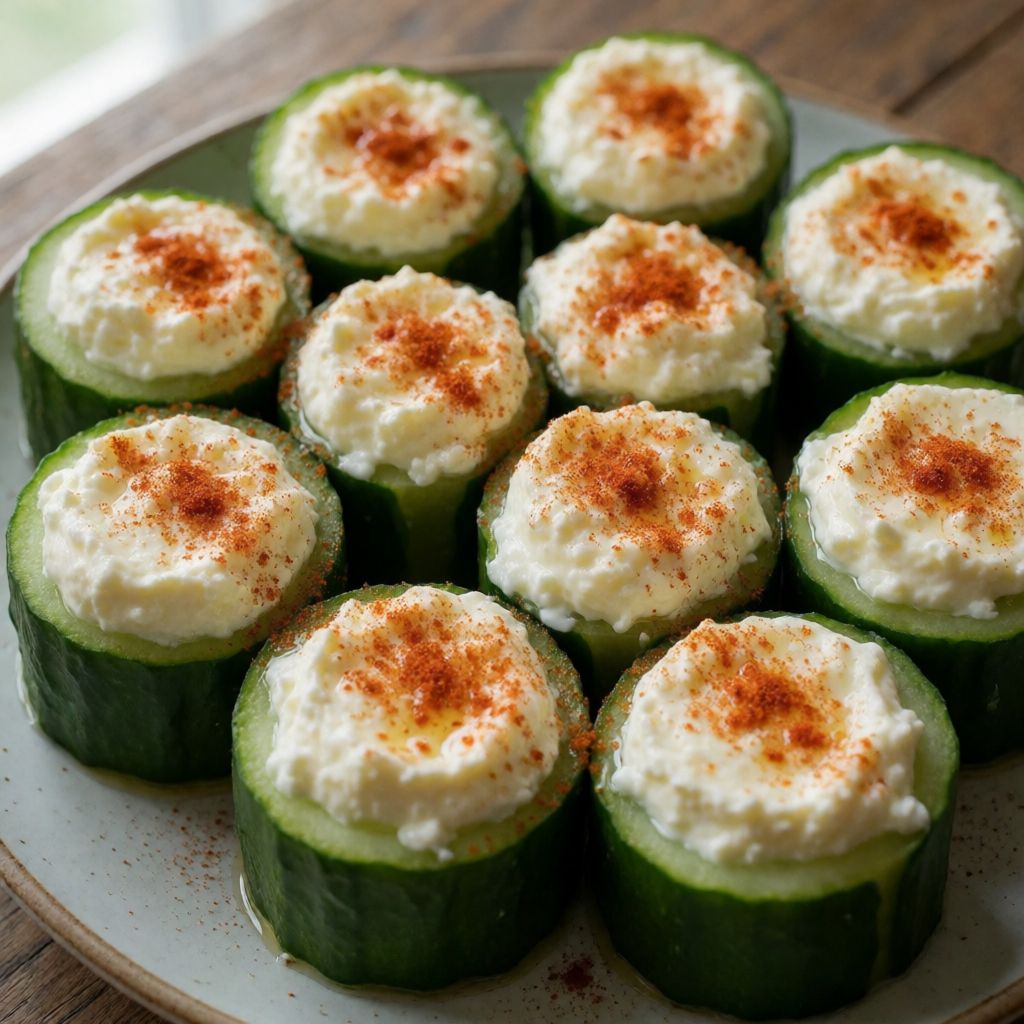
 AI photo
Cucumbers Stuffed with Cheese and Paprika
Cool cucumbers filled with a creamy goat cheese and robiola mixture, flavoured with chives and paprika.
Labels are worked out automatically from the ingredients and can be wrong. Check the packaging if it matters to you.
Ingredients
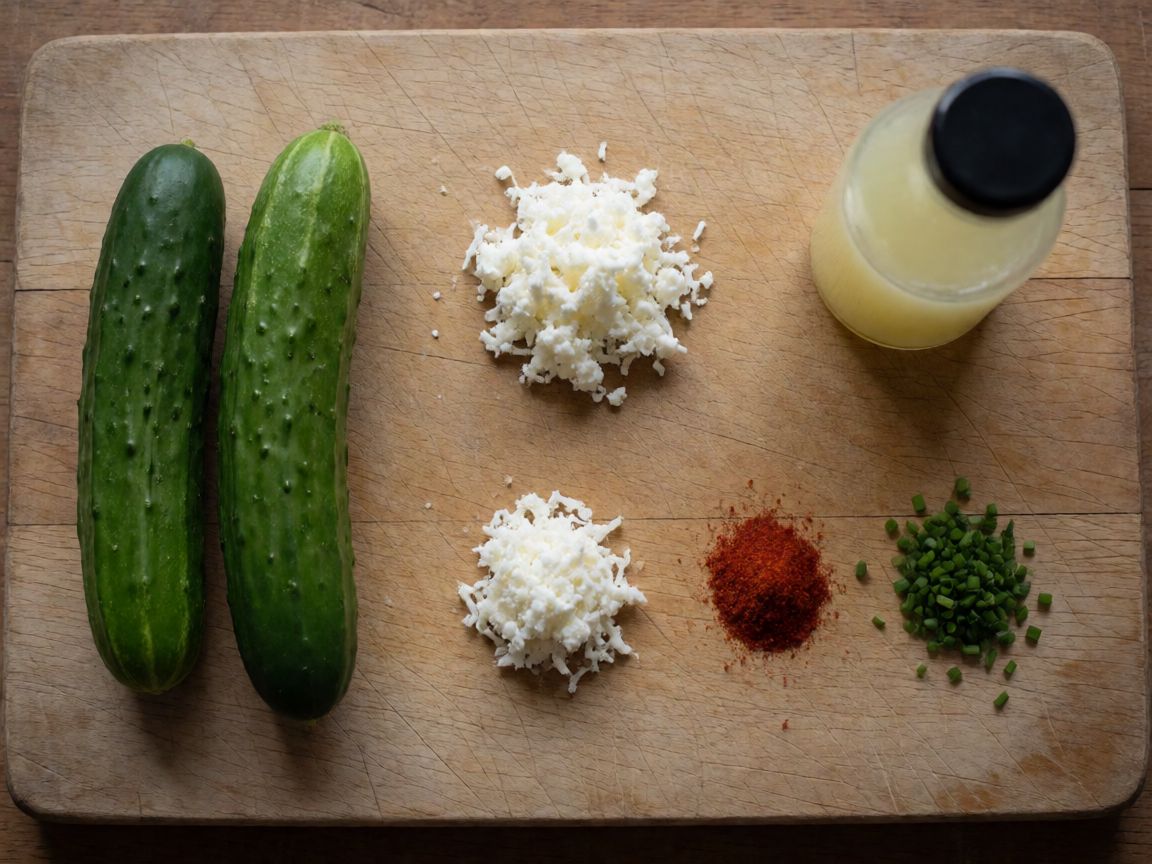







Steps
Wash the cucumbers, trim the ends and peel them. Cut them into pieces and hollow out the centres, removing the seeds.
Sprinkle with salt and leave on a paper towel to rest.
20 minRinse the cucumbers and leave to rest for another 20 minutes.
20 minMix the goat cheese and robiola with a pinch of salt, a pinch of paprika, lemon juice and olive oil.
Roughly chop the chives and add to the mixture, stirring thoroughly.
Brush the cucumbers with a little olive oil and fill them with the cheese cream.
Pipe the remaining cream on top using a piping bag, then sprinkle with paprika and chives.
Chill in the refrigerator before serving.
This isn't cooking, it's plumbing. You turn a cucumber into a cup and fill it with something soft and cold. Nothing goes near heat. So the whole recipe lives or dies on two things: getting the water out of the cucumber before it goes near the cream, and keeping the cream firm enough to hold its own weight once piped.
Cucumber is 95% water held in cells that rupture the moment you cut and salt them. Salt pulls that water out by osmosis — the same mechanism that makes coleslaw weep in a bowl. Skip this step and the cucumber keeps leaking quietly into the cheese for the next hour, turning a clean filling into a thin, salty puddle sliding off a soggy shell. That's the defect people blame on "watery cheese" when the cheese never had a chance — the water came from the vegetable, not the dairy.
The rinse after salting matters just as much as the salting itself. Salt doesn't just pull water, it stays behind on the surface, and a cucumber cup rinsed only once is still carrying enough of it to fight the salt you've already put in the cheese. The second rest, after rinsing, lets the surface dry and firm up again — rinse water left sitting undoes the whole point of the first twenty minutes.
Pick cucumbers that are straight, not for looks but for geometry — a curved one hollows out unevenly, thin on one side and thick on the other, and you either tear through the thin wall or leave a lump of raw flesh in the thick one. Peeling isn't about bitterness so much as giving the salt a clean surface to work on; skin is a water barrier, and if you leave it on, the salting step above does almost nothing.
The cheese is doing two separate jobs, which is why there are two cheeses. Aged goat cheese brings the tang and the backbone — a cheese with structure, something that still tastes of something when it's cold and not cooked into anything else. Robiola is there for the opposite reason: it's soft, high in fat, almost cream in solid form, and it's what makes the mixture pipeable rather than crumbly. If you don't have robiola, any very fresh, spreadable cheese with a mild flavour of its own does the same job — mascarpone, a soft cream cheese, even ricotta beaten smooth. If you don't have aged goat cheese, look for the criterion, not the name: something tangy and firm enough to hold its shape on a cheeseboard. A mature Cheddar grated fine, or a hard sheep's cheese, will stand in.
Paprika here isn't decoration, whatever the dusting on top looks like. It's doing the job pepper would do in a cooked dish — adding a background warmth — except paprika gives it without the raw bite, because the capsicum has already been dried and ground, not thrown in fresh. Use sweet paprika if you want colour and a gentle round flavour; smoked paprika if you want it to taste like it came near a fire, which it didn't, because nothing in this dish does.
Olive oil and lemon juice are the two things holding the cheese cream together in flavour, not texture — oil for richness without its own smell getting in the way (any neutral oil you'd use in mayonnaise works, but olive oil's slight bitterness actually suits goat cheese well), lemon for cutting through the fat of the robiola so the whole filling doesn't sit heavy. Chives are there raw, chopped rough rather than fine, so you get little bursts of oniony sharpness rather than a uniform green mush through the cream.
You don't need a piping bag — a sandwich bag with one corner snipped off does exactly the same thing, and most British kitchens have a box of them already. The chilling at the end isn't an afterthought either: it's the moment the oil and cheese actually set together into something you can bite through cleanly, rather than something that smears. Treat it as the last ten minutes of cooking this dish doesn't otherwise have, and don't rush past it to the table.