
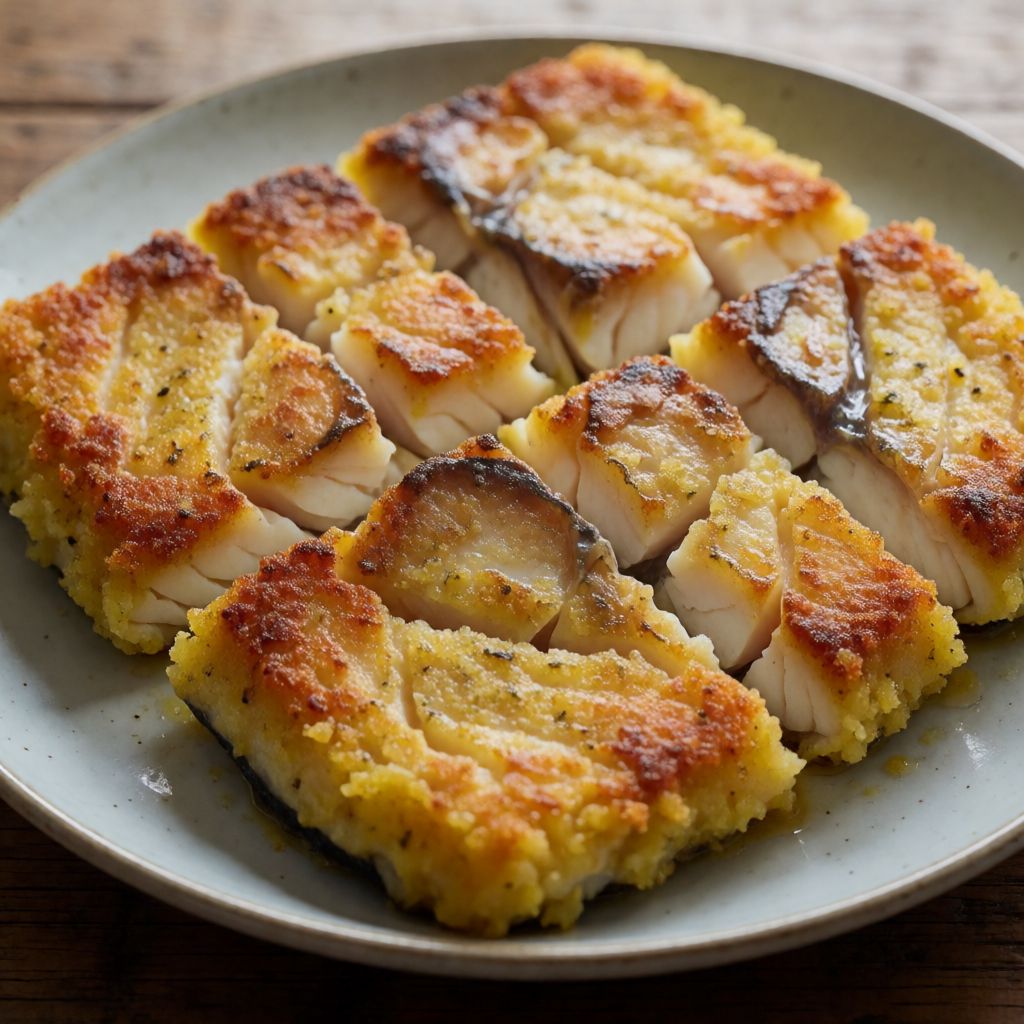
 AI photo
Curried Pollock
Pollock pan-fried and simmered in a light curry sauce for a quick, simple fish supper.
Labels are worked out automatically from the ingredients and can be wrong. Check the packaging if it matters to you.
Ingredients
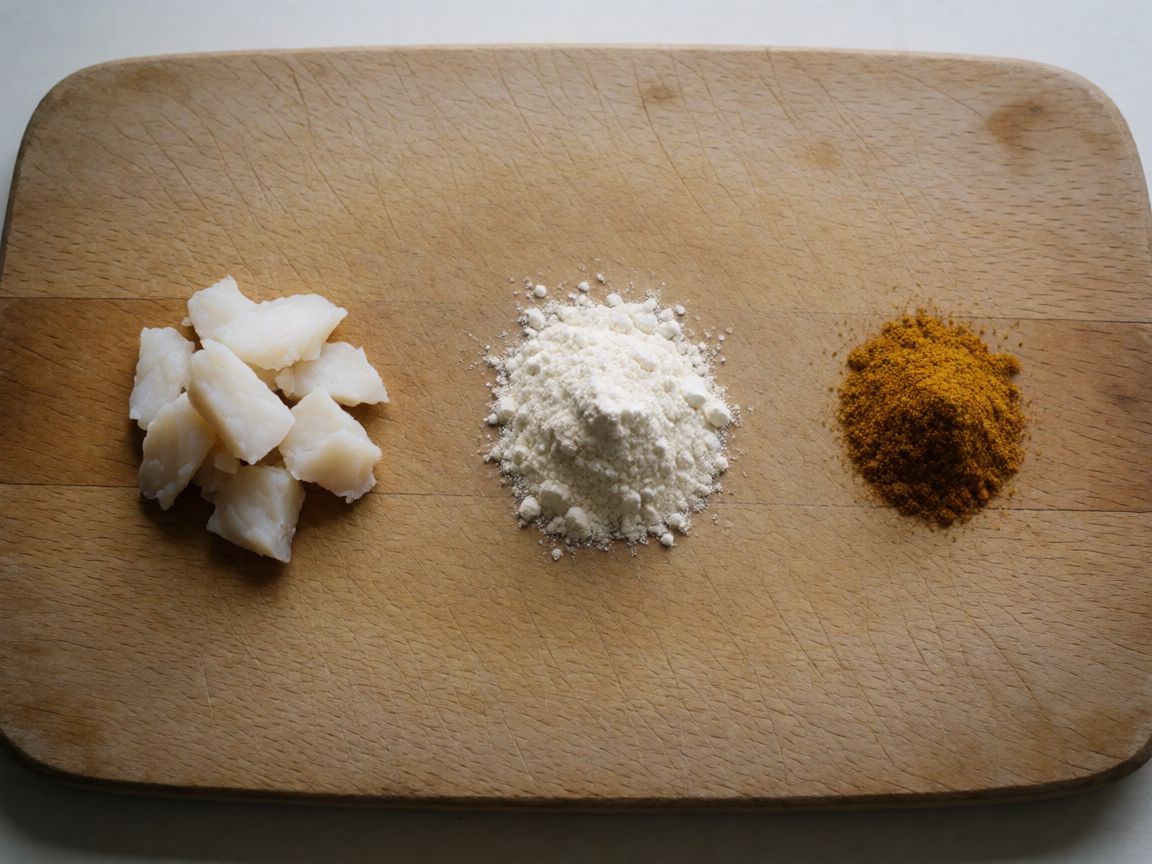
- 200 g Pollock
- 2 tbsp Plain flour
- 1 tsp Curry powder
- Salt to taste
- 1 tbsp Vegetable oil
- 8 tbsp Water






Steps
Coat the pollock in the flour.
Pour a tablespoon of oil into a frying pan and lay the fish in.
Dissolve the curry powder in 8 tablespoons of water and pour half of it over the fish.
Turn the pollock over and pour the remaining curry and water mixture over it.
Cook until the fish is done.
20 minSeason with salt and serve.
This is not a curry in the Indian sense — it's a British fish supper wearing curry powder like a borrowed coat. Pollock gets dusted in flour, laid in a hot pan, then flooded twice with curry powder dissolved in water. What you end up with is the fish gently poaching in a thin, spiced gravy that the flour on its own skin has thickened. Nobody is layering onion, garlic, ginger and ten spices here — one tin of curry powder does the whole job, because that's what curry powder was invented for: a single, pre-mixed shot of "exotic" flavour for a kitchen that has neither the time nor the stock of a dozen jars. It's a weeknight trick, not a pretence at Indian cooking, and it works precisely because it doesn't try to be more than that.
Pollock is the quiet alternative to cod and haddock — same family of lean, flaky white fish, usually a fair bit cheaper, and these days more often the sustainable choice on a British fishmonger's slab or in the supermarket chiller. If you can't find it, coley, hake or whiting behave the same way under flour and liquid: look for any firm, white, low-fat fillet, because that's the category this method is built for. A fattier fish — salmon, mackerel — will survive the same treatment but doesn't need it the same way; their own fat already does some of the basting work the sauce is doing for pollock.
The flour is plain flour because you want starch with no flavour of its own and no leavening to fight — this isn't batter, it's a thin coat meant to disappear into the sauce. If you're avoiding wheat, cornflour or rice flour will thicken the curry-water just as well, though you'll want slightly less of it, since they thicken harder than plain flour does gram for gram.
Curry powder is the whole point and the whole shortcut. It was never a single spice in India — it's a British commercial invention from the days of the East India trade, a fixed blend sold so that a cook at home, thousands of miles from where turmeric and coriander and cumin and chilli actually grow, could get something like their flavour without sourcing or grinding any of it. That's exactly the role it plays here: one spoon, one jar, standing in for a whole spice rack. Choose it the way you'd choose any blend you're going to taste raw-ish and barely cooked — mild if you want the fish's flavour to still come through, hotter if you want the sauce to carry the dish. There's no wrong jar, only a jar that suits your taste for heat.
The oil is just there to stop the fish sticking and to carry a little fat into a dish that otherwise has almost none — any oil with no smell of its own will do, sunflower, groundnut, a flavourless vegetable blend; save your good olive oil for something where you'll actually taste it, because here it would just compete with the curry.
The eight tablespoons of water isn't an arbitrary number — it's roughly enough to come partway up two small fillets in an ordinary frying pan, enough to simmer and thicken into a sauce that coats rather than drowns. If your pan is wider, or your fillets bigger, you may need to judge it by eye rather than by the spoon: enough liquid that the fish is sitting in a shallow bath of it, not swimming.
Salt goes in at the end, not before. Salt draws moisture out of fish on contact — season it early and sitting in salted flour, and you're drawing water out of the pollock before it's even near the heat, which is how you end up with a drier, tighter piece of fish than you intended. Add it at the table instead, to the finished dish, and you season what you're actually eating rather than drying out what you're about to cook.