
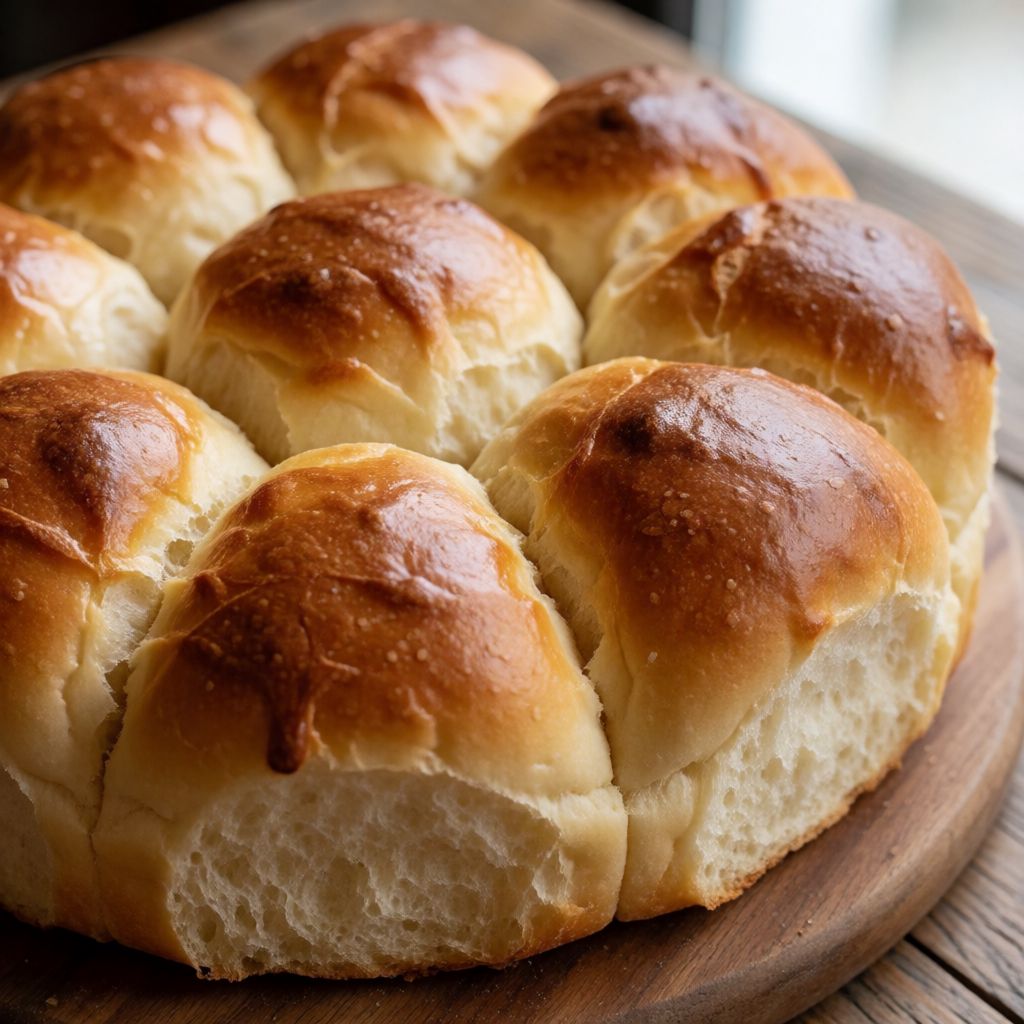
 AI photo
Danubio Pizza
A soft pull-apart pizza bun stuffed with tomato, mozzarella and anchovies, baked in a round tin until golden.
Labels are worked out automatically from the ingredients and can be wrong. Check the packaging if it matters to you.
Ingredients
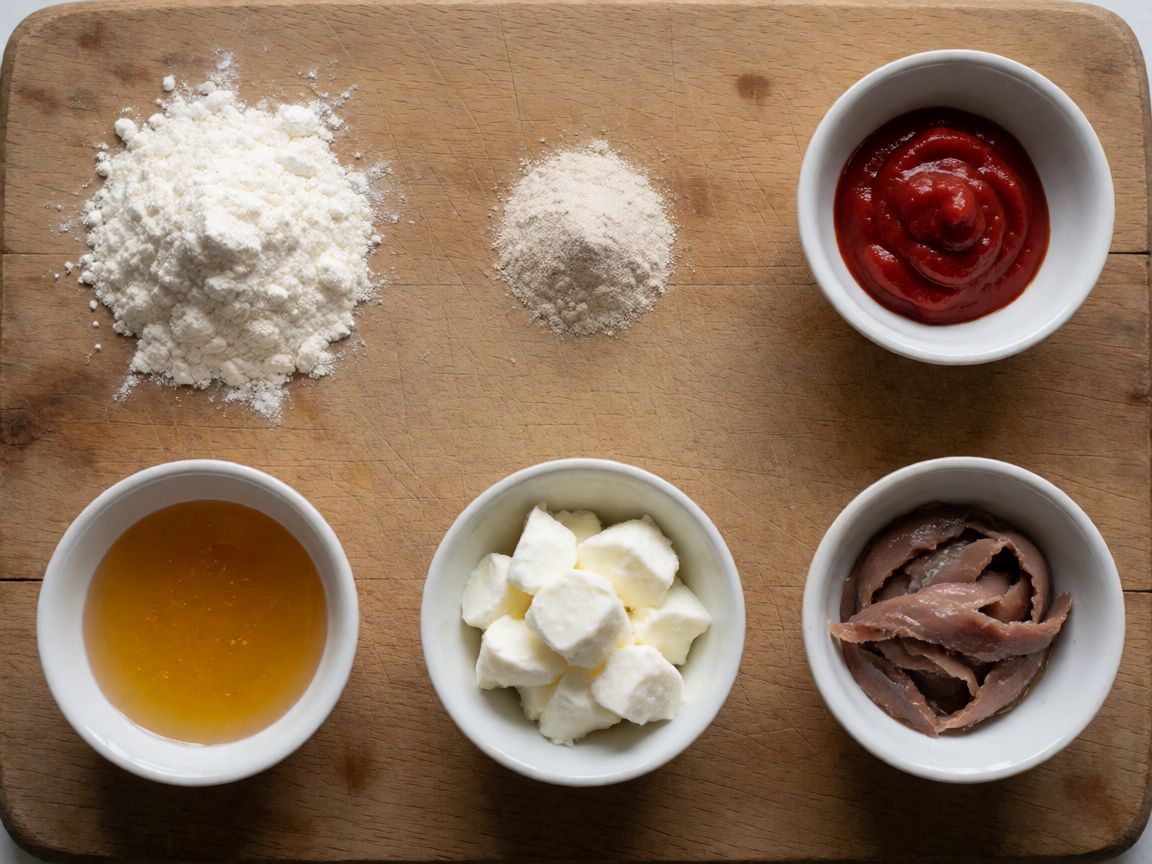
- 300 g Strong white bread flour or Manitoba flour
- 7 g Fresh yeast
- 1 tsp Honey
- 170 ml Water
- 8 g Salt
- 20 ml Olive oil
- Tomato passata to taste
- Mozzarella to taste
- Anchovies to taste








Steps
Heap the strong white bread flour onto the worktop, make a well in the centre and add the yeast, honey, water and olive oil.
Mix the ingredients in the centre with your hands, gradually drawing in the flour from the edges, add the salt and knead the dough energetically.
Transfer the dough to a bowl, cover with cling film and leave to rise until doubled in volume.
Divide the dough into smaller pieces of about 70 g each.
With your fingers, stretch and flatten each piece of dough, then add tomato passata, mozzarella and anchovies.
Bring the edges of the dough up over the filling and pinch firmly to seal, then shape into a ball.
Grease a 24 cm round tin with oil and arrange the balls inside.
Cover the tin with cling film and leave the dough to rise for a further 30-40 minutes.
35 minBrush the surface with tomato passata, add a little oil and bake in a fan oven preheated to 190°C.
15 minRemove from the oven and serve the Danubio Pizza while still warm.
Danubio is what happens when pizza dough forgets it's flat. Instead of one disc you make small stuffed buns — tomato, mozzarella, anchovy sealed inside a ball of dough — and pack them shoulder to shoulder in a round tin so they rise into each other and bake into one soft, pull-apart loaf with hidden pockets of filling. It's Neapolitan in spirit, named after the Danube only because the shape of the risen buns, huddled in rows, reminded someone of the river's bends — nothing more romantic than that.
What decides whether it works is the dough's hydration and the strength of your seal. This dough is wetter than a standard pizza dough (170 ml water to 300 g flour, roughly 57%), which is why you start it by hand on the worktop rather than slapping it straight in a bowl — the well-in-the-flour method lets you control how fast the liquid meets the flour, so you're not fighting a puddle. If you seal the filling-stuffed balls badly, the tomato juice will find the seam in the oven and leak, turning your tin into a shallow red moat instead of risen buns — so pinch the edges together like you're closing a purse, not just folding them over.
Strong white bread flour, or Manitoba, matters here because of the protein, not the brand name. You want a flour that can hold a wet, enriched dough together without tearing when you stretch it round a blob of mozzarella and tomato — plain flour's weaker gluten network will leave you with split buns leaking sauce. If you can't find Manitoba, any "strong" or "bread" flour on a UK supermarket shelf, the kind sold for sourdough or baguettes, does the same job.
Fresh yeast at 7g gives a quicker, more forgiving rise than dried, but it's perishable — if yours has gone grey and hard at the edges, it's dead weight, not yeast. Dried active yeast works as a substitute at roughly a third of the weight (so about 2–2.5g), dissolved into the water first rather than crumbled straight in. The honey isn't there for sweetness you'll taste — it's food for the yeast to get going faster, a small kickstart. Sugar does the identical job if that's what's in the cupboard.
Salt goes in after the initial mixing, not with the yeast, for a real reason: salt tightens gluten and slows yeast activity, so if it hits the yeast directly before the dough has started forming, you get a sluggish, patchy rise. This is why step two tells you to knead energetically only once the salt's in — before that you're just bringing things together, not building strength.
Olive oil in the dough (and more for greasing and brushing) should be a plain, not-too-peppery one — this bake doesn't need a fruity extra virgin shouting over tomato and anchovy. Any neutral oil without a loud flavour of its own will do for greasing the tin; keep the better oil for the brushing on top, where you'll actually taste it.
Tomato passata rather than chopped tinned tomatoes or fresh is a texture choice: it's smooth enough to sit inside the sealed dough without a lump of tomato skin blowing a hole in your seam during baking. Mozzarella should be drained well — the ball-type in its liquid is the tradition, but squeeze it or pat it dry, because trapped whey inside a sealed dough ball becomes steam in the oven, and steam looks for an exit. Anchovies are salty and pungent on purpose, standing in for a stronger savoury hit than the mild filling gives on its own; if they're not your thing, a few capers or olives do similar work, cutting through the mozzarella's blandness, though you lose that specific brininess.
On an ordinary UK hob and oven: a fan oven at 190°C is a real, achievable setting, not a kazan fantasy, so trust the number as given. What you can't fully trust is exact minute counts, because every oven runs slightly hot or cool at the edges — look for the tops of the buns turning an even gold-brown and the dough sounding hollow-ish when you tap the tin's edge, rather than clock-watching at the 15-minute mark. The second rise (30–40 minutes) is the one step people most often shortchuck when they're in a hurry — don't; a half-risen bun in a hot oven sets its crust before the inside's had its final lift, and you end up with a dense ring under a puffed top.