
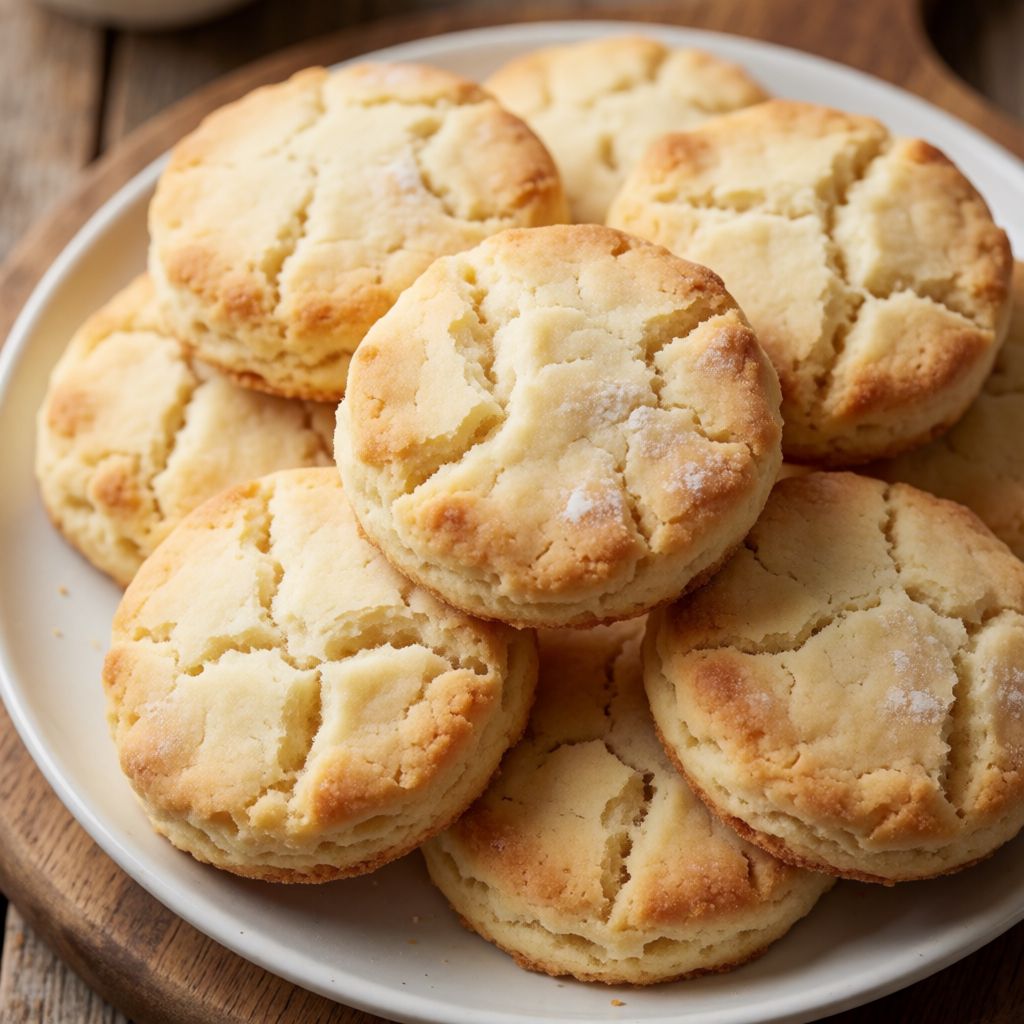
 AI photo
Desert Rose Biscuits
A simple, buttery biscuit rolled in cornflakes to look like a desert rose.
Labels are worked out automatically from the ingredients and can be wrong. Check the packaging if it matters to you.
Ingredients
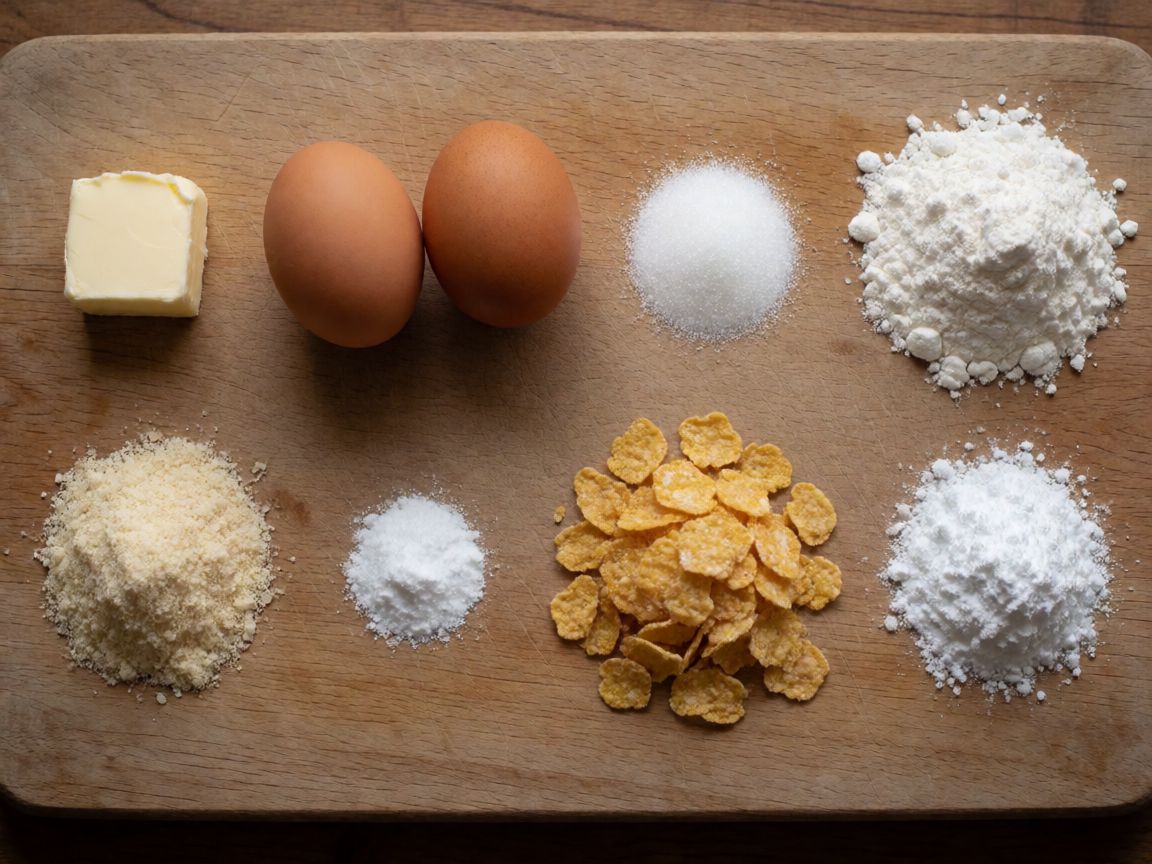
- 180 g Butter at room temperature
- 2 pcs Eggs
- 160 g Sugar
- 130 g Plain flour
- 130 g Almond flour
- 16 g Baking powder
- 120 g Cornflakes
- Icing sugar to taste
- Cornflakes whole, for coating, to taste








Steps
Cut the room-temperature butter into small cubes, place in a bowl, add the sugar and beat with a mixer until smooth and creamy.
Add the eggs and keep beating until smooth.
Sift in the flour gradually, folding it in with a spatula.
Add the baking powder and almond flour, and mix well into a smooth dough.
Crush the cornflakes by hand into smaller pieces and fold them into the dough until evenly distributed.
Pinch off about a teaspoon of dough at a time and shape into balls with your hands.
Roll each ball in whole cornflakes, pressing gently so the flakes stick well.
Place the balls on a baking tray lined with parchment paper.
Bake at 150°C for about 8–10 minutes.
9 minLet the biscuits cool, then dust with icing sugar before serving.
A desert rose biscuit is really just a butter cookie wearing armour. The dough itself — butter, sugar, egg, two flours, baking powder — is standard creamed-cookie stuff. What makes it this and not a plain biscuit is the crust of whole cornflakes pressed round each ball, which toasts in the oven and gives you something closer to shattered meringue than crumb. That crust is the whole point: it's what's crunching when you bite, not the inside.
What decides whether it works is restraint in two places. First, the butter has to be properly room temperature — soft enough to dent with a finger, not greasy and pooling. Cold butter won't trap air when beaten, so you lose the lift that makes these biscuits spread into a flat domed disc rather than sit as a dense lump. Second, the oven time: at 150°C you're not baking the dough hard, you're setting it while the flakes on the outside toast to a deep gold. Pull it too late and the cornflakes go from toasted to burnt-bitter in under a minute — there's no grace period, because the flakes are thin and exposed to direct heat.
Some say cornflakes are a modern shortcut, a cheat ingredient that has no business in "proper" baking. No — they're doing a job that's hard to fake: a dry, irregular, already-crisp shell that holds its crunch for days because it was crisp before it ever went in the oven, rather than relying on sugar caramelising to get crisp (which goes soft again the moment it meets air).
Butter and sugar beaten together is not just "mixing" — it's trapping air in fat, and that air is what gives these biscuits any lift at all, since there's no liquid-raising mechanism beyond the baking powder. Beat until the mixture pales and turns fluffy, not just smooth; if you stop at "smooth," you've made a paste, not a batter, and the biscuit bakes denser and flatter. Any unsalted butter at true room temperature works; margarine will get you there too but tastes like nothing, which in a biscuit this plain matters.
The eggs bind and loosen the dough at once — without them you'd have a shortbread-style crumble, not something you can roll into a ball. Standard medium eggs, straight from the fridge is fine here since they go in after the butter's already soft, but don't use them ice-cold if you want the mixture to stay smooth rather than curdle slightly (which it can survive, but no need to invite it).
Plain flour gives structure; almond flour softens that structure and adds fat and flavour the plain flour alone can't. Because almond flour has no gluten, it's also part of why this dough stays tender rather than chewy — the gluten you do get comes entirely from the plain flour, so sift it in gradually and fold, don't beat, once it's added. Beating flour in develops gluten you don't want here; folding keeps the crumb short. If you're out of almond flour, ground hazelnuts will do almost the same job; plain flour alone will not — you'll lose both the nuttiness and some of the tenderness, and need to compensate with a touch more butter.
Baking powder at 16 g for this quantity of flour is a proper dose — it's doing the lifting that the egg alone can't manage in a dough this heavy with butter and nuts. Don't substitute bicarbonate of soda without an acid to trigger it; it simply won't react the same way and you'll get flat, dense discs.
Cornflakes do double duty: crushed into the dough they give a hidden crunch and break up what would otherwise be a fairly soft interior; whole, pressed onto the outside, they're the "rose" — the ragged, petal-like crust that gives the biscuit its name and its crunch. Crush them by hand, not in a processor — you want irregular shards, not flour, because a processor turns them into dust that behaves more like breadcrumbs and loses the crunch entirely.
Icing sugar at the end is pure decoration and a little bit of sweetness on the tongue before the biscuit itself — dust it only once the biscuits are properly cool, or it melts into the butter fat still warm on the surface and disappears instead of sitting as a visible dusting.
For a British kitchen, nothing here asks more of your oven than a Sunday roast does — 150°C is a gentle setting, well within what any home oven holds steady. The only real adjustment is fan versus conventional: if yours is fan-assisted, treat 150°C as the top of the range and start checking at the lower end of the time given, since fan ovens push hot air directly onto those exposed cornflakes and will colour them faster than still heat would. A tray of these, 8 biscuits' worth as given, suits tea with milk rather better than it suits dessert after a roast — they're small, snackable, and don't need a fork.