
 AI photo
Stuffed Fried Eggs
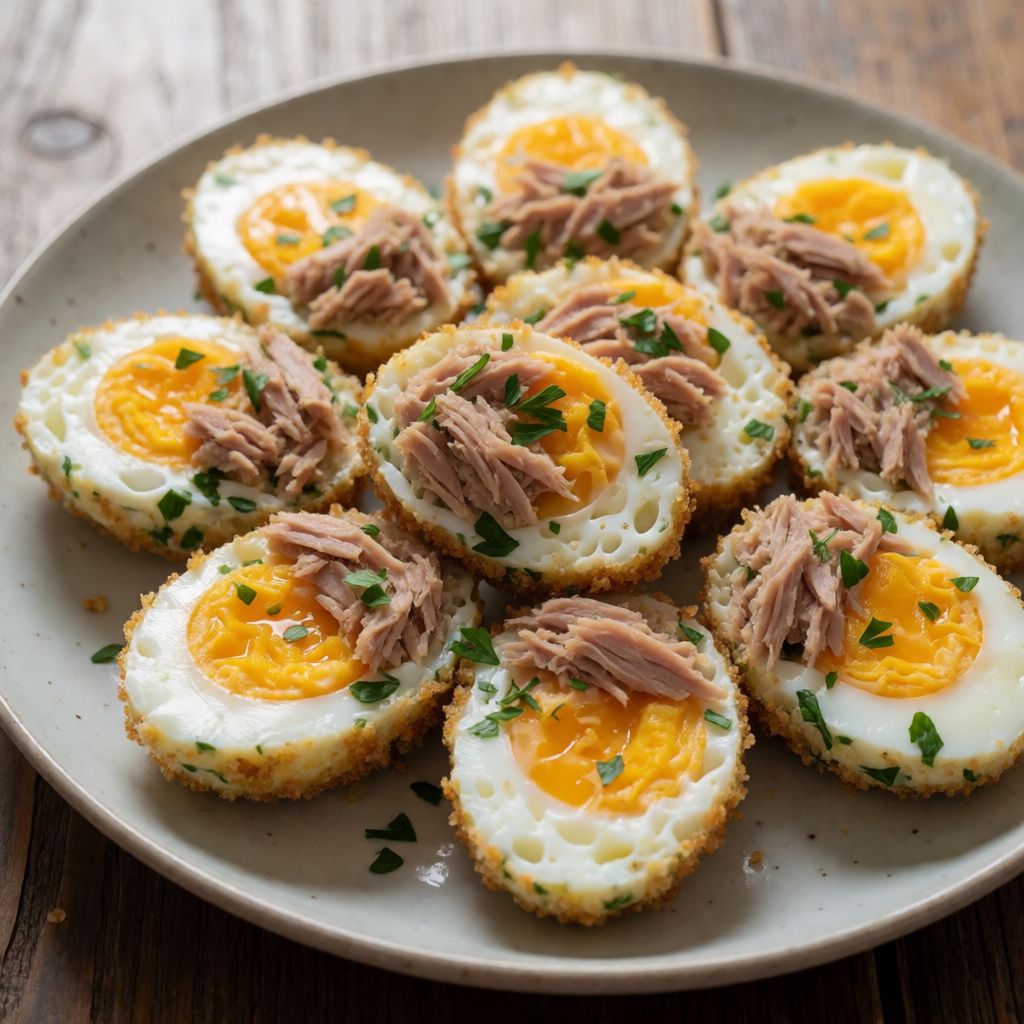
Hard-boiled eggs stuffed with a tuna and parsley filling, coated in breadcrumbs and pan-fried until golden.
Labels are worked out automatically from the ingredients and can be wrong. Check the packaging if it matters to you.
Ingredients
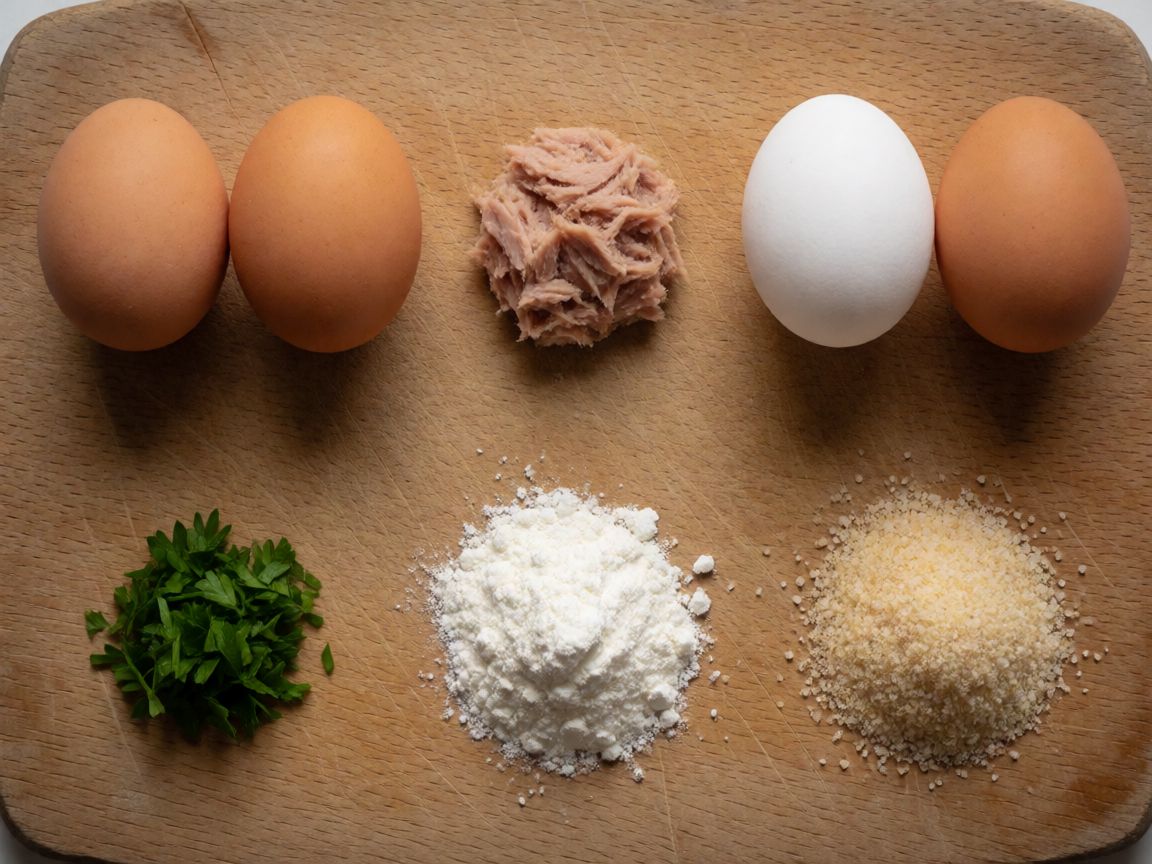
- 5 pcs Eggs
- 30 g Tuna
- Parsley to taste
- Flour for dredging
- Breadcrumbs for dredging
- Vegetable oil for frying
- Salt to taste




Steps
Place 4 eggs in a pan, cover with water and boil for 8 minutes from the moment it starts boiling.
8 minCool the eggs, peel off the shells and cut in half lengthways.
Scoop out the yolks and mash them.
This is a twice-cooked egg. You boil it once to set it fully, cut it open, rebuild the inside with a savoury paste, then fry the whole thing again in a crumb jacket. The double cooking is the whole trick: you are not frying a raw egg, you're crisping the outside of one that's already finished, so the filling stays soft and the shell of crumb turns brittle around it.
What decides whether it works is that first boil. Eight minutes from a full boil gives you a yolk that's completely set but hasn't dried to chalk, and hasn't sat long enough in its own heat to throw that grey-green ring round the edge — that ring is iron and sulphur meeting because the egg cooled too slowly, not because you 'overdid' anything dramatic. The moment the timer goes, the eggs go into cold water. Skip that and you're peeling a hot egg that tears instead of lifting clean, and a torn white won't hold a filling.
Some say fresh eggs make the best boiled eggs. Not for this job. A fresh egg's white hasn't had time to shrink off the shell membrane, so it clings and shreds when you peel it — exactly the damage you can't afford here, because you need eight intact half-shells of white to stuff. A week-old egg from the shop peels in one clean piece, which is why older eggs are actually the better choice for boiling, whatever the tin says.
Eggs: you need five, but they don't do the same job. Four are boiled and become the shells and the filling base; the fifth stays raw and is purely glue, holding flour to crumb. If your eggs are large rather than medium, don't just trust the clock — a bigger yolk takes a little longer to set through, so when you halve the first one, the yolk centre should look matte and uniform, not glossy in the middle. That glossiness is unset yolk, and unset yolk will run the moment it meets hot oil.
Tuna: drain it hard, press the liquid out, because a wet filling is the real cause of a crumb coat blowing off in the pan — not clumsy frying, but steam and oil escaping from inside the egg and pushing the shell of breadcrumbs away from underneath. The mashed yolk acts as the binder that holds the flaked fish together; without enough yolk fat the filling just crumbles when you try to pack it back into the white. No tuna to hand — any dry, finely flaked cooked fish or shredded ham works on the same principle: dry protein, mashed into the yolk, not swimming in its own juice.
Parsley: fresh, chopped fine, there to cut through all that fried yolk-and-fat richness with something green and sharp — not for bulk. If you've only got dried parsley, use less of it, and chives are a fair stand-in for the same job: a clean, grassy edge against the crumb.
Flour and breadcrumbs are not two flavours, they're one mechanism in two stages: a dry layer the raw egg can cling to, then a second dry layer the oil can crisp fast. Any plain flour does the first job, including a gluten-free blend if that's what your kitchen has — it's there for grip, not taste. The breadcrumbs matter more: they need to be properly dry. Fresh soft breadcrumbs hold moisture and go gummy in the pan instead of crackling; dried white breadcrumbs or panko crisp within moments and seal the surface before the heat has time to reach too deep into the filling.
Oil: you don't need a deep-fat fryer for this, a wide pan with oil coming roughly halfway up the stuffed half is enough — that's shallow-frying, and it does the same job as deep frying here because the crumb crust only needs contact with hot fat, not full submersion. The oil itself should have no smell of its own; sunflower, groundnut, any light vegetable oil, because its only function is carrying heat to the crumb, not adding flavour. Olive oil fights the dish on both counts — it brings its own taste, and it starts smoking sooner in a hot shallow pan than you'd like. Fry a few halves at a time, not the whole batch at once: crowd the pan and the oil temperature drops, and a cooler oil means a crumb that soaks up fat slowly instead of crisping — soggy, not golden.
Salt: put it in the yolk-and-tuna mash, not anywhere else. Once the egg is breaded and sealed, there's no later point where seasoning can reach the inside, so taste the filling before you close it up, not after it's fried. As a plate, these halves are a generous single serving on their own, or a starter for two if you're putting them out alongside something else — drain them on a few sheets of kitchen roll rather than hunting for a wire rack you probably don't own, and give them a minute there before anyone bites in; the crumb needs a little time off the heat to actually firm up, not just cool down.