
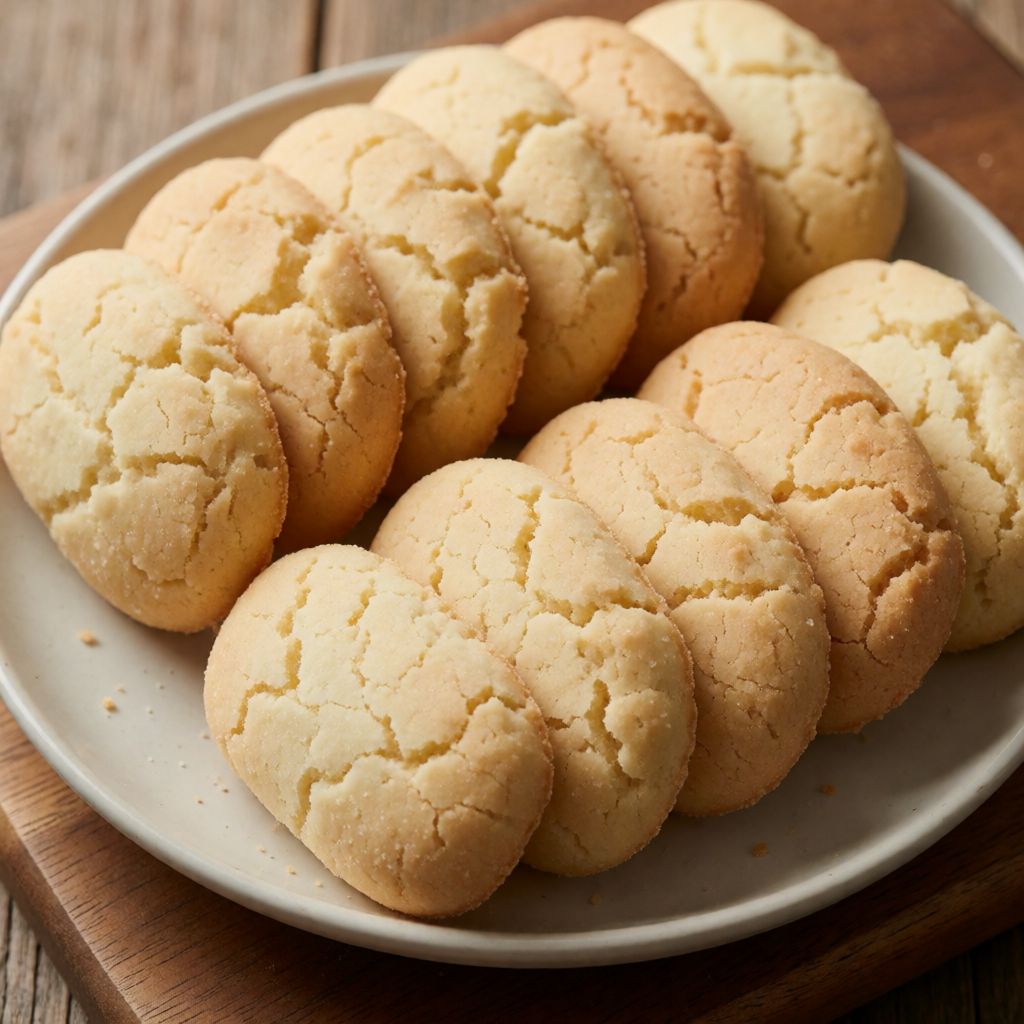
 AI photo
Biscuits for Dipping in Milk
Simple homemade biscuits perfect for dipping in a cup of milk.
Labels are worked out automatically from the ingredients and can be wrong. Check the packaging if it matters to you.
Ingredients
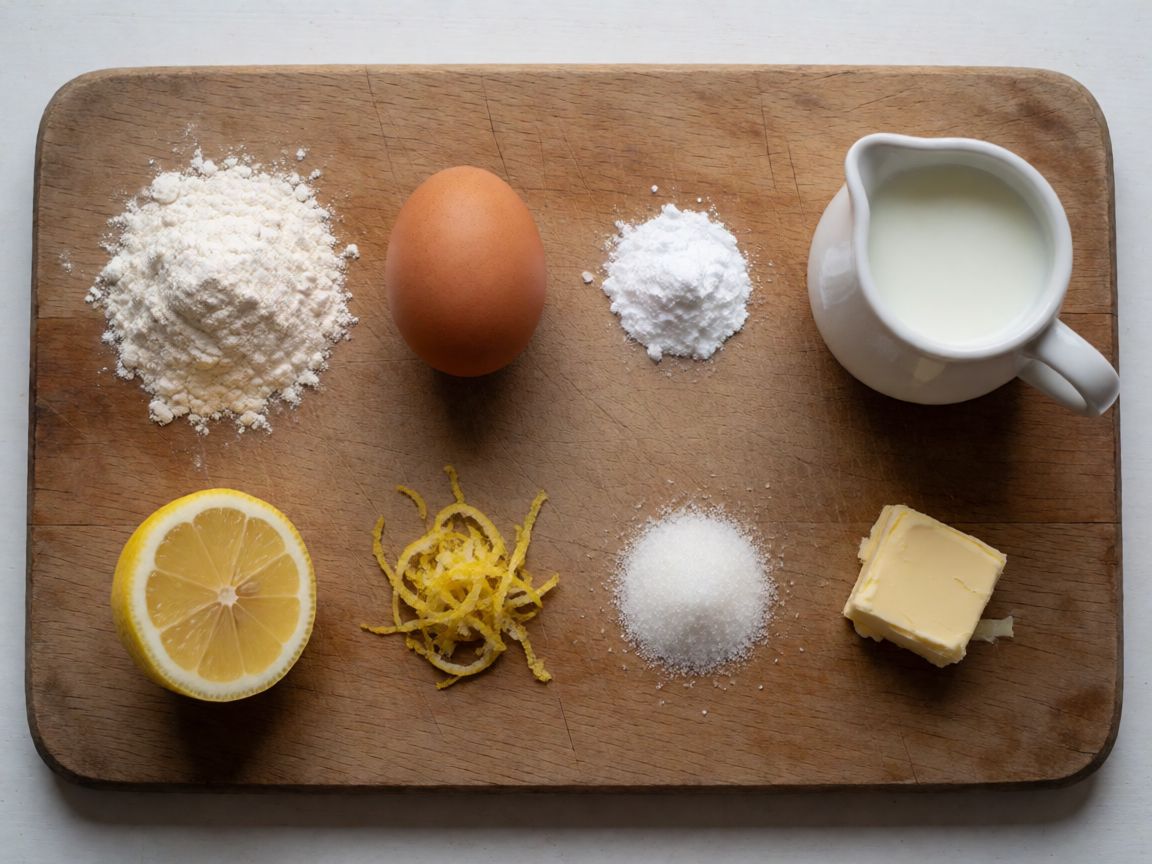
- 250 g Plain Flour
- 1 pcs Egg
- 8 g Baking Powder
- 90 g Sugar
- Lemon Zest from half a lemon
- 25 ml Milk
- 40 g Butter softened







Steps
Tip the flour into a large bowl, make a well in the centre with your fingers and crack the egg into it.
Add the baking powder, lemon zest and sugar.
Pour in the milk, then add the softened butter.
Knead the dough until it becomes smooth and pliable.
Shape into small rounded rectangles about 7–8 cm long.
Arrange the biscuits on a baking tray lined with parchment paper and bake in a fan (convection) oven preheated to 180°C for 18 minutes.
18 minIf using a conventional oven without a fan at 180°C, bake for 25–28 minutes.
27 min
This is not a cake wearing a biscuit's name. It's built to survive a swim. You dip it in tea or warm milk, hold your breath for two seconds, and it has to still be a biscuit when it comes out — not a sludge at the bottom of the mug. That single job decides every ratio in this dough.
Look at the liquid: one egg, 25 ml of milk, against 250 g of flour. That's a dry dough, almost stubborn, and that's the whole point. A wetter dough gives you a soft, cakey crumb — lovely to eat on its own, useless in a cup, because it dissolves before you've got it to your mouth. Some say a good biscuit should be tender and crumbly. No — not this one, because tender means it falls apart in liquid, and falling apart in liquid is the one thing this biscuit is not allowed to do.
The butter tells the same story from the other side. It's softened, not melted, and there isn't much of it — 40 g against 250 g of flour. Soft butter creams into the flour in small pockets rather than coating it in a slick, so the dough holds its shape and bakes into something firm enough to hold a shape in a mug of milk too. Melt the butter and you've built a shortbread — delicious, but it'll surrender the second it touches liquid.
Flour is the skeleton here, so use plain flour, not a strong bread flour — too much gluten and the dough turns elastic and chewy instead of short and crisp, and a chewy biscuit is a bad diver, it absorbs milk unevenly and goes soggy on one side before the other.
The egg does double duty: it binds the dry flour into a dough and brings almost all the structure-building moisture, since the milk alone (25 ml) wouldn't be enough to pull 250 g of flour together. If you're short an egg, you're not really making this biscuit anymore — there's no clean swap for what an egg does to a dough this dry.
Baking powder — 8 g, not a huge amount — is there to give the crumb enough air that it isn't a rock, without giving it so much lift that it turns spongy and absorbent. Too much baking powder and you've accidentally built a sponge, and a sponge in milk is a sponge in milk, full stop. If your tin is old, test it in a cup of warm water first — proper bubbling means it still works, nothing means it's dead weight.
Sugar (90 g) sweetens, obviously, but it's also pulling moisture toward itself as it bakes, which is part of why these come out with that slightly dry, almost sandy bite rather than a wet crumb. Lemon zest is there purely for smell — these biscuits are plain enough that without it they'd taste a little flat, like tea without the leaf. Any citrus zest does the same job; orange zest works, a few drops of vanilla works if you've no citrus in the house at all. None of it changes the structure, so pick by nose, not by rule.
Butter: anything solid and creamable at room temperature, softened but not greasy-soft, not melted. Unsalted is cleaner, but a pinch less sugar covers you if all you've got is salted. Margarine will get you a biscuit, just a flatter-tasting one.
Shape them the size the recipe gives — 7–8 cm — because that's a size built for a mug, not for showing off. Bigger and the middle stays underbaked while the edges go hard; smaller and they bake through before they've picked up any colour. And once they're out, let them sit on the tray a minute before you move them — they firm up as they cool, and a biscuit lifted hot will bend and crack in your hand before it's had the chance to become what it's meant to be. That's patience doing its job, not the oven's.