
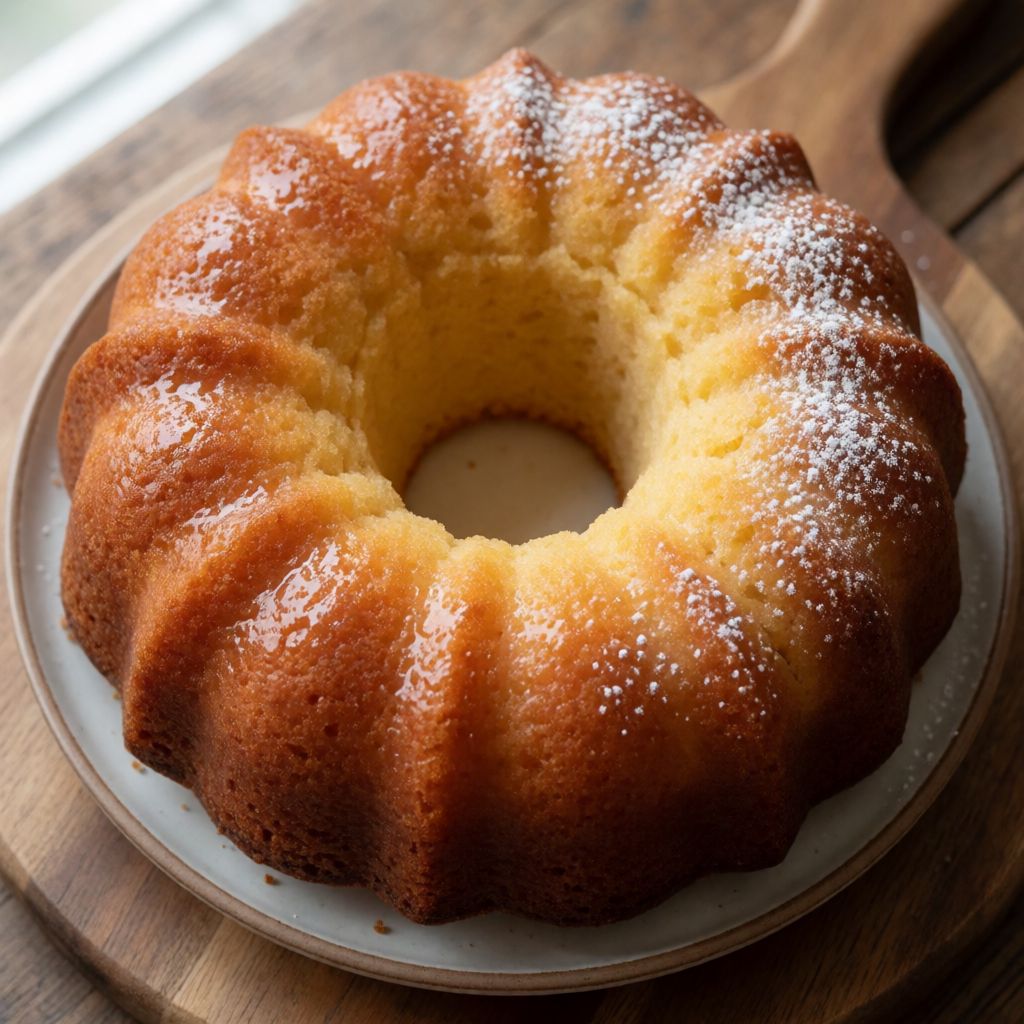
 AI photo
Eggless Bundt Cake
A simple eggless bundt cake, light and fragrant with citrus zest.
Labels are worked out automatically from the ingredients and can be wrong. Check the packaging if it matters to you.
Ingredients
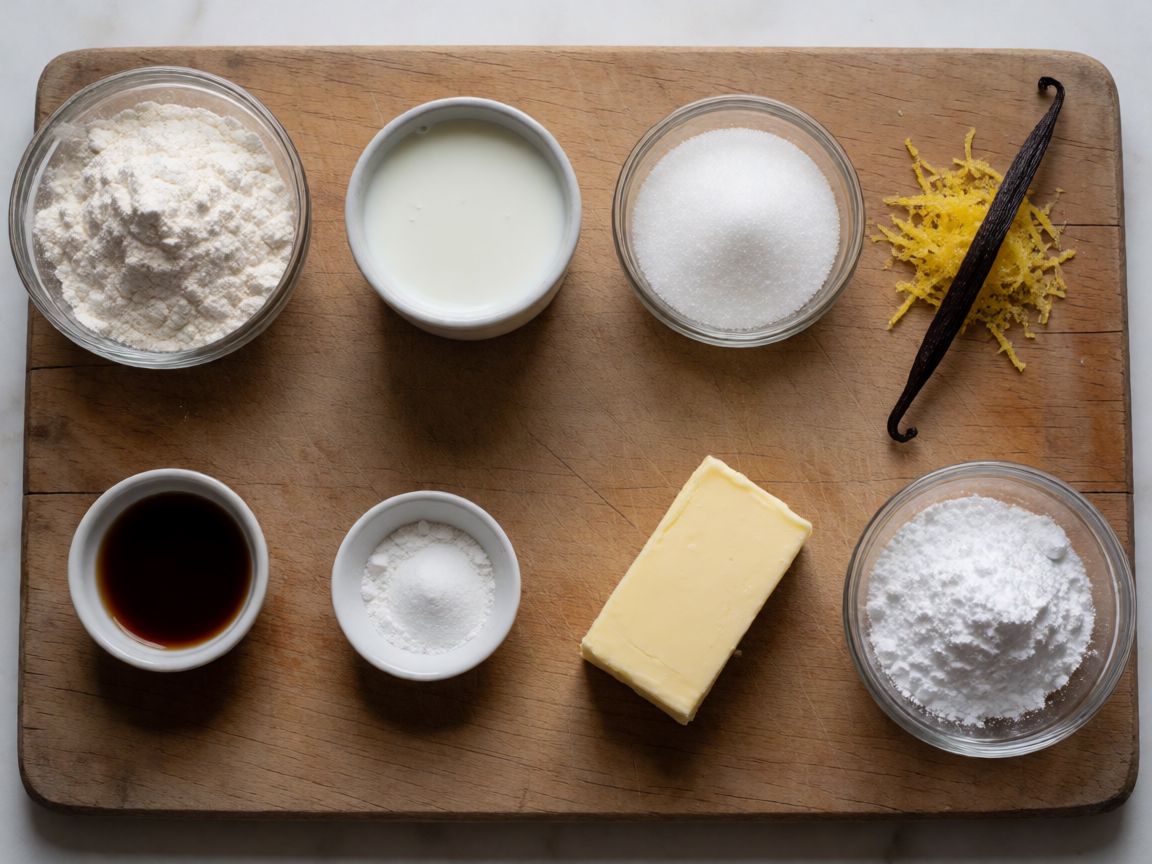
- 280 g Plain flour
- 250 ml Milk
- 180 g Caster sugar
- 130 ml Vegetable oil
- 1 pcs Lemon or orange zest
- 1 tsp Vanilla extract
- 16 g Baking powder
- 0 g Butter for greasing
- 0 g Icing sugar for dusting








Steps
Sift the flour into a bowl. Add the sifted baking powder and mix well.
Add the sugar and whisk together.
Pour in the milk in a thin stream, stirring continuously.
Add the vegetable oil, vanilla extract and lemon or orange zest.
Stir until the batter is smooth and free of lumps.
Grease a 24 cm bundt tin with butter or oil and dust with flour, then pour in the batter.
Preheat the oven to 170°C and bake the cake for 40 minutes.
40 minCheck with a wooden skewer — it should come out clean.
Remove the cake from the oven and let it cool completely before turning it out of the tin.
Serve the cake on a plate, dusted with icing sugar if you like.
This is a cake built on the idea that eggs are a convenience, not a law. What holds it up instead is baking powder and the structure flour gives when you work it gently — no egg protein to set, so the whole thing depends on getting air into the batter chemically rather than mechanically, and on not knocking that air back out.
What decides whether it works is the baking powder and your patience with the oven door. 16 g for 280 g flour is a generous dose — about right, because there's no whipped egg white doing any lifting here. Open that door in the first twenty minutes and the rise collapses before the crumb has set enough to hold its own shape. A bundt tin, with its hole in the middle, helps here too: more surface near the heat, a shorter distance for the centre to cook through, so you get an even set without the dense, gluey middle that a solid tin on a domestic oven is prone to giving a batter this wet.
Some say an eggless cake can't be properly soft, only dry and crumbly — no, because the fat and milk in this recipe are doing exactly what egg yolk would have done for tenderness, and oil has an advantage butter doesn't: it stays liquid at room temperature, so the cake doesn't firm up and turn tight the day after baking the way a butter sponge can. The texture you're after is closer to a loaf cake than a soufflé-light Victoria sponge — moist, slightly dense, held together by starch and air pockets rather than egg lattice.
Flour: 280 g plain flour, sifted. Sifting isn't fussiness — it breaks up compacted lumps so the baking powder distributes evenly through the mass rather than sitting in pockets, which is exactly how you end up with one risen corner and one flat one. Plain flour is correct here, not strong bread flour: too much gluten and the cake toughens, because you want tenderness, not chew.
Baking powder: 16 g, sifted in with the flour for the same even-distribution reason. This is your entire rising mechanism, so don't substitute it for bicarbonate of soda alone — soda needs an acid to react against, and there isn't enough acid in this batter (a little zest and milk, not much) to wake it up properly. If your tin of baking powder has sat in the cupboard since the last royal jubilee, test it in a glass of warm water first — if it doesn't fizz vigorously, it won't lift your cake either, and no amount of extra time in the oven fixes a batter that never rose.
Sugar: 180 g caster sugar, chosen over granulated because the finer crystal dissolves into the milk and oil without grit, and over icing sugar because icing sugar is too fine and clumps instead of dissolving cleanly in a liquid batter. Caster sugar here is doing sweetness and a little tenderising — sugar competes with flour for the liquid, which keeps the crumb soft rather than tight.
Milk: 250 ml, poured in slowly while stirring — not because the recipe is precious, but because adding liquid in a thin stream gives you a chance to catch lumps before they set into the batter, where they'd otherwise survive baking as little dry pockets. Any dairy milk works; a plant milk with no strong flavour of its own (oat, for instance, rather than a heavily flavoured almond) will do if you need it, since nothing here relies on milk proteins specifically.
Oil: 130 ml vegetable oil — meaning any oil with no smell of its own: sunflower, rapeseed, a light vegetable blend. Olive oil is the wrong choice unless you want the cake to taste faintly of olive oil, which most people don't in a vanilla-citrus sponge. Oil rather than melted butter is what keeps this cake soft after a day in the tin — butter resolidifies as it cools and tightens the crumb, oil stays liquid and keeps it yielding.
Zest and vanilla: a single lemon or orange's zest, and a teaspoon of vanilla extract — not essence, which is synthetic and sharper. These exist to give a batter made mostly of starch, fat and sugar some actual character, since none of the main ingredients bring flavour on their own.
Butter and icing sugar at 0 g each are there for a reason worth saying: they're tools, not ingredients in the batter. Butter (or oil, if that's what's open) greases the tin to stop the cake tearing itself apart on release, and a dusting of flour after that stops it sticking in the ridges of a bundt tin specifically, where batter can lodge in the grooves and refuse to let go. Icing sugar at the end is cosmetic — it's the reason this cake doesn't need icing at all, since a bundt's ridged shape already does the visual work a flat cake needs frosting for.
On cooling before turning out: this isn't patience for its own sake, though it is patience — a warm cake is still structurally soft in the middle, and turning it out before it's set risks it breaking at the narrowest part of the ring, right where the tin's central tube is. Let it go cold, and the structure that the baking powder built has had time to actually hold.