
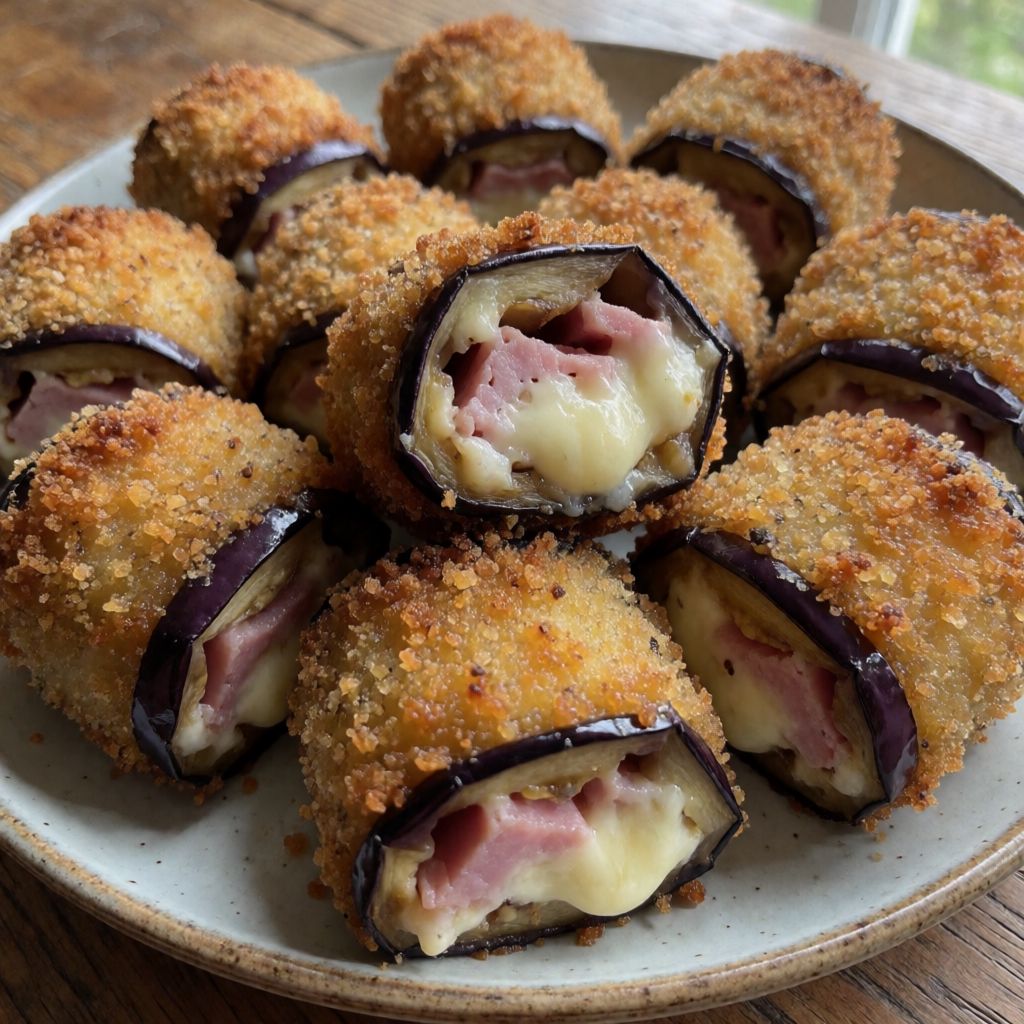
 AI photo
Aubergine Bombs with Ham and Cheese
Grilled aubergine rolled with ham, melting cheeses and bacon, baked in a simple tomato sauce.
Labels are worked out automatically from the ingredients and can be wrong. Check the packaging if it matters to you.
Ingredients
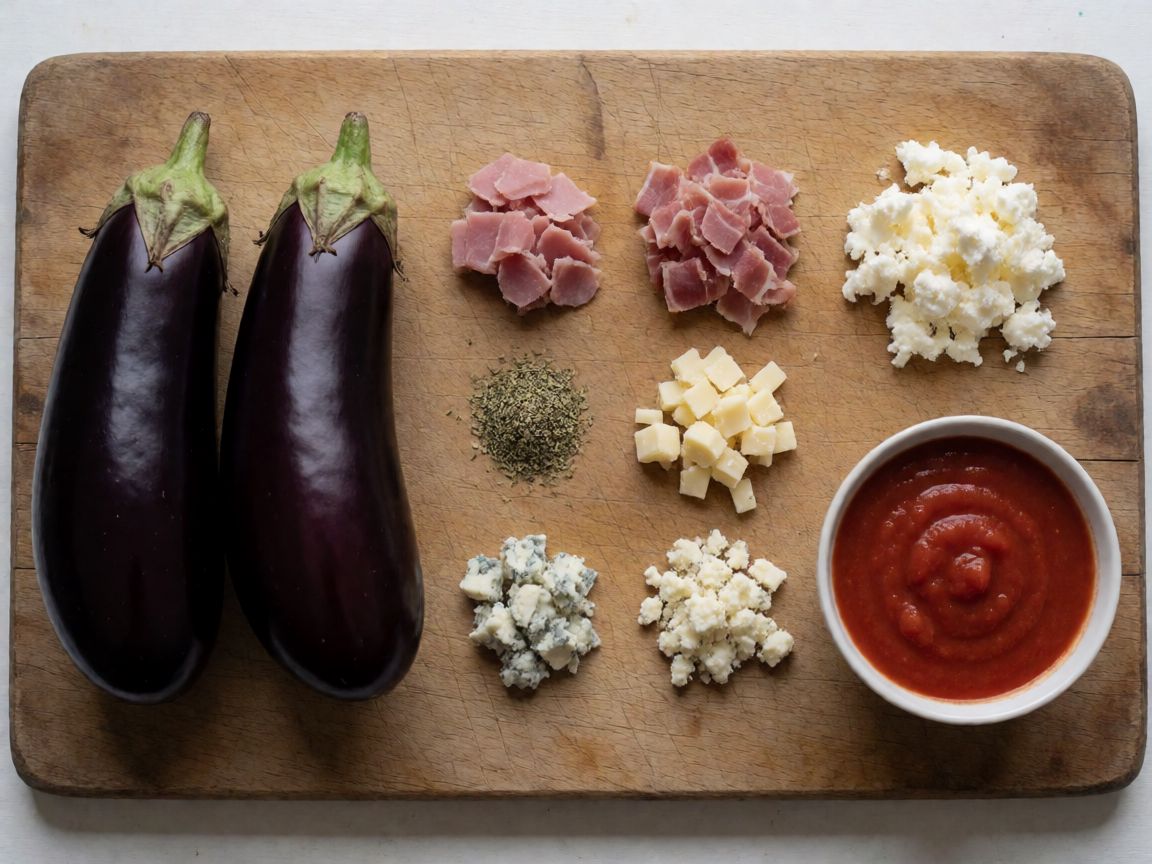
- 2 pcs Aubergine
- 200 g Ham
- 300 g Bacon thin rashers, for wrapping
- 200 g Smoked Scamorza
- 200 g Fontina
- 200 g Gorgonzola Dolce
- Tomato Passata to taste
- Salt to taste
- Olive Oil to taste
- Oregano to taste







Steps
Slice the aubergines lengthways into strips about 1 cm thick. Grill them and sprinkle with a pinch of salt.
On each aubergine strip, layer: a slice of smoked scamorza, a slice of ham, a slice of fontina, another slice of ham and a little gorgonzola dolce.
Roll up each strip into a little parcel and wrap it in bacon.
Warm the rolls for a few minutes in a non-stick pan so the bacon crisps slightly.
Meanwhile make the sauce: mix the tomato passata with olive oil, salt and oregano.
Arrange the rolls in a baking dish and pour over the sauce.
Bake in an oven preheated to 180°C for 15 minutes, until the bacon reaches a safe internal temperature of 70°C.
15 min
This is a stuffed aubergine roll wearing two coats: first grilled aubergine, then bacon, baked sitting in a loose tomato sauce. Underneath the cheese and ham, it's really an exercise in rolling a vegetable around a filling without it springing back open the moment heat hits it.
What decides whether this works is the aubergine strip. Cut it thick and it won't bend — it'll crack along the fold, and the gorgonzola will ooze out before it ever sees the oven. Cut it at about a centimetre, grilled until limp, and it curls like a tortilla. The second thing that decides it is the bacon: if you skip the pan and go straight to the oven, the bacon steams in its own fat under the passata instead of crisping, and a soft, pale wrapper does nothing to hold a parcel shut once the cheese inside turns to liquid.
This is antipasti — a starter bite, not a plate you build a Sunday round. Four rolls, cut each in half at the table if you like, is a first course for four. It isn't trying to be the main event, so don't oversalt chasing a 'main dish' punch — the ham and three cheeses already carry plenty of salt on their own.
Patience sits in two places here: letting the grilled aubergine actually go slack before you try to roll it (rush it and it tears), and letting the pan do the crisping before the oven does the melting. Skip either and you get a dish that tastes right but falls apart on the fork — which, for a dish built entirely on being rolled and wrapped, is the one failure that matters.
Aubergine first. Pick smaller, younger ones if you can — the skin's glossier, the seeds are pale and small, and that's where the bitterness lives in an old aubergine, not in the flesh itself. Some say you must salt and weep the slices for an hour before cooking or the dish turns bitter — no, that was true of the older, seedier varieties sold decades ago. A young aubergine, grilled hot and fast, loses its moisture (and most of its bitterness with it) in the time it takes to mark both sides; a pinch of salt afterwards is enough. Grilling also does the real job here: it's what makes the slice pliable. Raw aubergine doesn't roll. Grilled and slightly collapsed, it does.
The ham is a spacer, not a flavour statement. Its job is to sit between the two melting cheeses so one doesn't just merge into the other into a single undifferentiated pool — you want bites where you still find the gorgonzola's sharpness distinct from the fontina's mildness. Any thin-sliced cooked ham does this; a dry-cured one works too, but it's saltier, so go lighter on the sauce's own salt if you use it.
Three cheeses, three jobs, not three for showing off. Scamorza smoked brings the one note none of the others can — smoke — and it melts stretchy rather than runny, so it gives the inside some structure. Fontina melts smooth and mild and fills the gaps scamorza leaves. Gorgonzola dolce is the punch at the end — it's soft enough to not need slicing thin, and strong enough that a little goes a long way. If blue cheese isn't your thing, you can drop it for more fontina, but you lose the one ingredient doing contrast rather than just richness — know what you're trading away.
Bacon, thin-sliced, is both lid and crisping agent. Thick-cut rashers won't do this job as well: they render slowly, which means by the time the fat's gone from white to brown, the aubergine inside has overcooked and the cheese has already escaped. Thin bacon crisps before the inside overheats, and crucially, it tightens as it cooks — it's the thing physically holding the roll shut once the cheese turns liquid and wants to push the parcel open. The few minutes in a dry pan before the oven aren't decorative; that's where the bacon actually sets. Skip it and you're asking the oven's gentler, ambient heat to do a job that wants direct metal contact.
On the passata: it's there for moisture and acid, not for a sauce in its own right. Thin enough that it coats the base of the dish and comes a third of the way up the rolls — any more and you're braising them, which softens the bacon you just worked to crisp. A tinned crushed tomato stands in fine; fresh tomato brings too much water and dilutes the point.
On doneness: the recipe gives you a number — 70°C — but nobody standing at a UK hob on a Tuesday evening has a probe thermometer in the drawer next to the Sunday-roast tin. You don't need one. Watch the bacon: it goes from pink-grey and slack to a deep amber, and you'll hear the sauce start to bubble rather than just sit there. That sound and that colour tell you more than a number would, because they're telling you what's actually happening at the surface of the meat, not guessing at its centre.