Meat & fish
Bacon
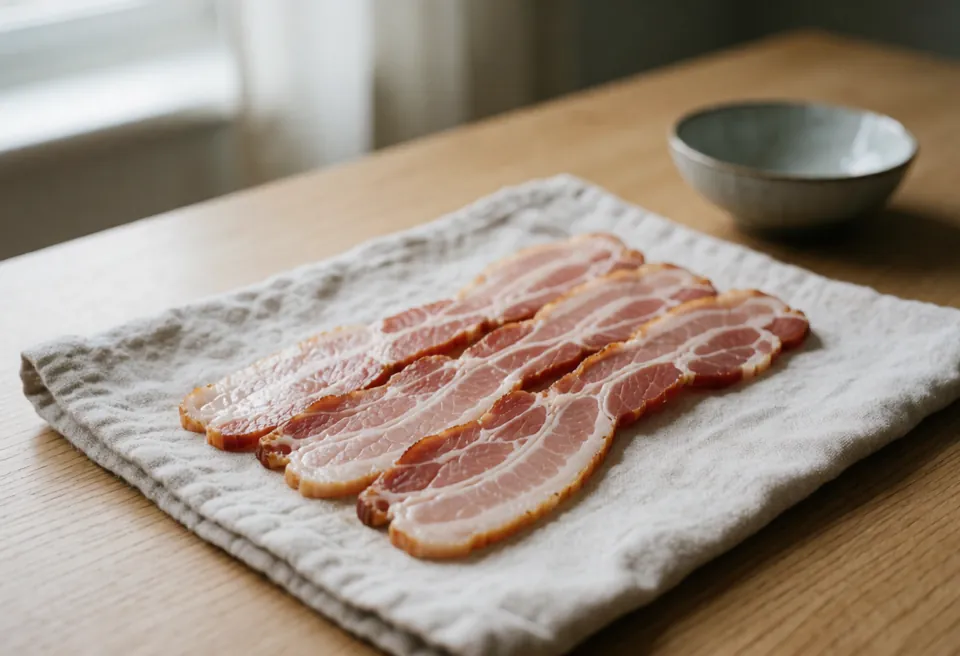
Bacon is thinly sliced salt-cured, smoked pork with streaks of fat. It's fried until crisp for breakfast or added to salads and hot dishes.
393 kcal per 100 g
Nutrition per 100 g
393 kcal
| Protein | 13.7 g |
|---|---|
| Fat | 37.1 g |
| Carbs | 0 g |
| Fiber | 0 g |
Source: USDA FoodData Central, 2026-09-21. Per 100 g of product.
Good to know: Bacon
Let's talk about bacon, and let's talk honestly.
Bacon is salted and smoked pork, cut thin so the fat and meat run in stripes next to each other. That's the whole trick of it. In the pan, the fat turns golden and the meat browns and crisps at the edges — listen for the sizzle to slow down, watch the colour deepen, and you'll know it's ready without needing a clock. Raw, a hundred grams carries 393 kcal, 37 grams of fat, just under 14 grams of protein, no carbs at all. Remember that before you fry a whole packet "just for the salad."
Choose it by the stripes. You want clear layers of pink meat and white fat, laid out neatly, with a clean smoky smell. If you're unsure whether water has been added, check the label rather than guess from looks alone.
Some people say the fattier the bacon, the better it fries. No! A strip can be heavy with fat and still come out pale and limp if you rush it. Watch for the edges to curl and turn deep gold, and listen for that sizzle easing off — that's what tells you it's done, not how thick the fat looks in the packet.
That misconception sends cooks reaching for the fattiest pack on the shelf, then pulling it out of the pan too soon, before it has had the chance to crisp properly.