
 AI photo
Rigatoni with Chickpeas
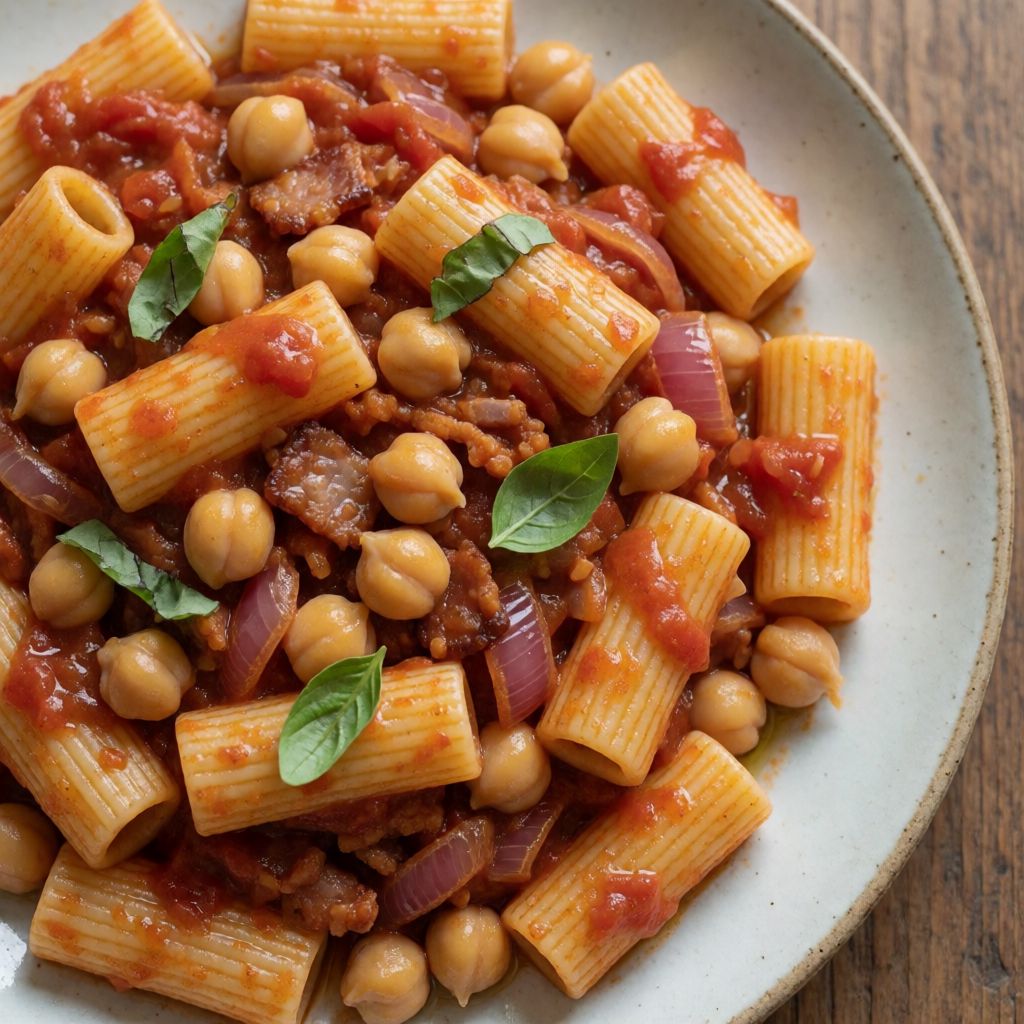
Rigatoni simmered with bacon, chickpeas and tomato passata, finished with basil.
Ingredients








Steps
Finely chop the red onion and fry it in olive oil until softened.
Add the tomato passata and basil leaves torn by hand, then cook.
15 minAdd the chickpeas and simmer.
30 minAdd the rigatoni, season with salt and pepper, and cook in the sauce until al dente.
This is a one-pot pasta built on rendered fat, not on a sauce you make and then marry to boiled pasta separately. Bacon, onion, tomato, chickpeas, and finally the rigatoni itself all cook in the same fat, one after another, so each stage inherits the flavour of the one before it. That's the whole logic of the dish: nothing gets washed off or drained away, everything stays in the pan and talks to everything else.
What decides whether it works is patience at two points, not skill. First, the onion has to soften in fat before anything else goes in — rushed on high heat, it browns at the edges while staying raw in the middle, and that bitterness sits under the whole sauce for the rest of the cooking and never leaves. Second, when the rigatoni goes in to finish inside the sauce rather than in a separate pot of water, you need enough liquid in the pan to actually cook it through, and a wide domestic pan loses liquid to evaporation faster than you'd think — watch it, don't trust the clock.
Some say pasta must always be boiled in its own pot of salted water and only tossed with sauce at the end. Not here — and not because this recipe is being clever. Finishing short pasta in a shallow sauce lets the starch it sheds thicken the sauce from the inside, so the rigatoni tastes of tomato and chickpea all the way through the tube, not just on the surface. The trade is that you have to feed it liquid as it drinks it, the way you would a risotto.
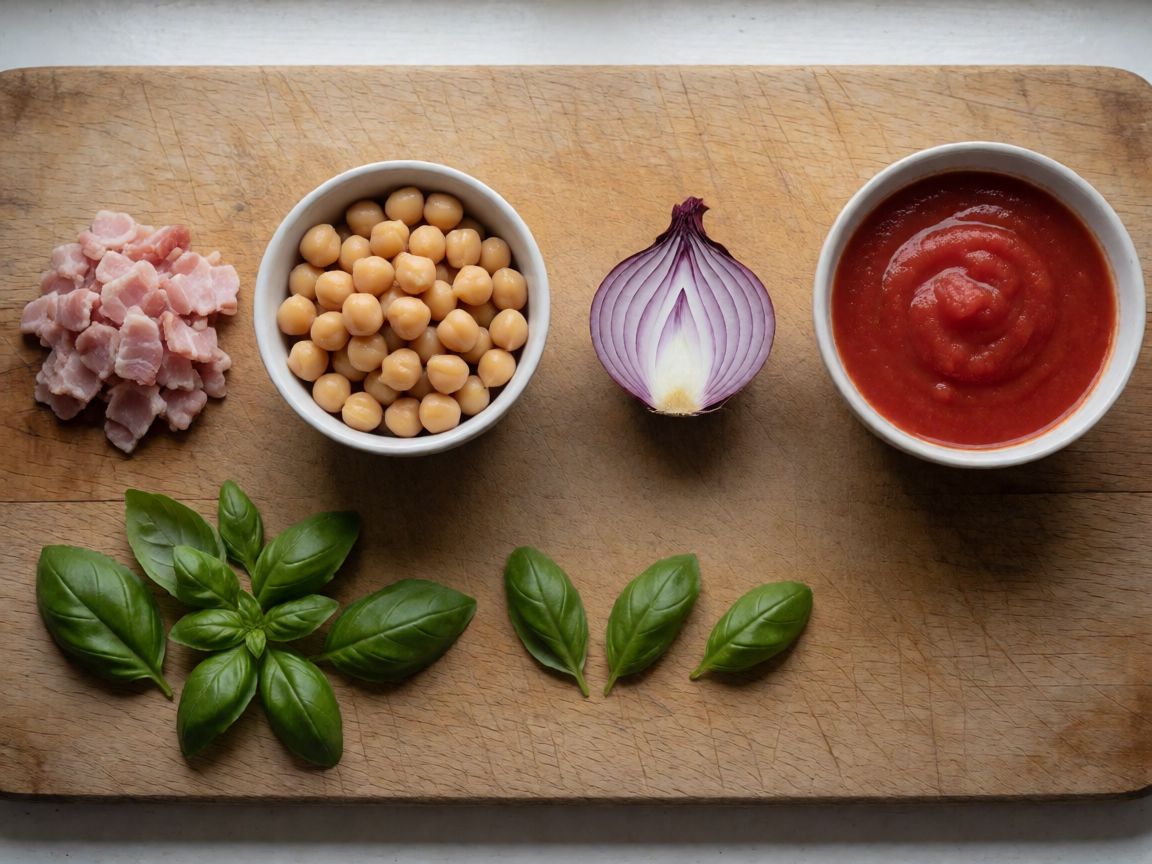
The bacon isn't mentioned again after the ingredient list, which looks like an oversight but isn't really one — it tells you where it belongs. You cut it and render it in the pan first, before the onion, and that fat is the 'olive oil for frying' the method mentions, or most of it. The point of rendering is to pull the smoke and salt out of the fat itself, so every later ingredient cooks in bacon flavour instead of bacon sitting on top as a garnish. If your bacon is lean and gives you almost no fat, that's when the olive oil earns its place — top it up rather than relying on it from the start. Any smoked, fatty streaky bacon works; pancetta or guanciale, cut thicker, does the same job with a cleaner cure.
The onion goes in next, into that fat, and 'softened' is the only word that matters — not golden, not caramelised. You're breaking down its sulphur compounds and starch so it turns sweet and translucent, not browning its sugars, which needs more heat and more time than this step wants. Red onion is chosen because it's sweeter raw than white or yellow, so it needs less cooking to lose its bite — a practical shortcut, not a flavour requirement. White onion works, just give it a minute or two longer and watch it doesn't catch at the edges, which is where bitterness starts.
Passata is tomato that's already been pushed through a sieve — no skin, no seed, a smooth base that reduces evenly instead of separating into watery pockets. The fifteen minutes it spends with torn basil isn't really a timer, it's a description of a state: the sauce has to lose enough water to coat a spoon rather than run off it, and basil's flavour is carried in oils that need fat to dissolve into, which is exactly what's in the pan. Tinned chopped tomatoes blitzed smooth are a fair substitute if passata isn't on the shelf. Dried basil is a poor stand-in — most of what makes basil basil evaporates in the drying — so if that's all you have, use less of it and add it at the very end instead of the start, so what's left of it doesn't cook away entirely.
Tinned chickpeas are already cooked soft, so the thirty minutes they spend in the sauce isn't softening them — it's letting the sauce reduce further and the chickpeas release a little of their own starch back into it, thickening things and taking on the tomato colour right through. If you're starting from dried chickpeas, soak them overnight and cook them to tender on their own first; thirty minutes in a simmering sauce won't touch a dried chickpea that hasn't already been soaked and boiled.
Rigatoni's ridges and width are why it works finishing in sauce rather than water — a thinner pasta would turn to paste before the sauce reduced enough, where rigatoni has enough wall to hold its shape while it absorbs. In an ordinary flat kitchen, use the widest pan you own for this last stage, because surface area is what lets liquid evaporate at the rate you want instead of either drowning the pasta or scorching the bottom before it's done. There's no lid called for and you don't need one — a plate over the pan slows the same evaporation if things are moving too fast. Judge doneness by biting a piece, not by the clock: it should have a little resistance in the middle, not crunch, not slump.
Salt and pepper come last on purpose — bacon is already salty, and tomato has none, so seasoning early just means guessing. Taste once the chickpeas have had their thirty minutes and the pasta has gone in, then correct. The whole fifty minutes of cooking in the method is really three separate patiences stacked on top of each other — rushing any one of them doesn't save you time, it just moves the fault downstream to where you can't fix it anymore.