
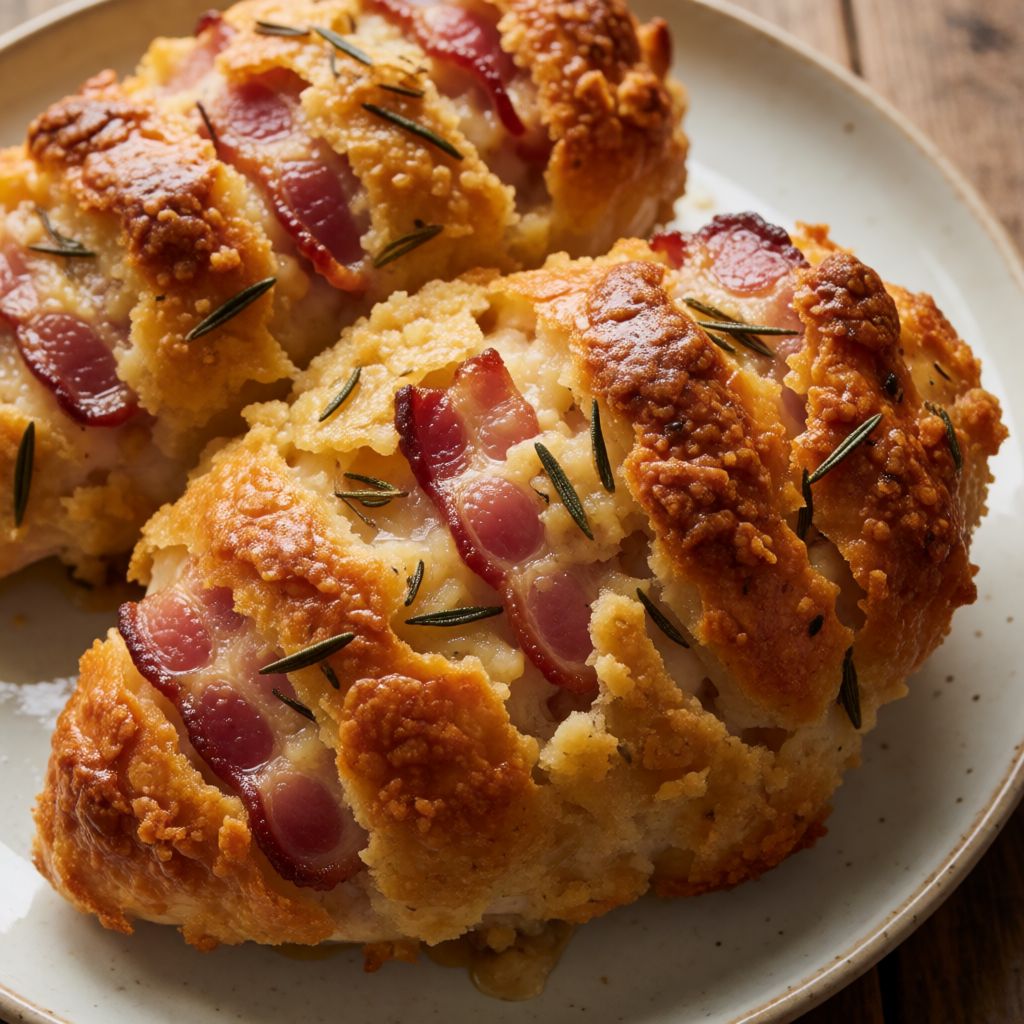
 AI photo
Chicken Breast in a Bread Crust
Chicken breast wrapped in pancetta and rosemary, baked inside a bread crust until juicy and golden.
Labels are worked out automatically from the ingredients and can be wrong. Check the packaging if it matters to you.
Ingredients
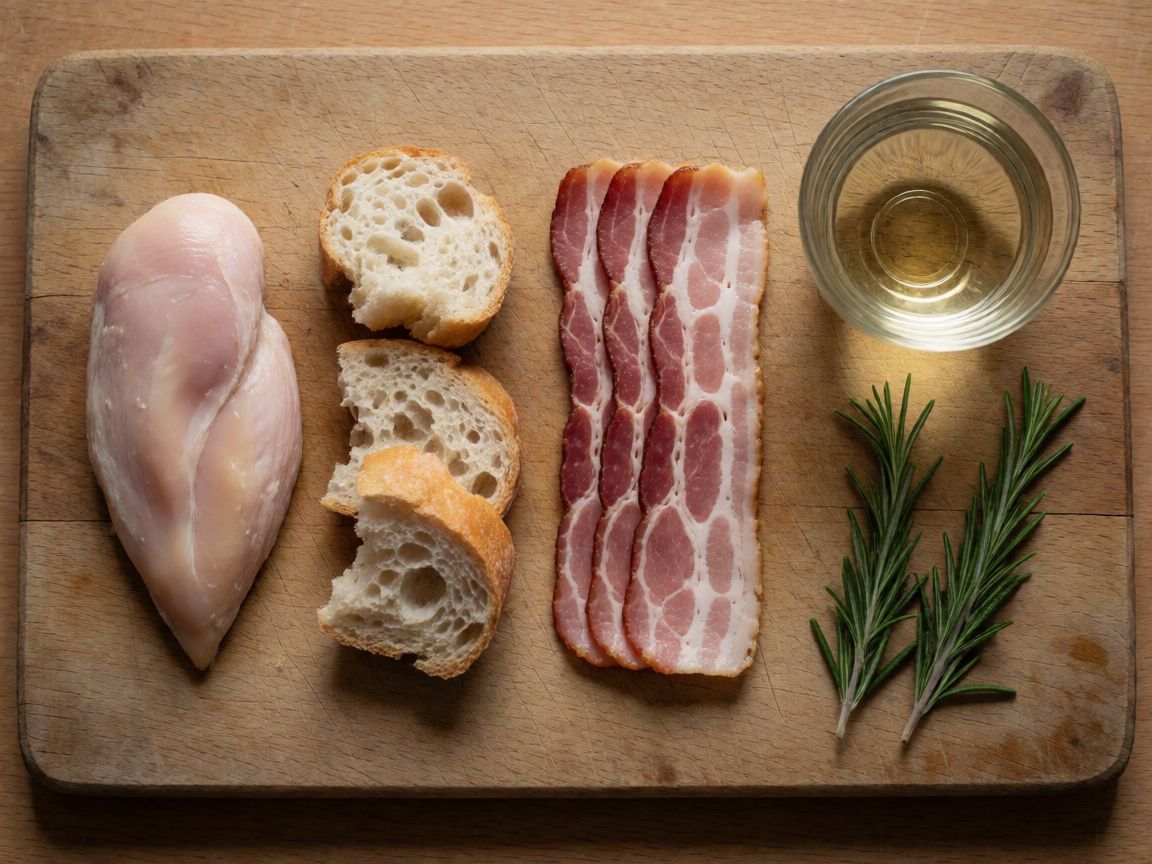
- 1 pcs Chicken breast
- 400 g Country bread
- 3 pcs Pancetta
- 250 ml White wine
- 2 pcs Rosemary
- Salt to taste
- Vegetable oil to taste







Steps
Rub the chicken breast with a mixture of salt and chopped rosemary.
Halve the bread, place the breast inside, wrap it in pancetta, and add a sprig of rosemary.
Tie securely with a cooking net or kitchen string.
Place the parcel in a baking dish and drizzle with oil and wine.
Bake in an oven preheated to 180°C for 50–60 minutes. Doneness: internal temperature 74°C.
55 min
Think of this as building a mini-oven inside your oven. Chicken breast is the driest, leanest piece on the bird — no fat marbling, no skin doing any favours, nothing standing between the meat and the air that's trying to dry it out. So you give it its own climate: a loaf of bread hollowed into a shell, a wrap of pancetta, a splash of wine, all tied shut. That bread shell isn't decoration you peel off and bin — it's the thing that stops dry oven air from ever touching the meat directly. The wine inside turns to steam, the pancetta fat renders slowly and drips down, and the breast sits in that small moist pocket the whole time instead of in the oven proper.
Some say wrapping meat seals the juices in, like cling film with a crust. No — bread is full of holes, and a loose tie of string round a bread parcel is not a vacuum seal. What it actually does is buffer the heat: slow it down, spread it evenly, keep a damp atmosphere around the meat. That's a mechanism, not magic, and it's the difference between this breast staying tender and one roasted bare, which goes from juicy to cardboard in the time it takes to answer the phone.
The chicken breast itself: pick one that's plump and even in thickness, because a thin, tapered end cooks through long before the thick end does, and inside a sealed bread parcel you can't just move it around on the tray to compensate. If it still has its skin, leave it — any fat you can keep is fat you don't have to borrow from the pancetta.
The bread needs a proper crust and a crumb that holds together under its own weight — a country loaf, sourdough, something with structure. Supermarket sandwich bread will go to paste the moment the wine hits it and collapse round the meat instead of containing it. The logic here isn't fussy, it's practical: you're asking this loaf to be a cooking vessel, and a vessel needs walls.
Pancetta wraps the whole thing in fat and salt, both of which a bare chicken breast has none of. Don't expect it to go crisp — at 180°C, wrapped inside bread and bathed in wine vapour, nothing crisps, that's not the job it's doing here. If you can't get pancetta, any thin, fatty cured pork works on the same principle — streaky bacon, lardo, pancetta's cousins — the criterion is fat that renders slowly without turning acrid, not a specific name on the packet.
White wine does two things: its acid keeps the meat from tasting flat, and its water content is what turns to the steam doing the actual cooking work inside the parcel. If you've no wine open, a dry vermouth does the job, or water sharpened with a spoon of lemon juice — the point is an acidic liquid that steams gently rather than simmers hard, since a hard boil inside a bread shell will just split the crust.
Rosemary and salt are rubbed straight onto the meat before anything else happens, because once the parcel is tied shut you can't season it again — whatever's on the meat at that point is what you get at the end. Oil is there purely to stop the outside of the loaf catching and to help it brown a little in the dish; use anything with no smell of its own, a plain vegetable or sunflower oil, nothing that'll fight the rosemary.
In a British kitchen you likely don't own a cooking net, and that's fine — kitchen string wound a few times round the loaf does the same job, just check it before it goes in, because a parcel that loosens mid-bake is the whole mechanism undone. And once it's out, give it ten minutes before you cut — the bread is still hot enough to keep working on the meat inside, and slicing straight away just lets all that steam and juice run out onto the board instead of staying where you wanted it. Patience here isn't a virtue, it's the last ingredient on the list, uncredited.