
 AI photo
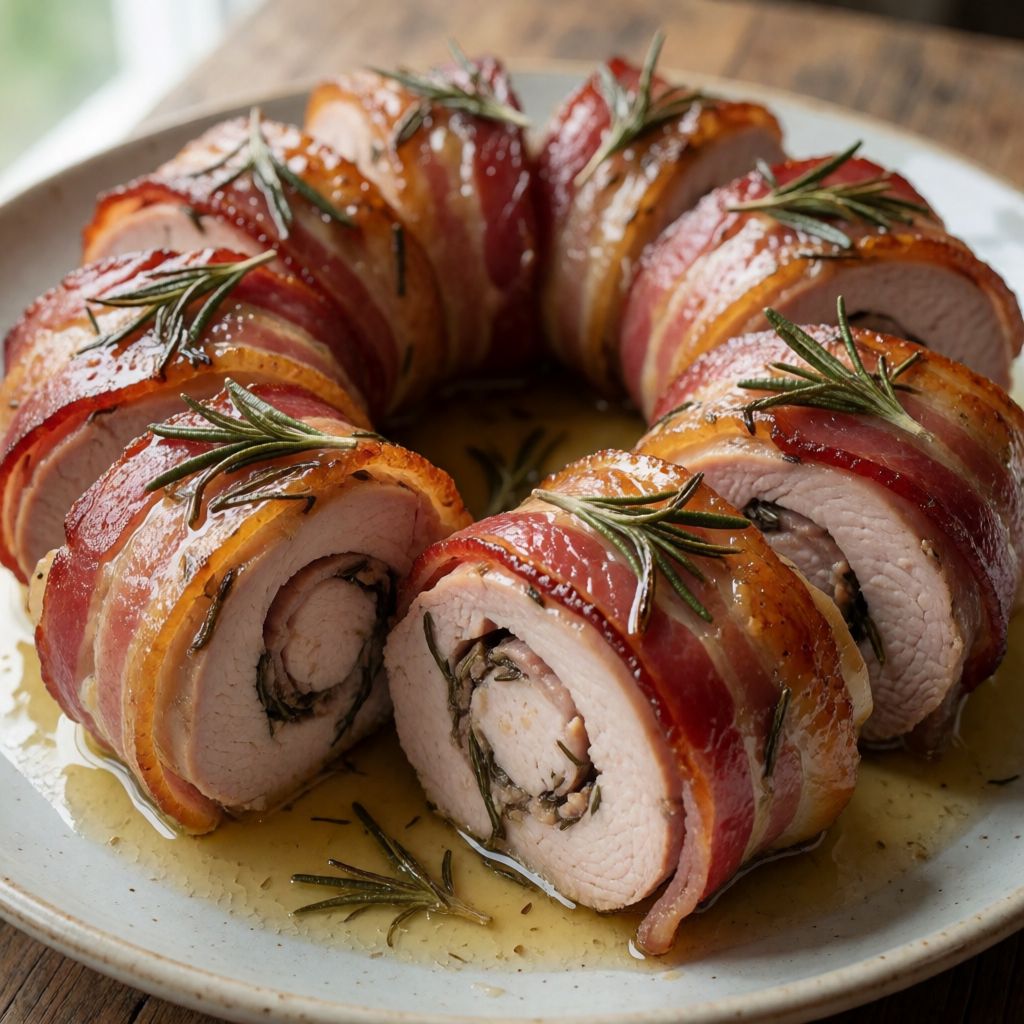
Turkey and Bacon Rolls
Turkey steaks rolled with bacon and rosemary, seared in butter and simmered in white wine until tender.
Labels are worked out automatically from the ingredients and can be wrong. Check the packaging if it matters to you.
Ingredients
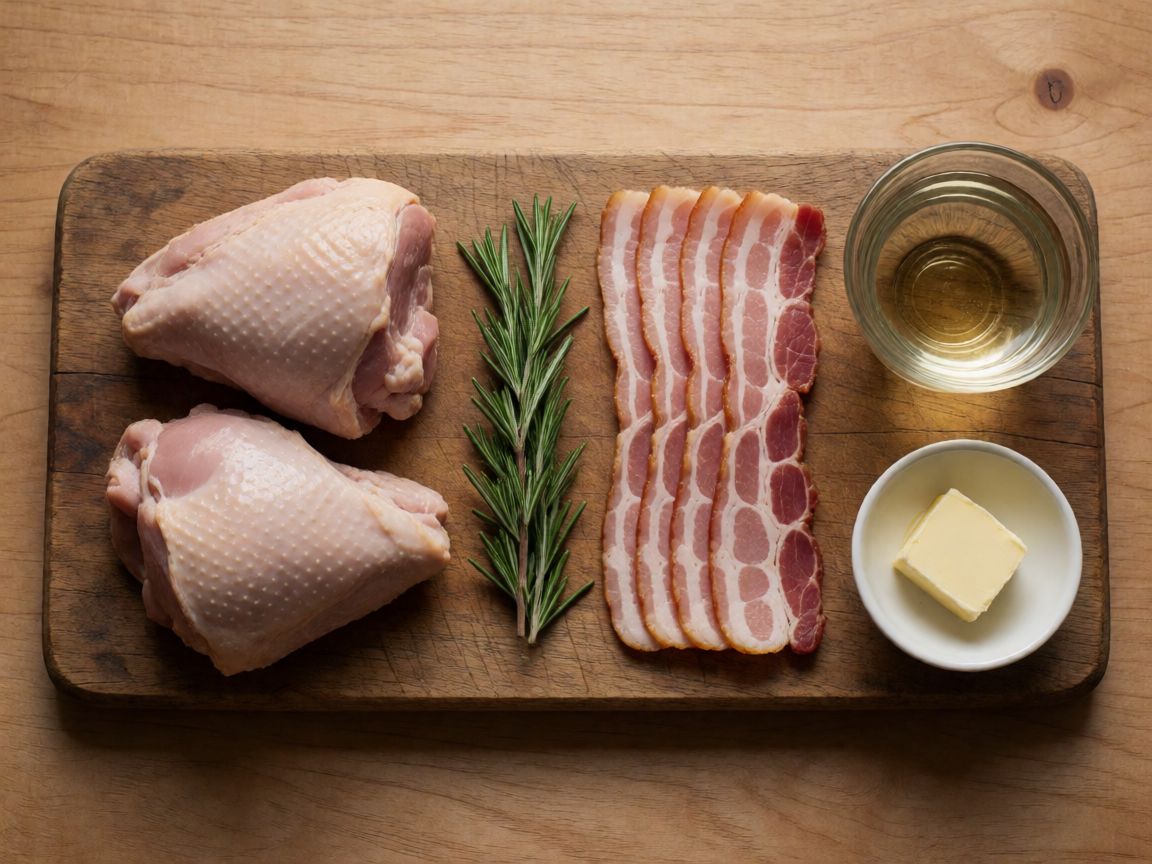
- 2 pcs Turkey steak
- 4 pcs Bacon
- Rosemary to taste
- Butter to taste
- White wine to taste
- Salt to taste
- Black pepper to taste





Steps
Lay the bacon slices over the turkey steaks, then scatter with a little rosemary and black pepper.
Roll up the steaks and secure with a wooden skewer.
Melt the butter in a non-stick frying pan and sear the rolls on all sides until golden.
Season with salt, add a little more rosemary and pour in the white wine.
Cook over medium heat, turning down the heat as the liquid evaporates, until the turkey is cooked through (74°C internal temperature).
40 min
Turkey rolled with bacon, browned in butter, finished in a wine bath that shrinks to a varnish — that's the whole architecture. Turkey breast gives you no fat of its own, so you wrap fat around it instead. The bacon isn't decoration, it's the basting system, working from the outside the whole time the roll is in the pan, doing something a dry breast fillet can never do for itself.
What decides whether it works is the thermometer, not the clock. Forty minutes is roughly how long two rolls take in an ordinary pan — a lower bound, nothing more. Pull them when the inside reads 74°C, because that's the point where the usual poultry pathogens stop being a worry, not a number invented for texture. Go well past it and the turkey turns to string, because muscle fibres that have already given up their water don't take it back.
Some say you sear meat "to seal in the juices." No — a crust doesn't close like a zip, and moisture isn't sealed by heat, it's pushed out by it. What searing buys you is colour and the roasted-meat smell, the browning on the surface, nothing to do with what's happening inside the roll. You sear for flavour, not for protection. And don't rush it — four sides of proper browning in butter takes the time it takes; crank the heat to hurry it and you'll burn the butter before the turkey's gone gold. Patience here is an ingredient, same as the rosemary.
Turkey steak: pick breast, sliced flat, and keep the two pieces a similar thickness — if one's thicker it finishes later, and by the time it hits 74°C the thin one has long since passed it and gone dry. Any lean, mild poultry breast works on the same principle; chicken breast is the obvious stand-in, just thinner as a rule, so watch it a little sooner.
Bacon: streaky, with real fat running through it, not lean back bacon — the fat is the entire point, it has to render and baste as it cooks. If what's in the fridge is a dry, lean streaky, pancetta does the same job, same mechanism: cured pork fat melting onto the meat it's wrapped around. Four slices between two rolls is enough to cover the turkey's length without bare patches showing — that's your one roll each, two people, two bacon slices apiece.
Butter: it browns faster and deeper than plain oil because of the milk solids in it, which is exactly what gives this dish its colour — but those same solids burn if the pan runs hotter than butter can stand, and a thin domestic pan on an electric or induction ring heats up and drops off fast, with none of a heavy kazan's slow buffer. Watch the butter, not the dial. If that worries you, use any oil with no smell of its own — sunflower, a light olive oil — to sear, and drop a knob of butter in only at the end, for the smell of it.
Wine: dry, white, nothing sweet. It does two jobs — lifts the browned residue stuck to the pan, the fond, which would otherwise just scorch, and then, as it evaporates, concentrates into a light glaze that coats the rolls instead of drowning them. That's exactly why the heat comes down as the liquid shrinks: less wine means faster, hotter contact between pan and glaze, and a thin glaze catches before you've noticed. No wine in the house, dry cider or stock with a spoon of vinegar does similar acid-and-deglaze work — you lose the particular smell, not the mechanism.
Rosemary: resinous, so it survives forty minutes of heat without the bitterness soft herbs like parsley would pick up over that long. That's why it goes in twice, once inside the roll and once again with the wine, rather than one dose being asked to last the whole cook. Go light — its oil is strong and sits a long time in a small amount of butter and wine.
This is really a weeknight cousin of the Sunday roast — the same logic of wrapping lean poultry in fat that a whole turkey gets from its own skin and from basting, just scaled down to two rolls and a fraction of the patience. Serve it with what you'd put next to roast turkey — mash, greens, nothing that needs explaining — and don't tip the pan out before you've scraped up that wine glaze; it's your gravy, already made.