Meat & fish
Beef
Meat from cattle, stewed, boiled, fried, or roasted for soups, borscht, pot roasts, and many other dishes.
128 kcal per 100 g
Nutrition per 100 g
128 kcal
| Protein | 21.8 g |
|---|---|
| Fat | 4.5 g |
| Carbs | 0.2 g |
| Fiber | 0 g |
Source: USDA FoodData Central, 2026-09-21. Per 100 g raw (per USDA FDC).
Good to know: Beef
Beef is muscle, and muscle remembers work. A cow's leg has worked hard all its life, so it comes packed with connective tissue and needs slow, wet heat to soften. The sirloin, sitting near the spine, barely worked at all — grill it fast and hot, and leave the leg for the pot. That is the whole mechanism, really: cut equals history, and history tells you the method.
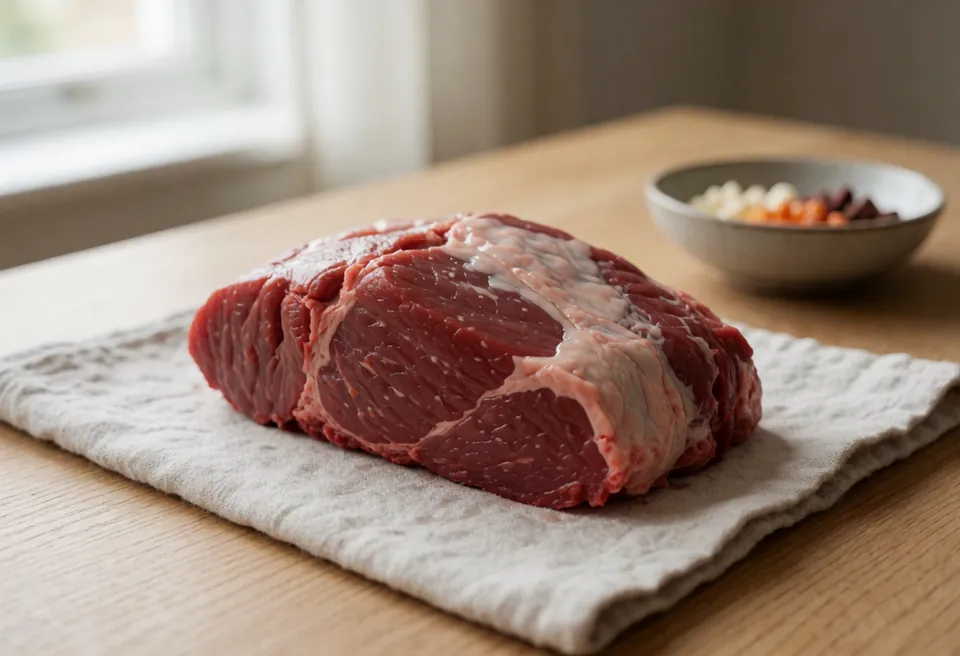
Choose beef with your eyes and your nose, not with a chart. The fat can be pale cream or even yellowish — that's often just grass in the animal's diet, nothing to fear. The meat itself should look bright cherry-red where it meets the air, moist but not wet, and smell of nothing but clean iron. Press it: it should spring back, not stay dented.
Some people say marbled beef is fattier and therefore heavier food. No! Look at raw beef and you'll see there isn't much fat to begin with — most of what you're eating is protein and water. That misconception pushes people toward trimming every visible fleck of fat before cooking, and then wondering why the steak turns dry and sad on the plate. Leave the fat. It's not the enemy — it's the flavor.