
 AI photo
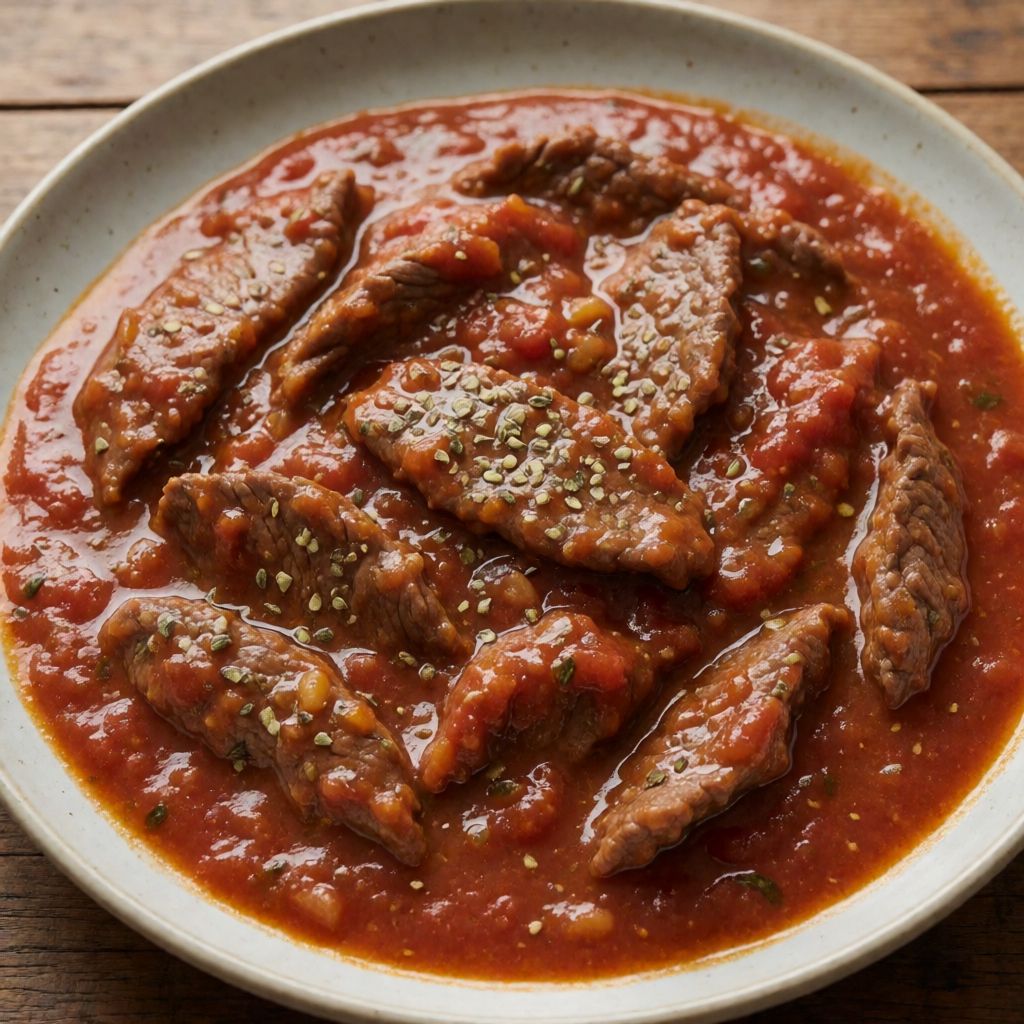
Beef Pizzaiola
Tender beef slices simmered gently in a rich garlicky tomato sauce.
Ingredients





Steps
Heat the olive oil in a frying pan and add the garlic. Let it turn golden.
Stir in the tomato passata and season with salt and black pepper. Simmer the sauce over medium heat.
Add the beef to the pan, turning the slices so they are fully coated in the sauce.
Cover the pan with a lid and cook the meat, turning the slices so they cook evenly. It is ready at 63°C in the centre (medium).
Pizzaiola means "the pizza-maker's way" — not because it goes in an oven, but because the sauce is the quick tomato-and-garlic base a pizzaiolo would use before a pizza ever sees heat. The beef goes into that sauce to finish, rather than being fried first and sauced after. That order is the whole point of the dish.
What decides whether it works is thickness and time, not a dial setting. You're not braising here — you're coating thin beef in a simmering sauce for the few minutes it takes the centre to reach medium. A thin slice from a quick-cooking cut gets there before the sauce has had time to overreduce or catch; a thick piece either stays cold in the middle or the sauce turns to paste waiting for it to catch up.
Some cooks believe the acid in tomato tenderises tough meat on contact, so any cheap cut will soften given enough simmering in the sauce. It won't — not in fifteen minutes. Acid needs hours, sometimes a day, to loosen muscle fibre; in a quick sauté it changes the surface, nothing more. If the beef is tough going in, it's tough coming out. Choose a cut already suited to fast heat — don't cook hoping the tomato will talk it round.
The garlic stage decides the flavour of everything that follows. Gold, not brown — the moment it tips past gold it turns bitter, and that bitterness sits in the sauce for the rest of the cook. You can't simmer it back out later.
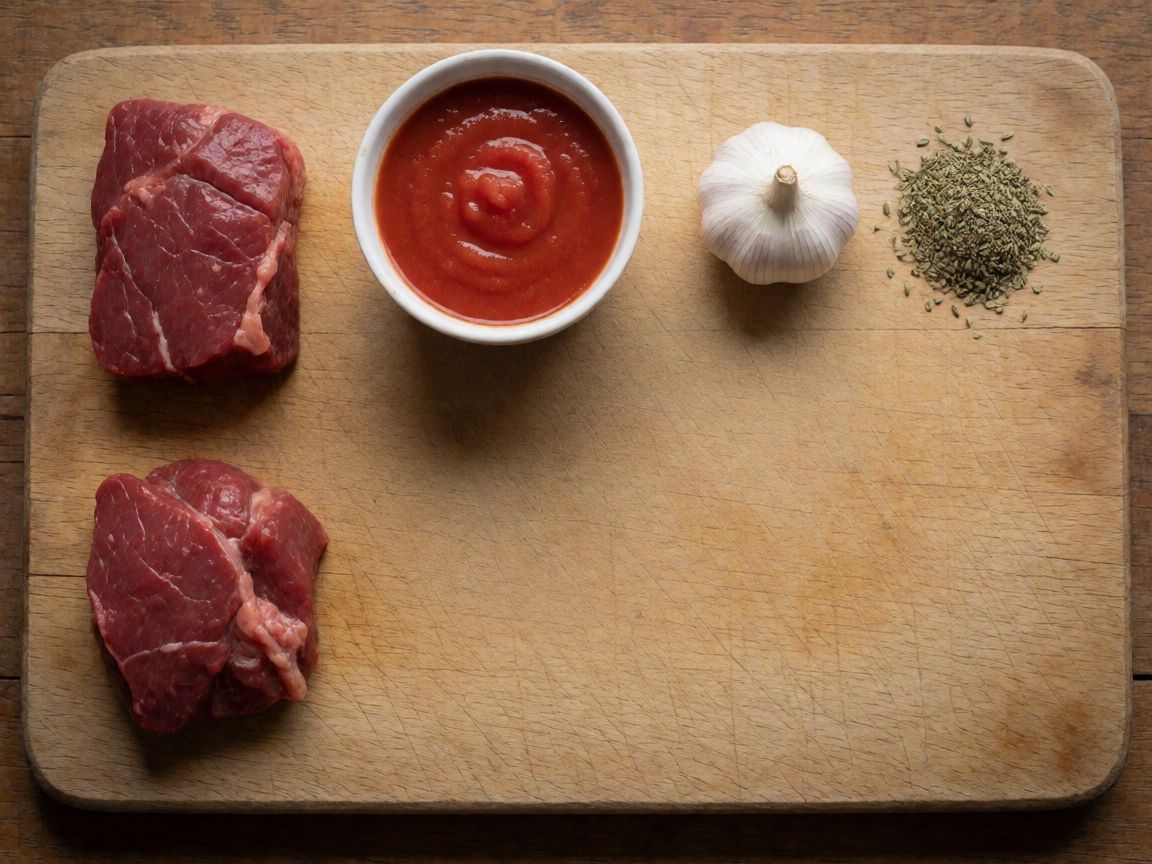
Beef: look for a cut built for quick heat — rump, sirloin, or a flank steak, sliced thin against the grain, the sort of thing you'd put under a grill for a couple of minutes a side. Not shin, not chuck, nothing that wants three hours of low simmer — pizzaiola gives the meat fifteen minutes in a hot pan, and that's a different mechanism entirely from a stew, where collagen has time to melt into gelatine. A thermometer earns its keep here: 63°C at the centre for medium is a real number, trust it over the clock and over cutting into the meat to check, which just lets the juice run out onto the board instead of staying in the slice.
Tomato passata: plain sieved tomato, nothing added — no sugar, no vinegar, nothing fighting the garlic. If you can't find it, blitz tinned whole tomatoes smooth and use that; tinned tomatoes are picked ripe and canned within hours, often a better bet than a pale fresh one bought in a British supermarket in January. Don't reach for ketchup or a jarred pasta sauce — both carry seasoning of their own that will argue with the oregano instead of carrying it.
Garlic: one clove, sliced or lightly crushed, flavours the oil — it isn't meant to be eaten as a chunk. Olive oil carries garlic's scent better than it carries most things, which is why this dish leans on oil with some character of its own rather than the usual "no smell of its own" rule — here the oil's job is partly to taste of something.
Oregano: dried, rubbed between your fingers as it goes in, actually gives more scent than fresh in a short-cooked tomato sauce — drying concentrates the oil held in the leaf. Fresh oregano is milder and needs longer contact with heat to give anything up, and this dish doesn't offer it that long. Use whichever you have, but add it early enough to simmer in, not as a garnish on top.
Salt and pepper go into the sauce while it's still liquid, before the meat goes in — tomato takes salt evenly while it can still move; sprinkled on raw meat afterwards, salt only sits on the surface.
On the lid: its job is to hold steam against the meat so the upper side cooks by contact with hot vapour while the underside cooks in sauce. Skip it and the top of each slice stays paler and takes longer to reach temperature while the sauce underneath keeps reducing regardless. In an ordinary flat without a lid that fits the pan, a large plate set over the top does roughly the same job — it won't seal as well, so expect the covered stage to run a little longer than it would under a proper lid, and go by the thermometer, not the minutes.
Patience is worth naming here even in a fast dish: don't rush the garlic to save two minutes. It's the one stage you can't undo later.
For 4 people from 300g of beef, each portion is doing a lot of work carried by the sauce — this isn't a Sunday roast's worth of meat. That's the economics sitting behind the dish: a small, quick-cooking cut, dressed in a sauce that takes fifteen minutes, feeding a table without needing an oven on for hours.