
 AI photo
Roast Beef
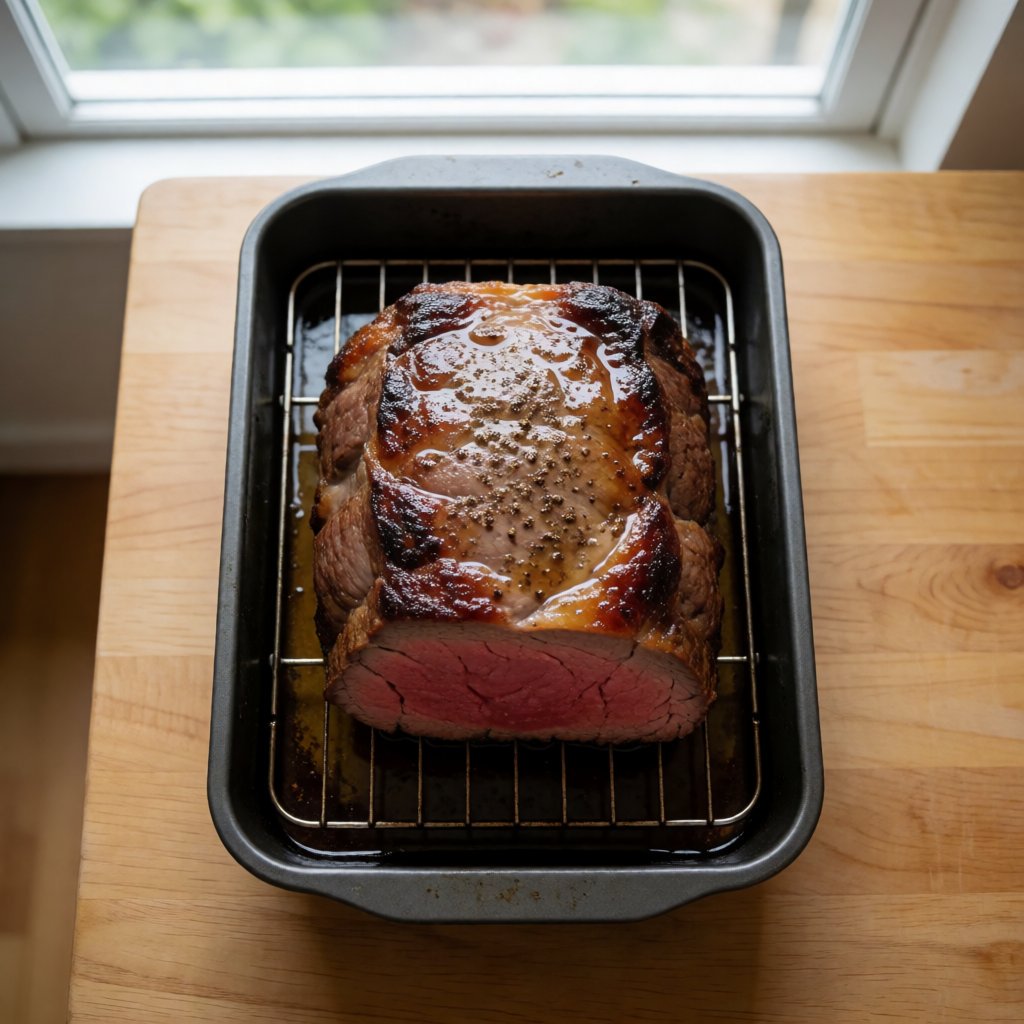
A simple roast beef with a golden seasoned crust and a rosy centre, sliced thin against the grain.
Ingredients
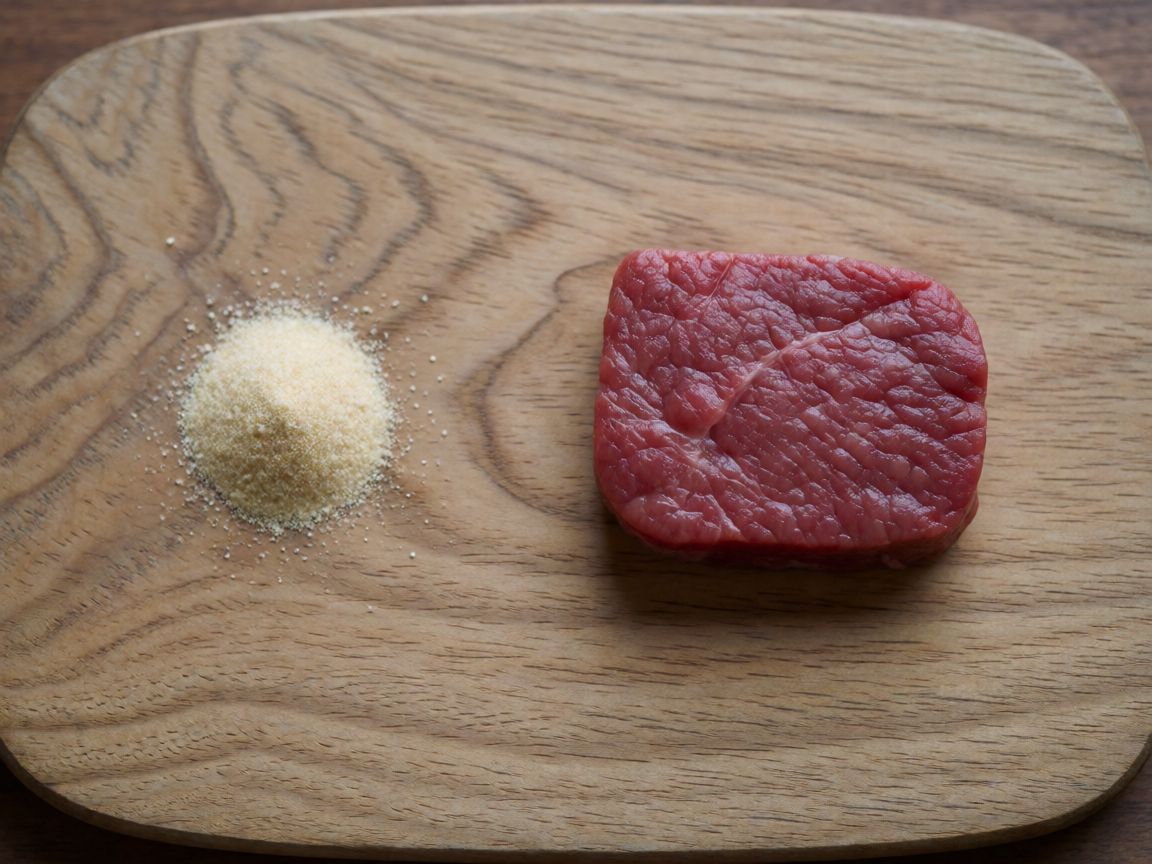
- 500 g beef fillet or sirloin, a thick, even cut, about 6cm thick
- 1 tbsp sunflower oil
- 1 pinch salt to taste
- 1 pinch black pepper to taste
- 1 pinch garlic powder to taste



Steps
Take the beef out of the fridge 30 minutes before cooking, then rub it with oil, salt and the spices.
30 minPut the beef in the oven at 200°C for 30 minutes, until the centre reaches 63°C.
30 minTake the beef out of the oven and cover it with foil for 10 minutes.
10 minSlice thinly across the grain.
Roast beef, in this recipe, means one whole thick piece of meat, roasted hot and fast, left alone to settle, then sliced thinner than you'd think something straight from the oven could manage. The whole thing balances on two things: an even, thick cut of beef — the same width end to end — and a proper read on what's happening inside it, which means a thermometer, not a kitchen clock guessing on your behalf.
Some say searing or roasting hot "seals in the juices." No — a crust doesn't seal anything, meat isn't a bag with a zip. What 200°C actually does is brown the surface fast enough that it's done before the centre has caught up, so you end up with crust on the outside and pink in the middle of the same piece, instead of grey meat all the way through because you were chasing a crust with low heat for too long.
The number that decides everything here is 63°C in the centre. At that point the muscle fibres have tightened enough to look and behave like cooked meat, firm, no longer translucent, but they haven't yet been squeezed hard enough to force their water out. Keep pushing past 70°C and the fibres clamp down properly, the juice runs, and what's left is drier with every extra degree. 63°C reads as medium, not as an undercooked risk — it only looks alarming if the only roast beef you've known came out grey.
On the cut: fillet or sirloin, thick, roughly 6cm and even along its length, because the thickness buys you time. A thin steak would brown and overshoot 63°C in the centre before the crust had a chance to form properly — the whole method depends on there being enough mass for a slow climb inward while the surface does its work. This only works with a tender cut to begin with. Brisket or chuck have collagen that needs hours at a gentler heat to turn soft; thrown in a hot oven for half an hour, they'd just be tough and done, two separate problems instead of one. If fillet or sirloin is out of budget, a thick-cut rib-eye or a well-trimmed piece of topside can stand in, as long as you keep the rule: an even, substantial piece, not a flat steak.
The oil's only job is to carry heat evenly to the surface and give the salt and spices something to cling to — it isn't there for flavour, so the criterion is an oil with no smell of its own. Sunflower does that. So does rapeseed, which is what most British kitchens have in the cupboard anyway and costs less. Leave olive oil for things eaten at room temperature; at 200°C its flavour burns off and its low smoke point works against you, not for you.
Salt goes on before the meat goes in, during that 30-minute rest on the counter, not as an afterthought at the table. In that half hour it has time to draw a little moisture to the surface and dissolve back in, seasoning the part of the meat that actually makes contact with your tongue — the crust — rather than sitting on top of it like gravel.
Pepper and garlic powder are there for a quick hit of aroma without wetting the surface. Fresh garlic, crushed into a rub, brings water with it, and water on a surface you're trying to brown just steams instead of browning — the surface sits at 100°C fighting off moisture before it can climb towards the temperatures that actually make a crust. Powder sidesteps that problem entirely, which is the whole reason dry rubs favour it over fresh.
On the oven itself: don't take 200°C on the dial as gospel. Domestic ovens in the UK are commonly off by 10 to 15 degrees either way, and a fan oven cooks faster and more evenly than a conventional one set to the same number. Thirty minutes is where you start checking, not where you stop cooking — a probe thermometer pushed into the thickest part is the only honest answer to "is it done," because the dial on the door has never once told the truth about what's happening inside the meat.
500g for two is a generous main-course portion, 250g raw per head, which is roughly what a proper Sunday roast portion of beef has always run to — a tradition built less on ceremony than on the fact that a big joint, cooked once, fed a whole family and left something for Monday's sandwiches. The 40 minutes of resting before the oven and the 10 minutes after aren't padding either side of the real cooking — they're as much a part of the method as the heat is. Treat them the way you'd treat tea left to brew: pull it out early because you're impatient, and you've made something weaker than what you were aiming for.
·