
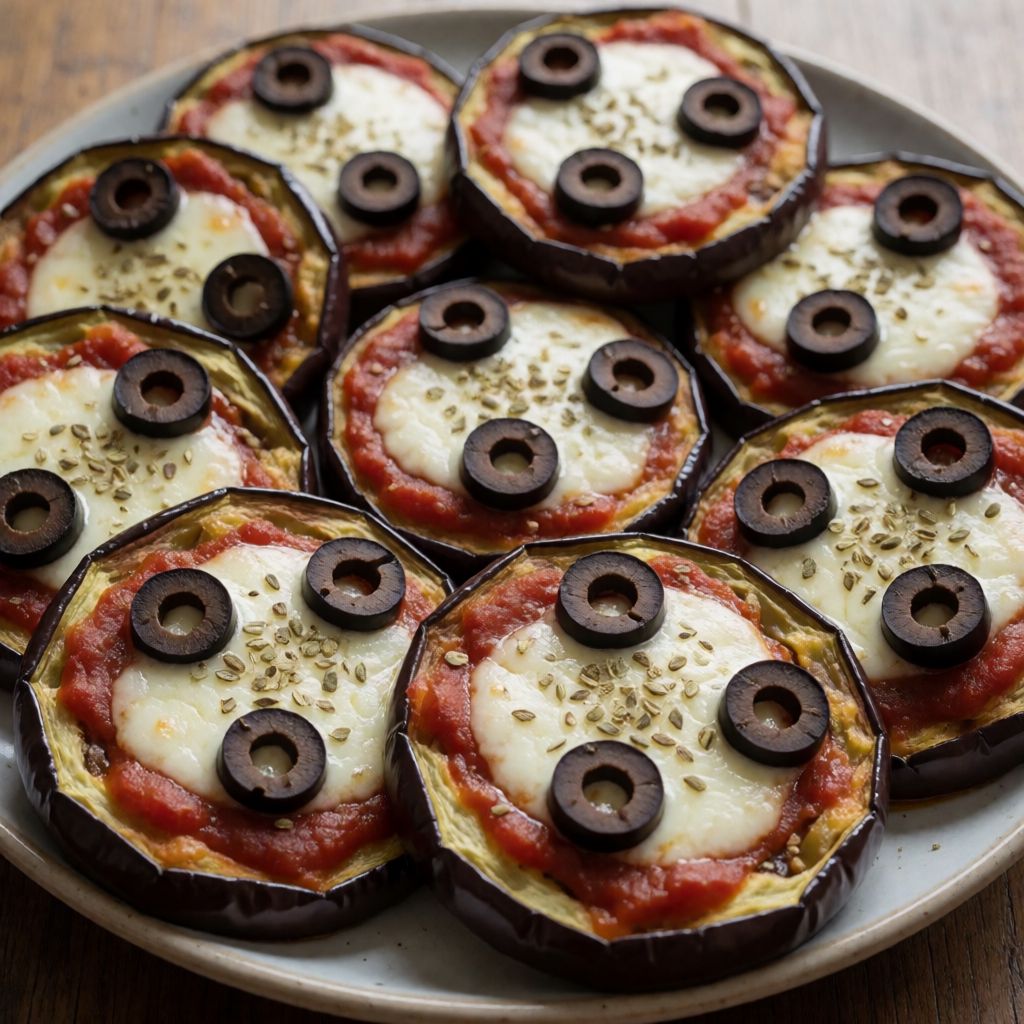
 AI photo
Mini Aubergine Pizzas
Grilled aubergine slices topped with tomato paste, mozzarella, olives and oregano, baked until melted and finished with fresh basil.
Labels are worked out automatically from the ingredients and can be wrong. Check the packaging if it matters to you.
Ingredients
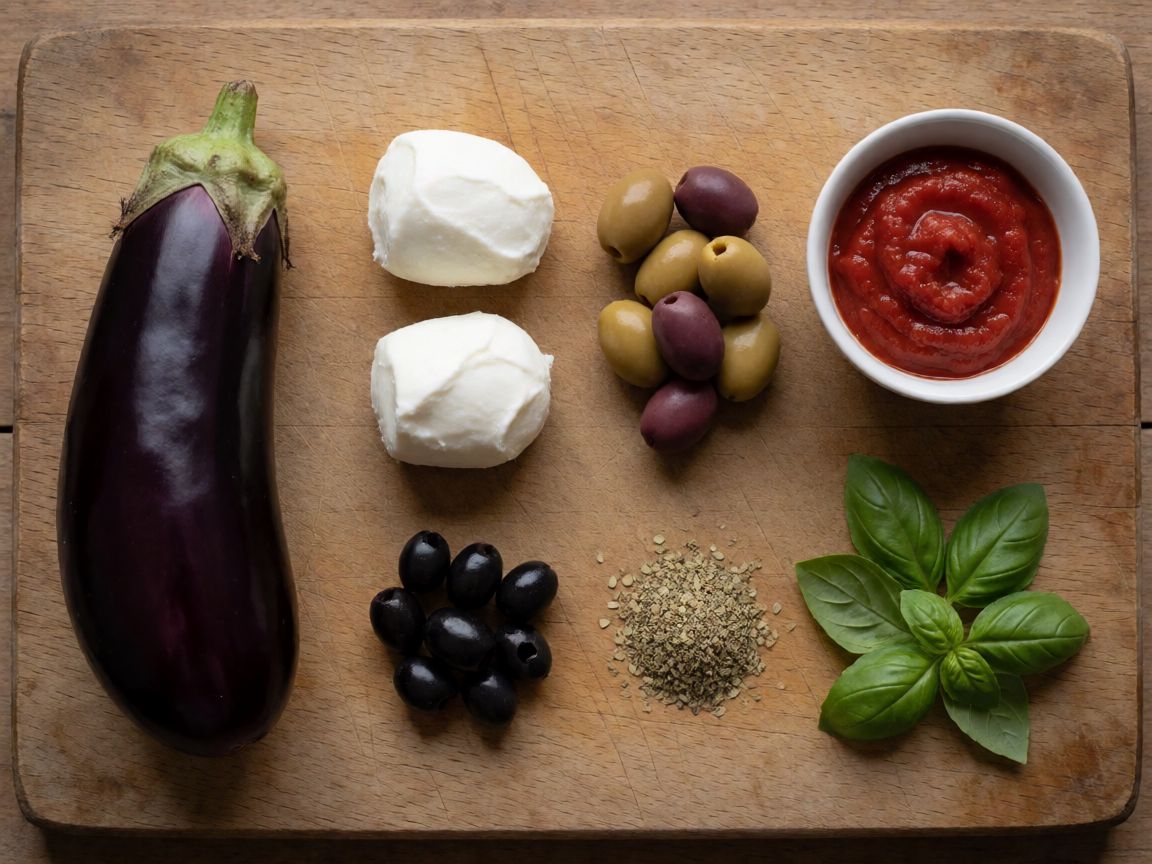
- 1 pcs Aubergine
- 2 pcs Mozzarella
- Tomato paste to taste
- Green olives to taste
- Black olives to taste
- Oregano to taste
- Olive oil to taste
- Basil fresh leaves, for garnish






Steps
Wash the aubergine and slice it into rounds about half a centimetre thick.
Grill the slices on both sides, then arrange them on a baking tray lined with parchment paper.
Spread the slices with tomato paste and top with diced mozzarella.
Decorate the mini pizzas with pitted olives and season with oregano.
Drizzle with olive oil and bake in an oven preheated to 180°C until the mozzarella melts.
10 minGarnish with fresh basil leaves and serve warm or hot.
These are rounds of grilled aubergine doing the job a disc of dough normally does: carrying tomato, cheese, and olives into the oven just long enough for the mozzarella to go soft. Call them pizzas if you like — they're really more of a vegetable canapé with ambitions, and they work as a starter before something heavier, a Sunday roast included, rather than as a meal on their own.
What decides whether this works is the aubergine slice, before any topping touches it. Cut it too thick and the middle stays raw and faintly bitter under the grill marks. Cut it too thin and it collapses the moment it's wet with tomato paste and oil — you get a puddle, not a base. Half a centimetre is the working compromise: thin enough to cook through fast on a hot pan, thick enough to still be a disc once it's carrying weight.
One myth worth clearing before you start: you don't need to salt the aubergine and let it weep first. That ritual belonged to older varieties, full of seeds and genuinely bitter. Modern aubergines aren't, mostly. What you're actually fighting is water, not bitterness — aubergine flesh is a sponge — and grilling deals with water better than salt ever did, by driving it off as steam instead of dragging it out slowly with a bowl underneath.
The whole thing has one real stopping point, and it's visual, not a timer: the mozzarella going soft and just starting to colour at the edges. Ten minutes in the oven is roughly how long that takes on a domestic hob's oven, but it's a lower bound, not a deadline — watch the cheese, not the clock.
Start with the aubergine itself. Pick one that's heavy for its size, with tight, glossy skin and no give when you press it — that weight means dense flesh and fewer of the loose seed cavities that turn watery and bitter when cooked. A soft or wrinkled aubergine has already started drying from the inside; no amount of grilling fixes that.
Grilling the slices before anything goes on top isn't decoration, it's division of labour. A ridged pan or a dry frying pan, hot enough that a slice hisses the instant it lands, does two jobs at once: it drives off enough of the aubergine's water that the slice won't go slimy under the tomato paste, and it lays down char flavour you can't get in an oven. Try to skip this and bake raw aubergine straight away, and you'll get one of two failures — the cheese melts and burns before the aubergine is cooked through, or the aubergine turns leathery waiting for the cheese to catch up. Two stages, two jobs. The oven at 180°C only has one task left: melt cheese gently, without scorching edges that are already cooked.
For the same reason, dice the mozzarella rather than laying on a slab. Small pieces melt into little pools that spread and cover more of the tomato base, and they shed less whey than one thick disc would, which matters on a slice that's already managed its water once and doesn't need more arriving from the topping. If you can't get mozzarella, any cheese that melts smooth without splitting into oil and solids will do the same job — a young provolone, scamorza, even a mild Cheddar in a pinch, though it browns faster, so watch it rather than the clock.
Use tomato paste, not passata or chopped tinned tomato, for the same water-logic. The whole point of grilling the aubengine was to get rid of excess moisture; spreading a watery sauce on top undoes that work before it's even gone in the oven. Paste is concentrated — it gives tomato flavour without adding a sauce's worth of liquid.
Buy olives already pitted. On a disc this small, biting down on a stone is not a small inconvenience, it's the whole bite ruined — and pitting eight people's worth of olives by hand while the aubengine slices are cooling is not a good use of your twenty minutes of prep. Dried oregano, rubbed between your fingers before it goes on, releases more of its oil than oregano simply shaken from the jar — friction and a bit of warmth from your hand does that.
The olive oil here is a finishing oil, not a cooking one, so the usual advice — use something with no smell of its own — is backwards for this step. You want the opposite: an oil with character, because it's going on raw or near-raw and its flavour stays. A peppery extra virgin earns its place here.
Basil goes on last, off the heat, for a reason worth knowing rather than just following: its fragrance lives in volatile oils that break down under heat, turning bitter and the leaf black at the edges. Put it on before baking and you lose the basil; put it on after and you get what it's there for. Patience here isn't about long cooking — it's about not rushing the one ingredient that doesn't want to be cooked at all.