
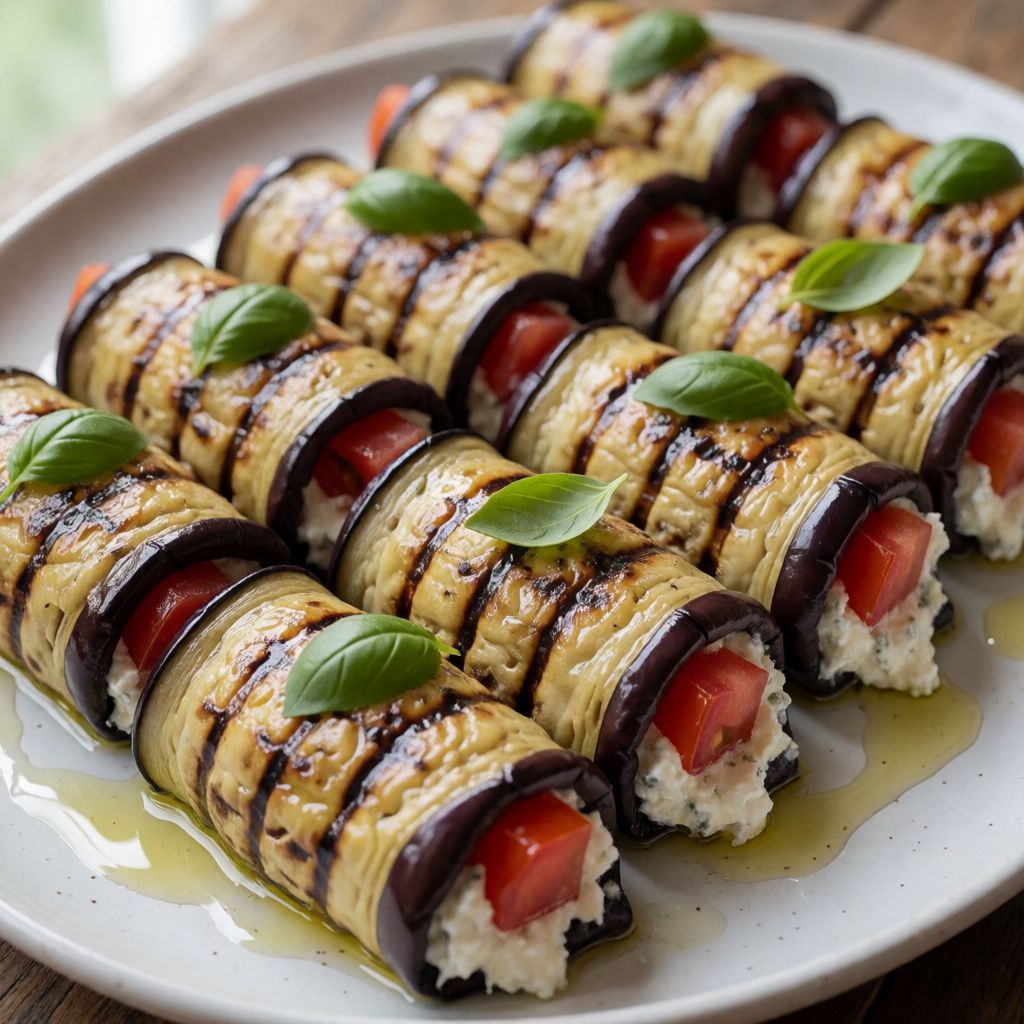
 AI photo
Aubergine Rolls with Robiola, Tomatoes and Basil
Light grilled aubergine rolls filled with robiola, cherry tomatoes and basil – a simple Italian-style starter.
Labels are worked out automatically from the ingredients and can be wrong. Check the packaging if it matters to you.
Ingredients
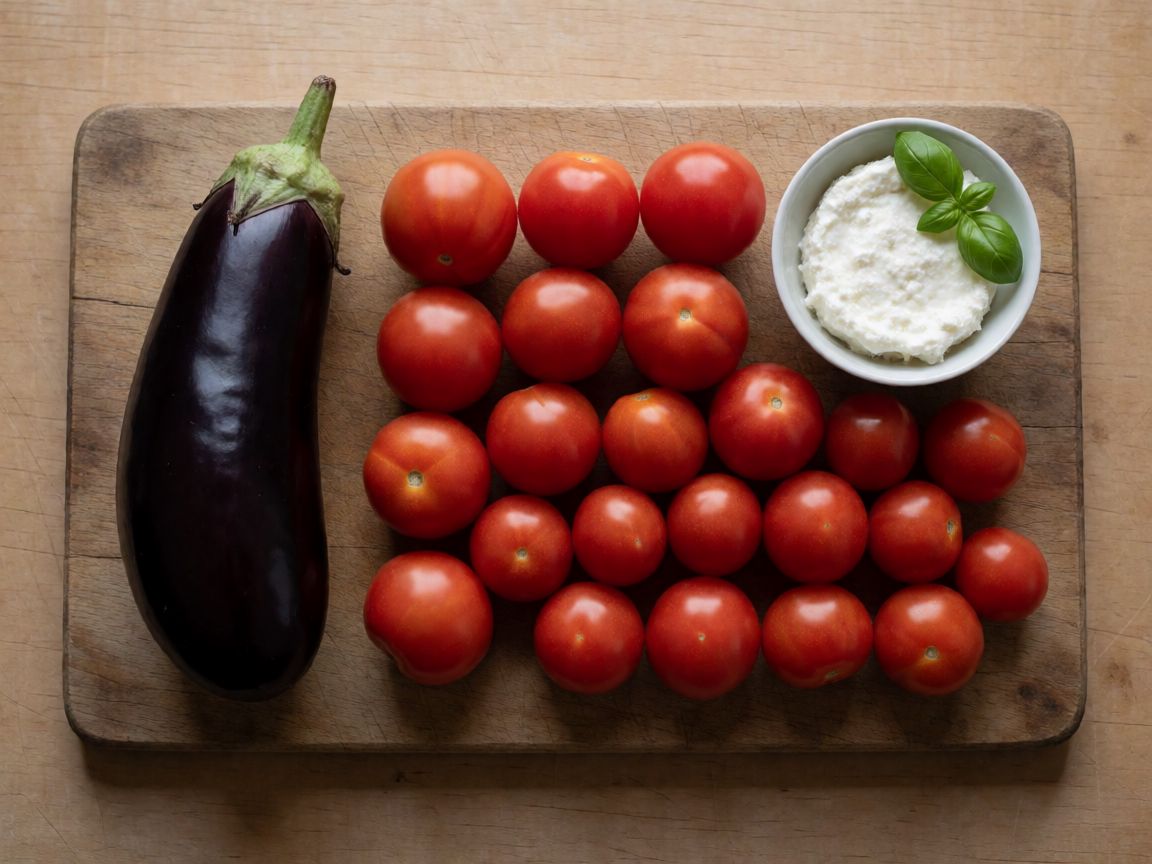
- 1 pcs Aubergine
- 18-20 pcs Cherry tomatoes
- 200 g Robiola
- 1 bunch Basil
- 2 tbsp Olive oil
- 1 pinch Salt
- 1 pinch Black pepper






Steps
Rinse the aubergine under running water, trim both ends, then slice it lengthways into slices about 3-4mm thick.
5 minHeat a grill, grill pan or a regular non-stick frying pan and cook the aubergine slices on both sides until lightly browned.
10 minLet the aubergine slices cool.
5 minChop the cherry tomatoes into small pieces and place in a bowl with the robiola; add the olive oil, salt and black pepper, then mix well.
5 minTake one aubergine slice, lay a basil leaf on top, spoon on the robiola and tomato mixture, roll it up and secure with a cocktail stick.
10 minTie each roll with a strand of chive if you like, then remove the cocktail sticks for a neater presentation.
5 min
This is a cold, built-not-cooked antipasto: thin ribbons of aubergine, browned just enough to turn pliable, wrapped around a soft cheese and tomato filling. Only one thing in the whole dish ever sees real heat — everything else is assembly. That's the point of it: a little cooking does a lot of work, and the rest is patience with a knife and a spoon.
What decides whether it works is the aubergine slice, nothing else. Cut it thick and the centre stays raw, spongy and faintly bitter — it won't bend around the filling, it'll crack. Cut it too thin and it dries out on the pan before it's cooked through, and tears the moment you try to roll it. Three to four millimetres is the window where the slice loses its raw sponginess but keeps enough structure to fold without snapping — the same logic as bending a carrot to test if it's done, just applied to a vegetable that has no crunch to give away its state. You're looking for flesh that's gone from chalky white to a soft, slightly translucent green-brown, with the surface starting to brown at the edges. That's your cue, not a clock.
On the aubergine itself: pick one that's heavy for its size, with skin that's tight and glossy, not dull or wrinkled — a wrinkled skin means the flesh underneath has already started losing water and will cook unevenly, soft in patches, tough in others. If you don't have aubergine, a firm courgette sliced the same way and grilled the same way follows the same mechanism — a dense vegetable, cut thin, browned until pliable — though the flavour is milder and the dish loses its particular smoky sweetness.
The pan matters more than the thermostat setting. You don't need a ridged grill pan — a wide, dry non-stick frying pan does the same job. What you need is a surface hot enough that the aubergine sears on contact rather than stewing in its own juice. If the pan's too cool, the slice releases water slowly, goes grey and slimy instead of browning, and never develops that slightly nutty edge that makes it taste of something. No oil goes on the aubergine itself here — all the fat is reserved for the filling — so a cold pan is the one real way to ruin this step.
Robiola is a very soft, almost spreadable fresh cow's cheese from northern Italy — mild, a little tangy, with no rind and barely any structure, which is exactly why it works: it spreads into the chopped tomato rather than sitting as lumps, and it won't puncture the aubengine when rolled. If you can't find it, the criterion is softness and spreadability, not a brand — a full-fat cream cheese loosened with a spoon of milk, or mascarpone with a squeeze of lemon to bring back some tang, both behave the same way under a knife.
Cherry tomatoes are chosen for being low in water and higher in sugar than a big tomato cut into the same size pieces — chop them small enough that they bind into the cheese rather than sitting as separate wet chunks, which would soak through the aubengine and loosen the whole roll. Salt them with the cheese, not before, or you'll draw out their water too early and end up with a puddle instead of a filling.
Basil has to be fresh here — its smell comes from oils that are mostly gone by the time a leaf is dried, and a dish built on contrast between warm vegetable, cool cheese and sharp tomato needs that one green, peppery note to hold it together. There's no real substitute; if you have none, leave it out rather than reach for the dried jar, which will taste of nothing useful.
Cocktail sticks are only there to hold the roll shut while the filling is loose and the aubengine still wants to spring back open — once it's chilled and the cheese has firmed slightly against the tomato, the roll holds itself and you can pull the stick for a cleaner plate. A strand of chive tied round each one is decoration, not function — skip it without guilt if you're feeding four people on a Sunday and don't fancy fiddling with herb string. Eighteen to twenty rolls from one aubergine and 200g of robiola works out to four or five rolls a head as a starter — small enough that nobody fills up before the roast.