
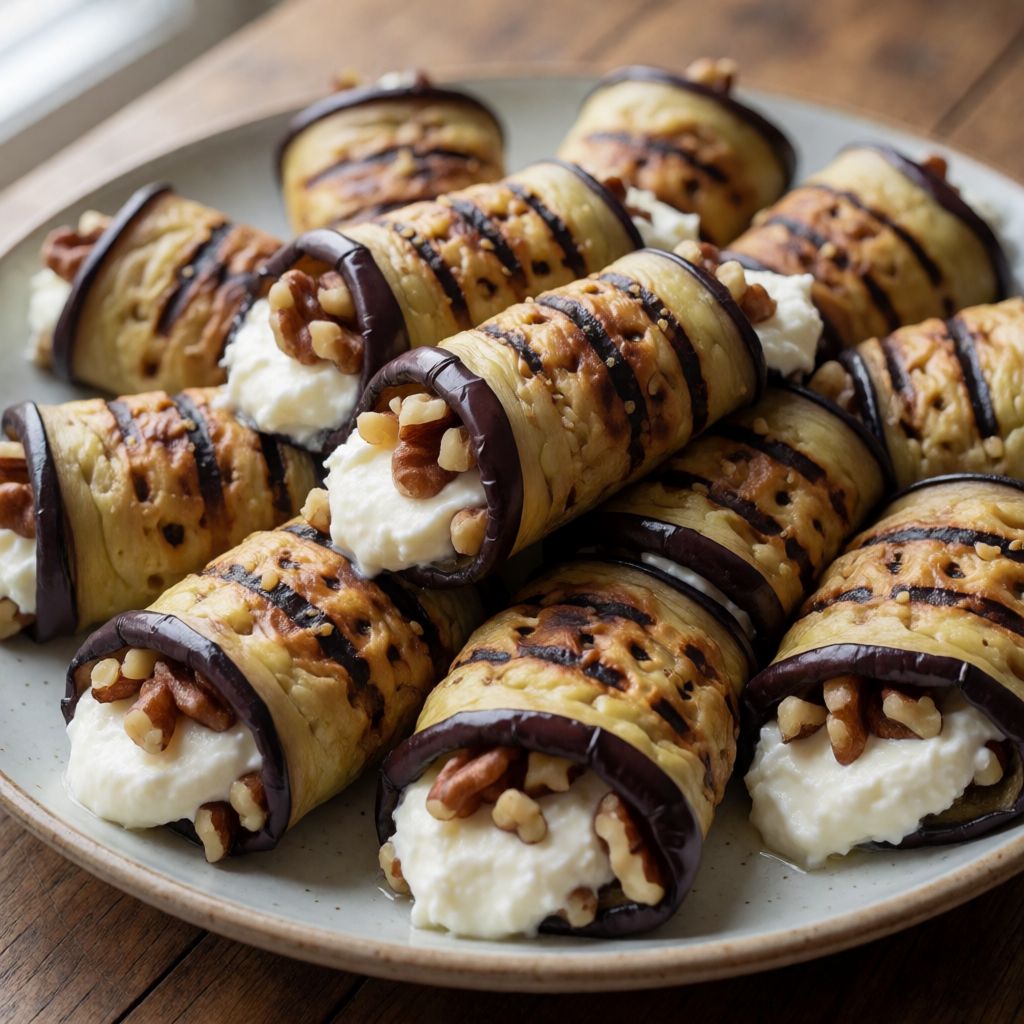
 AI photo
Aubergine Rolls with Walnuts
Grilled aubergine slices rolled with walnuts, garlic, parsley and mozzarella — a simple antipasto.
Labels are worked out automatically from the ingredients and can be wrong. Check the packaging if it matters to you.
Ingredients
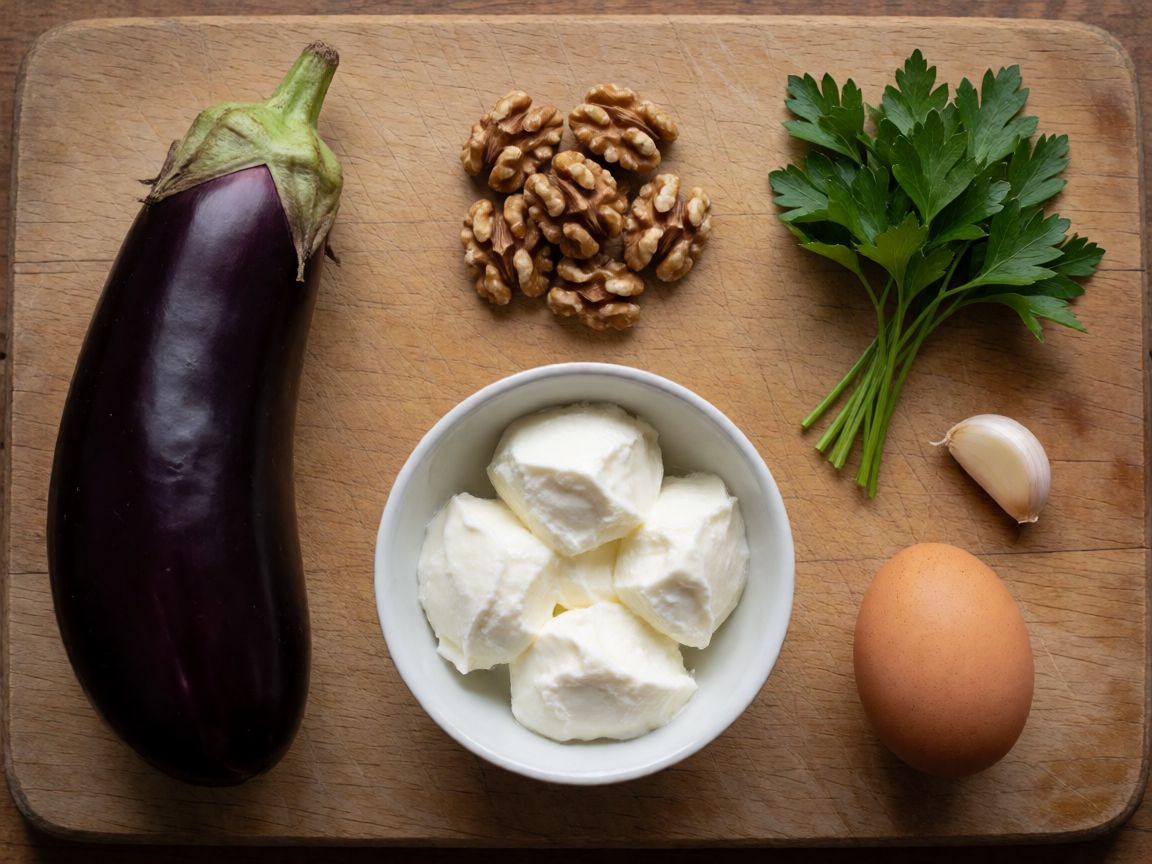
- 1 pcs Aubergine
- 50 g Walnuts
- 100 g Mozzarella
- 1 bunch Parsley
- 1 pcs Egg
- 1 clove Garlic
- Salt to taste
- Vegetable oil for frying





Steps
Wash the aubergine and cut it into slices. Sprinkle with coarse salt.
Leave the aubergine for at least half an hour to release its juices.
30 minFinely chop the parsley together with the garlic and walnuts.
Beat the egg vigorously in a bowl, add a pinch of salt.
Rinse the aubergine slices under running water and pat dry with a paper towel.
Grill the slices for a few minutes until softened.
Dip the grilled slices into the beaten egg.
Coat the slices in the mixture of walnuts, garlic and parsley.
Place a little chopped mozzarella on each slice, roll it up and secure with a cocktail stick.
Heat a large frying pan with oil for frying and fry the rolls until golden.
Place the rolls on a paper towel and serve hot.
This is a dish built on a correction. Aubergine, left alone, is bitter and thirsty for oil — it soaks up whatever fat is near it like a sponge soaking up a spill. So before anything else happens, you salt it. Not to season it — to pull water out of it by osmosis, and the bitterness goes with the water. Skip this and you get slices that drink your frying oil and still taste faintly of soap. That's the mechanism, not folklore.
What decides whether the rolls hold together, and taste of more than "fried vegetable", is the inside: walnuts for weight and a faint bitterness that plays against the mozzarella's blandness, garlic and parsley for sharpness, mozzarella for the stretch and the salt. The egg isn't there to taste of egg — it's glue, a wet layer that makes the walnut mixture stick to a surface that would otherwise shed it like rain off a car bonnet.
Some say you must fry the aubergine raw straight into oil, the old way. No — because raw aubergine flesh is rigid, almost woody, and it won't roll; it cracks. Grilling first isn't a nod to being "healthier", it's what makes the slice pliable enough to curl around a filling without splitting. You're looking for the slice to bend like a strip of leather, not snap like a cracker — that's your doneness cue, not a clock.
Take the aubergine itself first. One large one is enough for four starters because you're slicing it thin and rolling, not serving slabs. Choose one that feels heavy for its size and gives slightly under a thumb press without staying dented — that's a sign the seeds inside are still small and the flesh hasn't turned spongy and bitter with age. There's no real substitute for aubergine here; courgette will roll but it won't have the same give or the same need for salting, so it's a different dish, not a stand-in.
The salting step is the whole reason this works without drowning in oil. Coarse salt draws water out faster than fine salt because it dissolves more slowly and sits on the surface pulling moisture rather than melting straight in — thirty minutes is a floor, not a target; if your slices are thick, give them longer, you'll see beads of liquid sitting on the surface when it's done, that's your cue, not the clock. Rinse it off properly after, or you'll oversalt the dish later and have no way to pull it back out.
Walnuts need to be fresh enough that they don't taste of cardboard — old walnuts go rancid quietly, with a faint bitterness that mimics "healthy wholesome nut" when it's actually just stale fat. Buy them whole if you can and chop by hand; pre-chopped walnuts have more surface area exposed to air and turn faster. If you've only got hazelnuts or almonds in the cupboard, they'll do a similar job of adding weight and crunch, but you lose the slight bitterness that plays so well against the cheese.
Mozzarella's job is moisture and stretch when it hits heat — it's the only reason the roll feels like something, rather than a dry parcel of vegetable and nuts. Buy the kind sitting in its own liquid, not the dry pre-shredded pizza kind, which is designed to melt evenly on a pizza, not to ooze inside a roll. If mozzarella isn't to hand, any mild, meltable cheese with some moisture — a young provolone, even a soft mild cheddar in a pinch — covers the same ground, though you'll lose that particular milky stretch.
The egg dip is pure mechanics, not flavour. A beaten egg is sticky and wet in a way that lets the dry walnut-garlic-parsley mix cling rather than fall straight off into the pan — without it, you're frying naked aubergine with a pile of nuts beside it, not on it. Parsley and garlic, chopped fine together with the walnuts, are there for brightness against all that rich melted cheese and fried surface — garlic especially, raw and sharp, cuts through fat the way nothing cooked ever quite does.
On frying: use oil with no smell of its own — sunflower, a light groundnut oil, anything that won't argue with the garlic and parsley you've just worked hard to keep distinct. Olive oil, especially a good one, will fight the dish rather than support it, and it also smokes at a lower point, which matters once the pan's hot enough for the outside to turn gold and crisp while the cheese inside has barely begun to soften — that contrast, crisp outside, molten in, is the whole point of frying rather than just baking these. A wide domestic frying pan is honestly better suited to this than any kazan — you need the rolls lying flat, in one layer, each one touching metal, not stacked and steaming each other soft.