
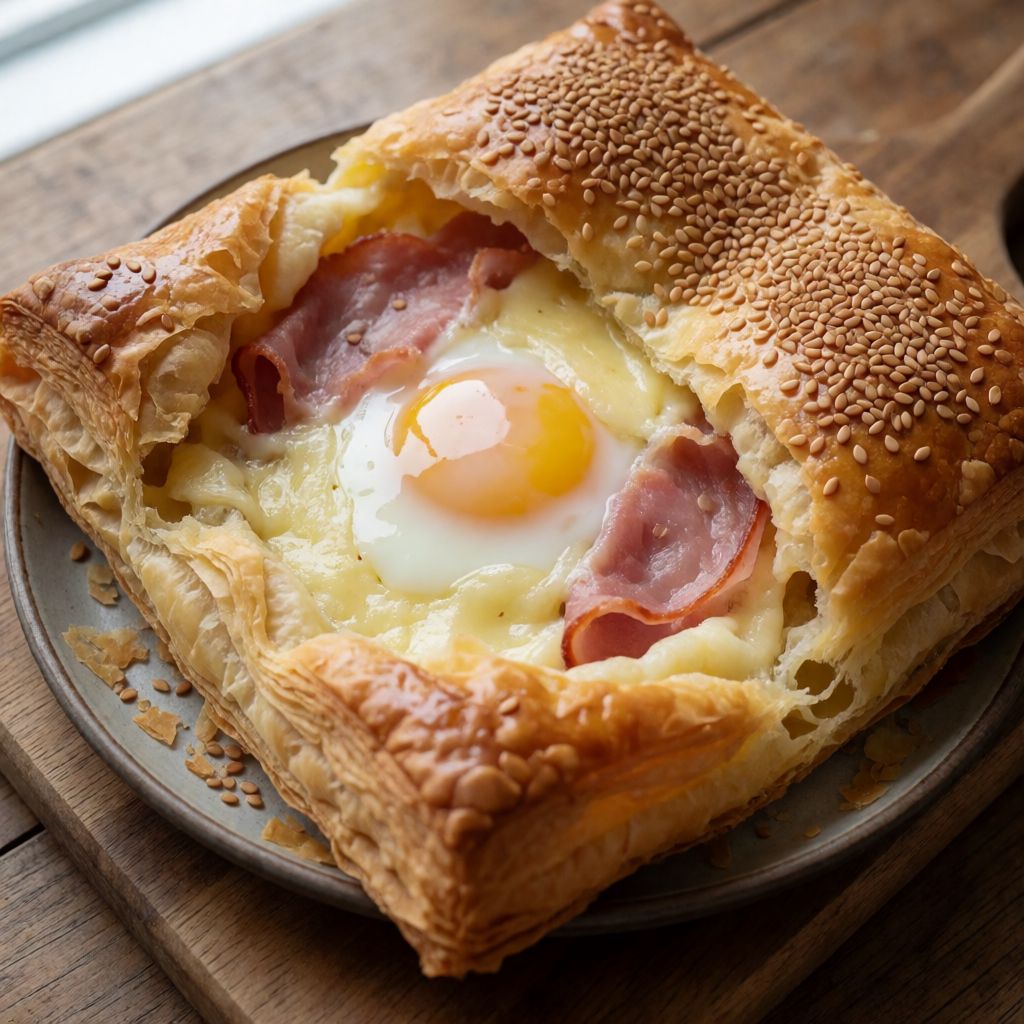
 AI photo
Eggs in Puff Pastry
A soft-boiled egg wrapped in ham, cheese and puff pastry, baked until golden.
Labels are worked out automatically from the ingredients and can be wrong. Check the packaging if it matters to you.
Ingredients
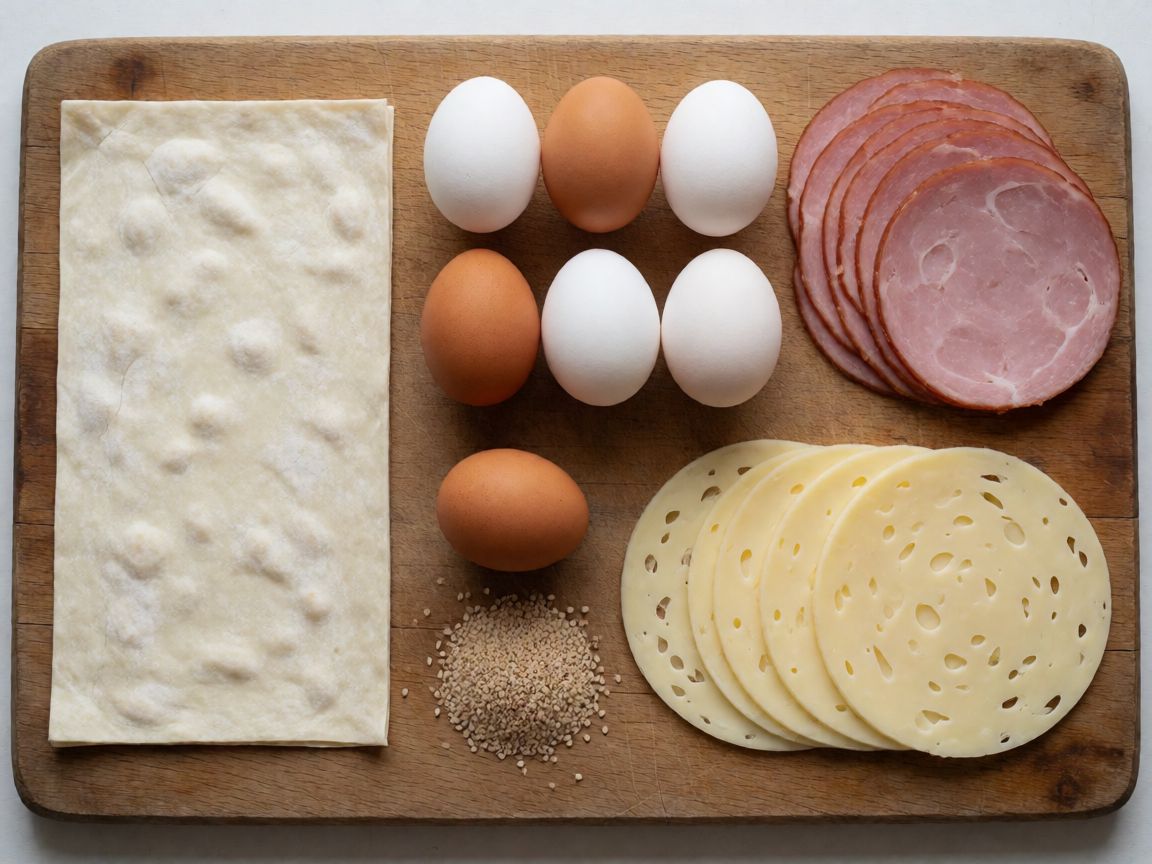
- 1 pcs Puff pastry sheet
- 6 pcs Eggs for the filling
- 6 pcs Ham slices
- 6 pcs Provolone or a stretchy cheese (pasta filata)
- 1 pcs Egg for brushing
- Sesame seeds to taste


Steps
Boil the whole eggs in a pan of water for 6 minutes from boiling.
6 minDrain, cool the eggs and peel off the shells.
Divide the puff pastry into 6 equal rectangles.
Place a slice of ham, a slice of provolone and a boiled egg in the centre of each rectangle.
Bring the opposite edges of the pastry together, wrapping each egg and pinching the edges well to seal.
Place the wrapped eggs on a baking tray lined with parchment paper.
Brush with beaten egg and sprinkle with sesame seeds.
Bake at 200°C until golden.
25 min
This is a soft-boiled egg hidden inside ham and cheese, wrapped in puff pastry, and baked till the crust goes gold. Think of it as a British answer to the Scotch egg, except the crisping job is done by butter trapped in pastry layers instead of by hot oil in a pot you'd rather not clean. What decides whether it works is almost entirely about timing two separate cookings of the same egg, and whether your seal holds while the pastry does its violent little expansion in the oven.
Some say you should hard-boil the egg for this, so it "holds its shape" when you wrap it — no, because the egg isn't done cooking at six minutes. It goes back into heat for another twenty-five, insulated by dough that slows the attack but doesn't stop it. Boil six minutes from the boil and the white is set, the yolk still soft and trembling. That trembling yolk is exactly what you want walking into the oven, because the second heating will firm it the rest of the way. Boil it hard first, as if for egg mayonnaise, and by the time the pastry is gold the yolk has gone past done into grey and chalky — cooked twice, forgiven never.
Puff pastry, bought in a block, is somebody else's patience sold to you cheap — the folding and resting that laminates butter into dough is a whole afternoon's work if you do it yourself, which is why most kitchens, professional or domestic, buy it ready-made. If you do buy it, look at what fat it's made with: a block that lists butter will puff taller and taste of something; one built on vegetable fat or palm oil will still rise, just flatter and blander, because the steam-trapping mechanism is the same regardless of which fat you use — it's the flavour and the height that differ, not whether it works at all.
The eggs don't need to be anything special — a medium egg straight from the fridge is fine, though a shell that's gone from fridge to boiling water sometimes cracks from the shock, so if that bothers you, let them sit on the counter ten minutes first. After boiling, cool them properly under cold water before you peel and wrap them. This isn't fussiness: a still-warm egg will sweat inside the pastry, and that trapped moisture is exactly what stops the layers underneath it from crisping — you end up with a soggy ring where the egg sat, gold everywhere else.
Ham here is doing a flavour job, but it can also do damage if you choose wrong. A wet-cured, brine-heavy ham slice weeps liquid as it warms, and that liquid soaks straight into the dough from the inside, same problem as the warm egg. Choose a drier, thinner-cut ham — cooked ham or a dry-cured one like prosciutto both work — and pat it dry if it looks damp out of the packet. If all you have is raw bacon, cook it through first; the pastry shields the centre enough that raw bacon will not reliably cook through in twenty-five minutes.
Provolone belongs to the pasta filata family — curd that's stretched and kneaded in hot whey during making, which is exactly why it melts in long elastic strands rather than pooling into a flat slick of oil the way, say, a crumbly aged cheese would. Any other cheese from that same family does the same job: mozzarella, scamorza, a mild kashkaval. A firmer cheese like cheddar will still melt and taste fine, you just lose that stretch when you cut into it — not a failure, just a different texture, and no reason to treat provolone as the only correct answer.
The egg wash is there for colour, not structure — egg proteins and sugars brown under heat (the same Maillard reaction that browns your Sunday roast), and a thin even brushing gives you that shine and gold rather than a dry, pale crust. Sesame seeds toast themselves in the same heat and add crunch; if you haven't got any, nothing is lost, the pastry will still colour on its own.
This is a tidier, oven-only cousin of the deep-fried Scotch egg, which suits a flat with no deep-fat fryer and no wish for one. Six eggs, six rectangles, one person each — good for a weekend brunch alongside the tea, or packed cold for lunch the next day, since they hold their seal once cooled.