
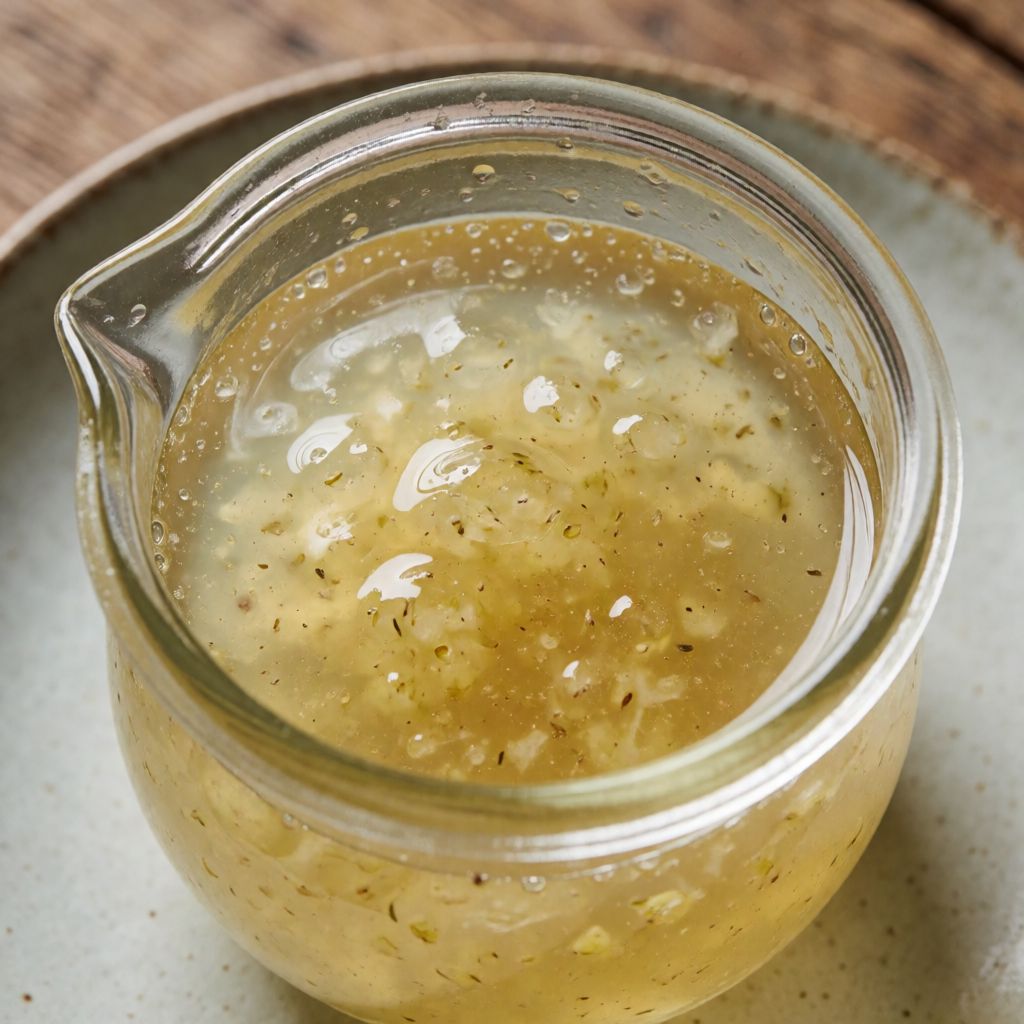
 AI photo
Elderflower Syrup
A simple homemade elderflower syrup, lightly sweetened and flavoured with vanilla.
Labels are worked out automatically from the ingredients and can be wrong. Check the packaging if it matters to you.
Ingredients
- 300 ml Elderflower cordial
- 100 g Caster sugar
- 20 g Glucose syrup
- 1 pcs Vanilla pod



Steps
Put the elderflower cordial, sugar, glucose syrup and vanilla pod into a saucepan.
2 minBring to the boil, stirring, then simmer over low heat for about 15 minutes, or until it reaches the consistency of a thin syrup.
15 min
What was changed
Vanilla pod was swapped to match the vanilla pod used in the steps.
This isn't a drink — it's a drink's backbone. Elderflower cordial is already sweet and already flavoured; what you're doing here is driving off water until what's left is thick enough to cling to a spoon instead of running off it. You're turning a dilute cordial into something concentrated enough to drizzle over a fool, stir into a glass of sparkling water, or lace through a sponge — a little goes a long way precisely because you've made it work harder.
What decides whether it works has nothing to do with the clock on the hob. Fifteen minutes is where to start checking, not where to stop and switch off. The real test is behaviour: dip a spoon, lift it, and watch how the liquid falls. Thin and watery, it's not ready. Falling in a slow, hesitating ribbon that holds its shape for a second before breaking — that's a syrup. Some people reach for a thermometer and a sugar-stage chart here. You don't need one for a job this small; a spoon and your own eyes do the same work, and you learn to trust them faster than you learn to read a dial.
Elderflower cordial is the whole dish in miniature: it's already sugar, water, elderflower extract and usually a little citric acid for brightness. You're not flavouring a neutral liquid, you're concentrating a flavoured one. If you only have the diluted stuff meant for making squash by the jugful, use less water than the bottle tells you to, or you'll be reducing for a very long time trying to catch up.
Caster sugar here isn't for sweetness — the cordial already has plenty. It's bulk: more dissolved sugar means the syrup sets up thicker and holds longer once it's cooled, because sugar in solution is what gives a syrup its body in the first place. If caster sugar isn't to hand, any fine white sugar that dissolves without a fight will do; just avoid sugars with their own strong flavour, like dark muscovado, which will fight the elderflower instead of supporting it.
Glucose syrup is the quiet insurance policy. Plain sugar syrups, cooled and left, like to turn grainy — the sugar molecules find each other and crystallise back out, and your smooth syrup turns gritty. Glucose syrup is made of different-sized sugar molecules that get in the way of that regrouping, so the syrup stays glassy and pourable instead of turning to slush in the fridge. The criterion for a substitute is exactly that: something that resists crystallising. Golden syrup or a mild honey will do the same job, though both bring their own faint flavour along — honey especially, so use a light one if you don't want it competing with the elderflower.
The vanilla pod is there for warmth under the floral top notes — elderflower alone can taste a little thin and sharp, almost soapy, and vanilla rounds that off. Heat and time together are what pull the flavour out of the pod; a short boil barely touches it, which is part of why the full simmer matters, not just for texture but for what's actually dissolving into the syrup while it reduces. If you don't have a pod, a small spoon of vanilla extract added once the pan's off the heat gets you most of the way there — just don't boil the extract itself, or the alcohol carries the aroma off with the steam before it's had a chance to do anything.
As for scale: this makes one batch, not one serving — a jar's worth, maybe 300–350ml once it's reduced, which stretches across a good many drinks or desserts rather than feeding one person once. Keep it in a clean bottle in the fridge and it'll outlast most things you'd pair it with; it's syrup, not stock, so it isn't in a hurry to spoil.