
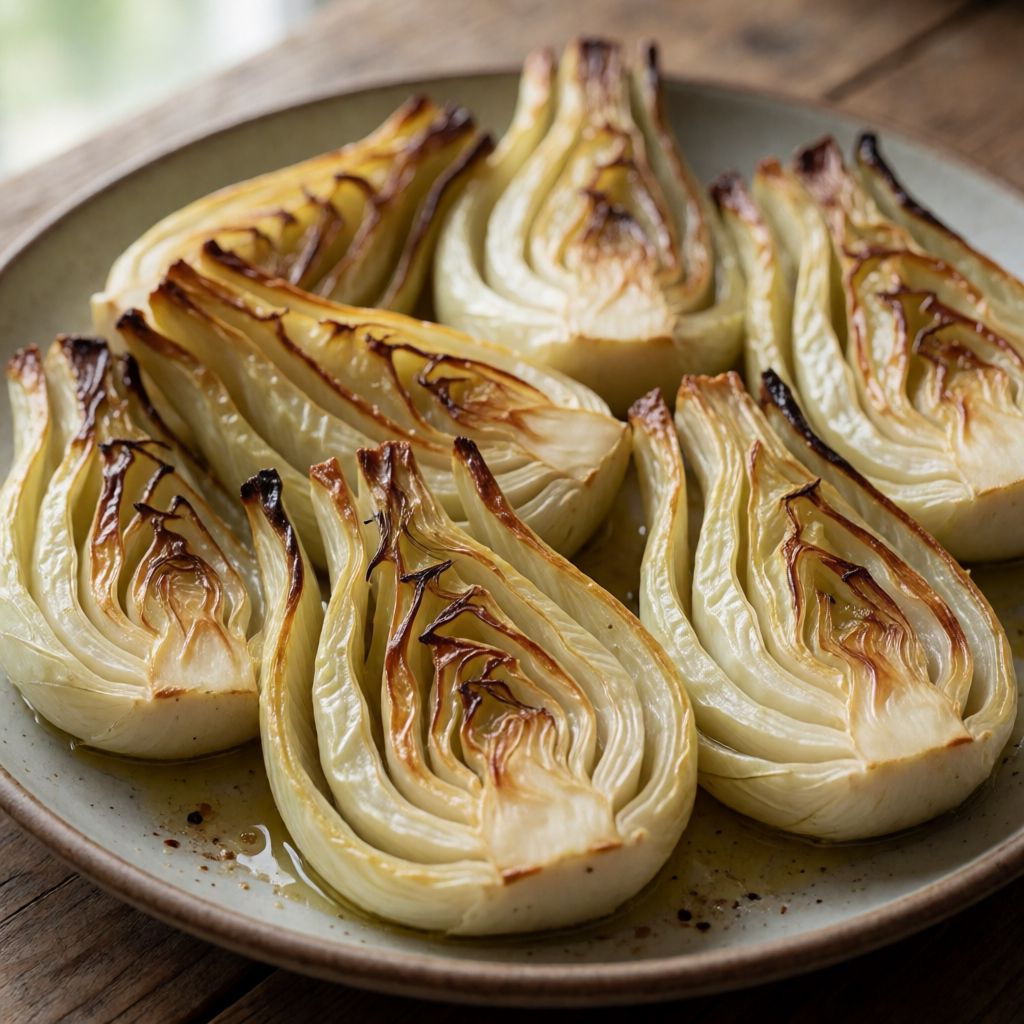
 AI photo
Oven-Roasted Fennel
Fennel wedges blanched, seasoned with olive oil, salt and pepper, then roasted until tender.
Labels are worked out automatically from the ingredients and can be wrong. Check the packaging if it matters to you.
Ingredients
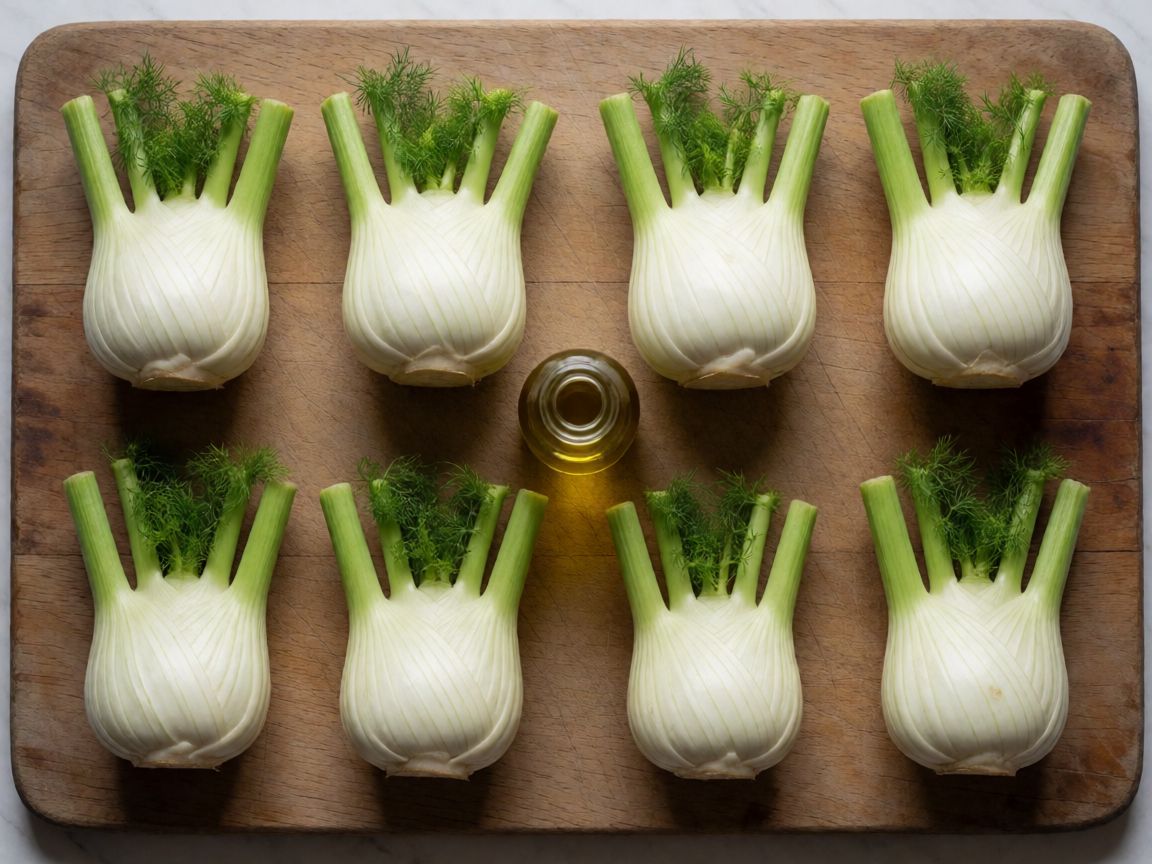
- 8 pcs Fennel
- Olive oil to taste
- Salt to taste
- Black pepper to taste



Steps
Wash the fennel thoroughly under running water. Trim the base and slice into wedges.
Rinse the fennel once more before continuing.
Fill a pot with water, add salt and bring to the boil.
Boil the fennel in the boiling water for about 5 minutes.
Drain the water and pat the fennel dry with paper towels.
Leave the fennel to rest for a few minutes.
In a bowl, mix the olive oil, salt and black pepper.
Dip the fennel wedges in the mixture, turning to coat evenly.
Line a baking tray with parchment paper and arrange the seasoned fennel wedges.
Roast the fennel in a fan oven preheated to 200°C for 15 minutes.
15 minServe hot.
Fennel roasted whole-wedge is really two different jobs stacked on top of each other, and the whole dish stands or falls on whether you let each job do its own work. The bulb is dense and fibrous at the core — raw, it would either stay crunchy in the middle while the outside blackens, or you'd roast it so long chasing a soft centre that the edges turn to carbon. So you parboil first: five minutes in salted water softens the core enough that the oven's only remaining task is to dry the surface and brown it. Two short processes, each doing the thing it's actually good at, instead of one long process trying to do both and failing at one end.
That's also why drying the wedges matters, and it's not fussiness — it's physics. Fennel is mostly water. Lay wet pieces on a tray and the surface stays near boiling-water temperature, held there by its own steam, and nothing browns — it just stews in its skin. Pat it properly dry, let it rest a few minutes so the last bit of surface moisture gives up too, and the surface can actually climb past 100°C and caramelise. A fan oven helps here precisely because it keeps stripping that moisture away as it forms, which is why 200°C with the fan on behaves differently from the same number on a static setting — don't swap one for the other without expecting a longer roast.
Eight bulbs for four people looks excessive until you remember how much of a fennel bulb is water and air — it shrinks hard in both the pot and the oven, so what looks like a mountain raw becomes a modest tray of wedges. Pick bulbs that are tight and pale, with no browning at the cut end and no splitting along the ribs; a split bulb has usually been sitting too long and the layers inside will be stringy rather than crisp-tender. The fronds on top, if your bulbs still have them, aren't wasted — save them the way you'd save dill, for a salad or stock, though that's a different pan entirely.
Olive oil is named here out of habit more than necessity. The real criterion for the fat is: it shouldn't fight the fennel's own aniseed smell. A fruity extra virgin can actually compete with that rather than support it — if that bothers you, use something with no flavour of its own at all, sunflower or rapeseed oil work fine and let the fennel's own character lead. Use olive oil if you like the Mediterranean note, use neutral oil if you want the vegetable to taste like itself.
Salt does two separate jobs in this recipe and it's worth noticing they're not the same job. In the boiling water, it's there to season from inside while the core is still soft and absorbent — fine salt, because it needs to dissolve fast in a pot that's only on the heat a few minutes. In the oil mixture before roasting, it's seasoning the surface that's about to brown, so it can be whatever salt you've got to hand.
Pepper is better cracked just before it goes into the oil than tipped from a pre-ground tin — the aromatic oils in pepper are volatile, they start leaving the moment the corn is broken, and a jar of ready-ground pepper has usually been losing that fight for months on a shelf. It's a small thing, but on a dish with only four ingredients, small things carry more weight than they would in a stew with twenty.
This is a tray dish, not a kazan dish, and that's worth saying plainly: in a wide domestic pan or on a flat baking tray you've no walls to trap steam and no deep sides to let things stew in their own juice, which is exactly why the drying-and-roasting half of the method depends on you, not on the equipment, to get the wedges properly dry before they go in. It sits comfortably next to a Sunday roast — the tray-roast vegetable habit this kitchen already knows — but the usual trick of leaving parsnips or carrots to their own devices for forty minutes doesn't apply; fennel at this stage is already half-cooked, so it wants watching, not abandoning. Patience here isn't about long hours — it's about not rushing the resting and drying stage, because that's the step that decides whether the oven browns the fennel or just reheats it.