
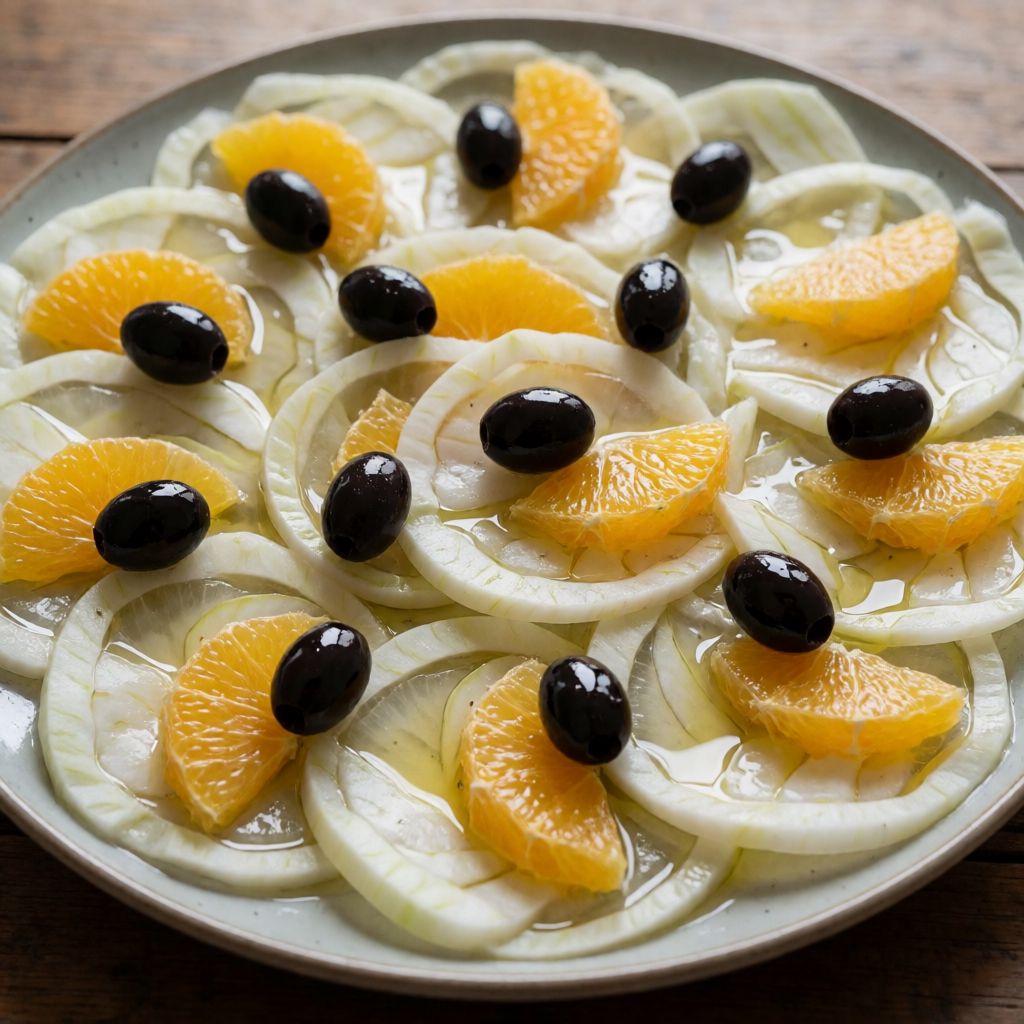
 AI photo
Fennel Carpaccio
A light, refreshing starter of thinly sliced fennel and orange, dressed with olive oil and olives.
Labels are worked out automatically from the ingredients and can be wrong. Check the packaging if it matters to you.
Ingredients
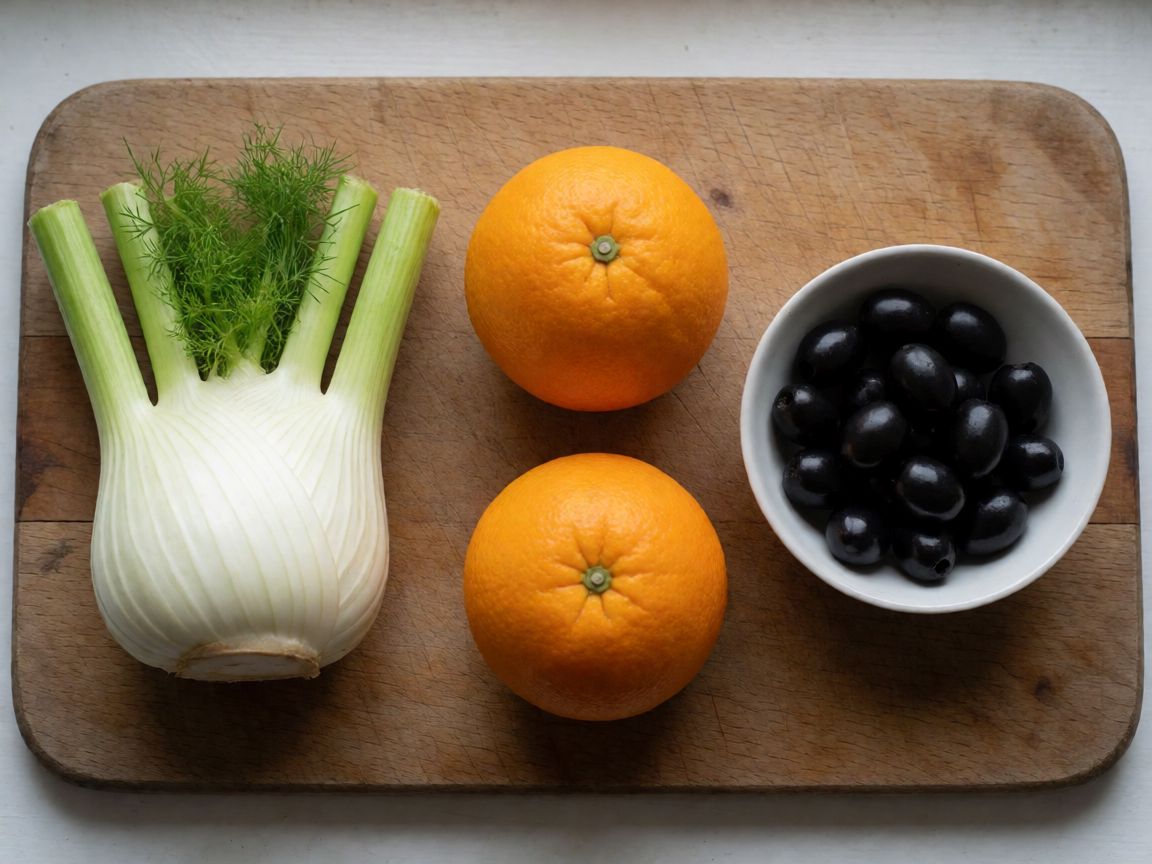
- 2-3 pcs Fennel
- 2 pcs Orange
- 12 pcs Gaeta olives or black olives
- 2 tbsp Olive oil
- 2 pinch Salt
- 2 pinch Black pepper





Steps
Trim away the tough outer parts of the fennel and slice it crosswise into thin slices.
Arrange the fennel slices on a serving plate.
Peel the oranges, removing the skin and white pith, then slice them crosswise into thin rounds.
Lay the orange rounds over the fennel, season with salt and pepper, and garnish with the olives.
Drizzle with olive oil and serve immediately.
This is not cooking, it's assembly — a plate where the knife does all the work and the oven never turns on. The whole mechanism rests on three things meeting raw: the anise-sweet crunch of fennel, the acid-sweet of orange, the salt-bitter punch of a good olive. Whether it works depends on how thin you can slice the fennel, and how fast you get the plate to the table.
"Carpaccio" borrows its name shamelessly from the Italian painter whose palette ran red and white — someone stuck the word on thin raw beef in Venice decades back, and by the time it reached vegetables nobody was pretending otherwise. There's no ancient lineage to defend here, no grandmother guarding the method. It's a fashion, a good one, built on the idea that a vegetable sliced thin enough behaves like meat on a plate — translucent, yielding, dressed rather than cooked.
Thin is the whole game. Fennel cut thick is just raw celery with perfume — tough, assertive, hard to eat politely. Cut it too thick once, chew your way through it, and you won't do it again. Sliced thin across the bulb, against its own fibres, it goes crisp and pale and lets the anise through as a whisper instead of a shout. You need a proper sharp knife or a mandoline for this; a dull blade bruises the slice before it cuts it, and bruised fennel weeps and greys at the edge.
Fennel: buy bulbs tight and pale, no cracking or browning at the base — a soft, spongy bulb has already started losing the water that gives you the crunch. Two to three bulbs, roughly a kilo by a UK greengrocer's scale, sounds generous for two people until you remember half of it is trim: the tough outer leaves, the woody base, anything bruised. Keep the feathery fronds you cut off — chop them into the dressing, they carry more anise than the bulb itself and cost nothing extra.
Orange: its job is sugar and acid pushing against the fennel's bitterness, and that only works if every scrap of pith comes off — pith is bitter, tough, and sits between you and the juice instead of letting it go. Slice crosswise so you get whole discs with the segment pattern showing; that pattern is the only visual argument this dish makes, don't rush past it.
Olives: Gaeta are wrinkled and salt-cured, their saltiness concentrated rather than diluted in brine — they bring dry depth that a watery brined olive can't match. If your shop only stocks the ordinary black ones sitting in liquid, that's fine, but drain them hard, even press them briefly in a cloth; you want saltiness on the plate, not extra liquid loosening everything else.
Olive oil: this is the only "cooking" the dish gets, so it has to be good enough to eat off a spoon, not just good enough to fry with. Taste it before you commit it to the plate — if it tastes of nothing, or of old tin, it will do nothing for the orange or the fennel either. There's no substitute by category here; a neutral oil with no character defeats the one job this oil has.
Salt and pepper: a pinch each, added right at the end — salt is exactly what starts drawing water out of the fennel, so it also sets your clock. Season it and you've got minutes, not hours, before the plate turns from crisp to wet.
Patience here isn't about waiting, it's about not waiting once you've reached the plate. All the slow work — trimming, slicing thin, peeling pith — happens upstream, so the last stage is quick: dress, season, serve, eat. Works well as a starter before a Sunday roast, for what it's worth — sharp and light, with nothing in it that competes with gravy later.