
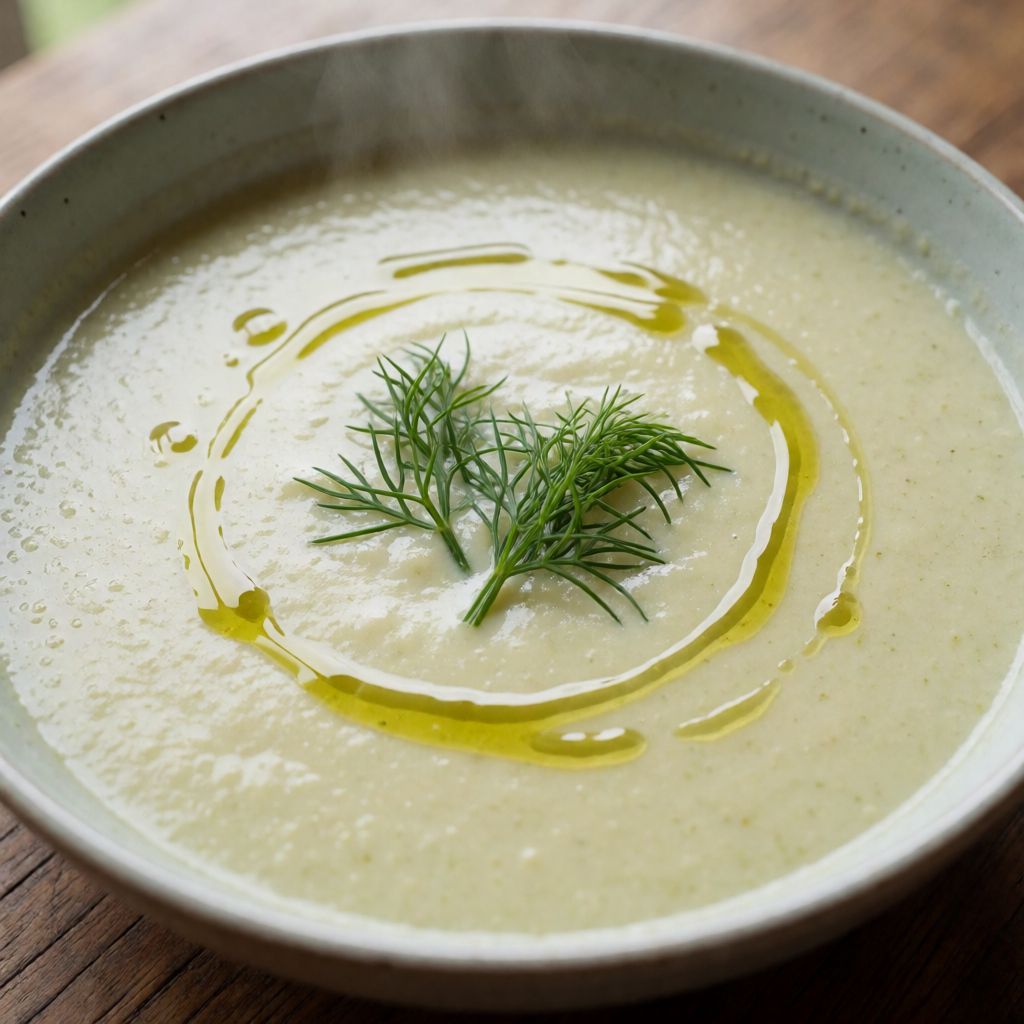
 AI photo
Creamy Fennel Soup
A light, creamy fennel soup gently simmered with garlic and finished with a touch of olive oil.
Labels are worked out automatically from the ingredients and can be wrong. Check the packaging if it matters to you.
Ingredients




Steps
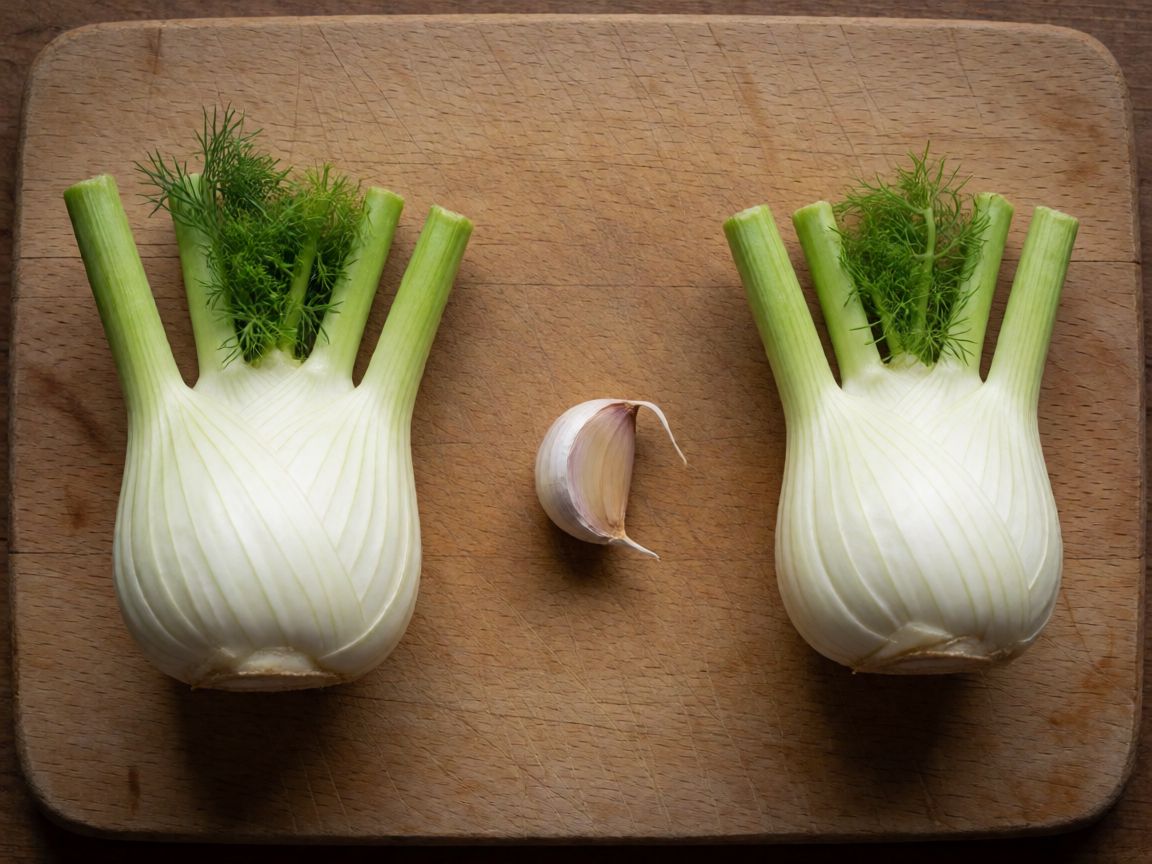
Wash the fennel and remove the tough outer leaves and any fibrous strands.
5 minPour the olive oil into a pot and sauté a crushed garlic clove over low heat.
2 minSlice the fennel very thinly.
5 minAdd the fennel to the garlic, increase the heat and let the moisture evaporate.
5 minAdd water or stock to cover the fennel, and simmer over medium-low heat until tender.
25 minBlend with a stick blender until smooth.
2 minSeason with salt to taste.
1 minLadle into bowls, drizzle with olive oil or sprinkle with chilli flakes if you like, and garnish with fennel fronds and croutons.
This is a four-ingredient soup, and that's not poverty — it's confidence. When the vegetable itself is good, you don't dress it up. Fennel bulb, a nub of garlic, oil, salt. Feeds two, if nobody's greedy with the bread for dunking.
What decides whether it works isn't the blender, it's the moisture. Raw fennel is crunchy, sharp with anise, and carries a fair bit of water in it. Cooking does two things to it, in a fixed order: first it drives that water out as steam, right there in the dry pot, which is what concentrates the sugar and tames the sharpness. Only then do you let water back in — as stock or plain water — so the fennel softens from the inside without its flavour washing straight down the drain. Skip the dry step and rush the liquid in, and you get a thin soup that tastes mostly of hot water, because you never built anything to dilute.
Some say a soup needs cream to taste creamy. No — here the creaminess comes from fibre, not fat. Fennel is cellulose wrapped around sweet flesh; simmer it until it gives up its structure, blend it smooth, and the broken-down fibre and natural starch do the thickening on their own. Pour in actual cream and you'd be hiding the fennel, not finishing it.
Doneness is a feeling, not a clock. Twenty-five minutes is where most pots land, but the real test is the fennel collapsing against the side of the pan with no push from your wrist. If it still resists a spoon, it'll resist the blender too, and you'll end up with gritty threads floating in otherwise silky soup.
Choose fennel by feel. The bulb should be tight and heavy for its size, pale and closed at the top, not splayed open like a flower — that's a sign it's old and starting to go woody in the centre. Two bulbs, roughly fist-sized each, is what two decent bowls need, not a starter-sized trifle. Keep the fronds if they're still attached — that feathery green top is the only herb this soup asks for, and it's free, already paid for with the vegetable.
Removing the tough outer leaves and stringy bits isn't fussiness, it's prevention. That outer layer carries fibrous strands running the length of the bulb, the plant's own scaffolding, and no amount of blending turns scaffolding into purée — it just gets chopped shorter and stays stringy, the same way celery string catches in your teeth no matter how long you cook it. Cut it out before it goes in the pot, not after.
One clove of garlic, crushed rather than minced. Crushing bruises the clove open slowly; mincing exposes more surface all at once, which is exactly what burns fastest in hot oil. Low heat for the garlic isn't a style choice, it's protection — burnt garlic turns bitter and acrid, and in a soup built from four ingredients, there's nowhere for that bitterness to hide. If a clove feels rubbery, or has a green sprout starting inside, cut past it — that sprouted bit carries the bitterness before it's even touched the pan.
Olive oil earns its place here for taste, not just as a cooking medium — fennel and olive grow in the same soil, which is really why they end up in the same pot; that's economics and geography more than magic. If you haven't got olive oil, any oil with no smell of its own will cook the garlic just fine — sunflower, a mild rapeseed. But keep a little good olive oil back, even if it's not what you cooked with, for the drizzle at the end. That's the only place its own flavour actually gets tasted, raw, sitting on the surface rather than cooked into the pot. Salt goes in last, after the water's reduced down into the fennel — salt it earlier and you're seasoning water that still has to boil away, and the finished bowl ends up oversalted without you doing anything wrong on purpose.
Water versus stock is a question of what you've got, not a rule. Water is the honest version — it tastes of nothing and lets the fennel's own sweetness carry the whole bowl. Stock, chicken or vegetable, is the richer version; the only real criterion is that it shouldn't fight the aniseed note, so skip anything heavily spiced or smoked. A stick blender is exactly the right tool for an ordinary kitchen — you don't need a jug blender for this, just a sharp enough head and the patience to run it properly round the edges of the pot, where the fennel always cooks slowest and stays toughest longest.
Patience here lives in two places: not rushing the water in before the pot's properly dried out, and not pulling the fennel off the heat before it gives way on its own, rather than on the clock's say-so. Forty-five minutes sounds long for something with four ingredients, but most of it needs no attention from you — put the kettle on, make your tea, and let the pot get on with it.