
 AI photo
Focaccia
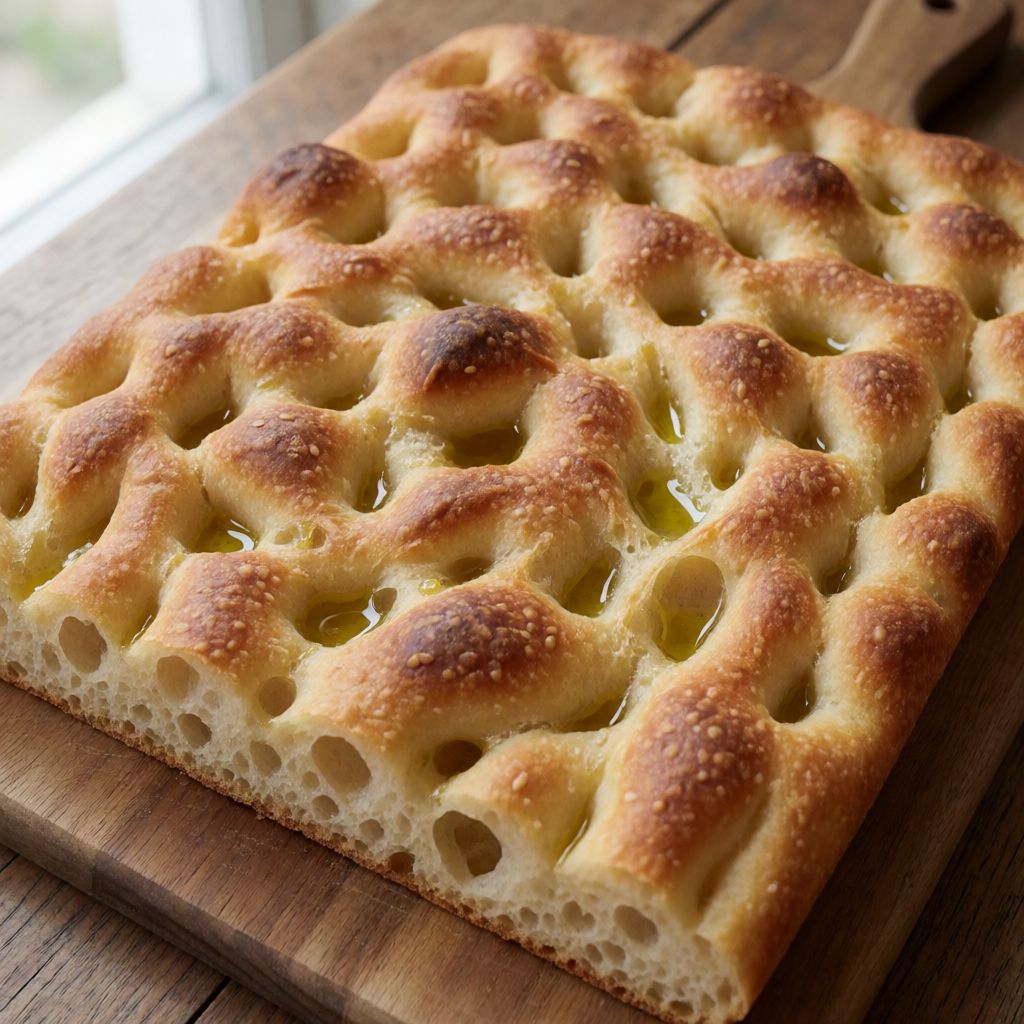
A classic Italian focaccia with a crisp, oil-dimpled crust and soft, airy crumb, finished with coarse salt.
Labels are worked out automatically from the ingredients and can be wrong. Check the packaging if it matters to you.
Ingredients
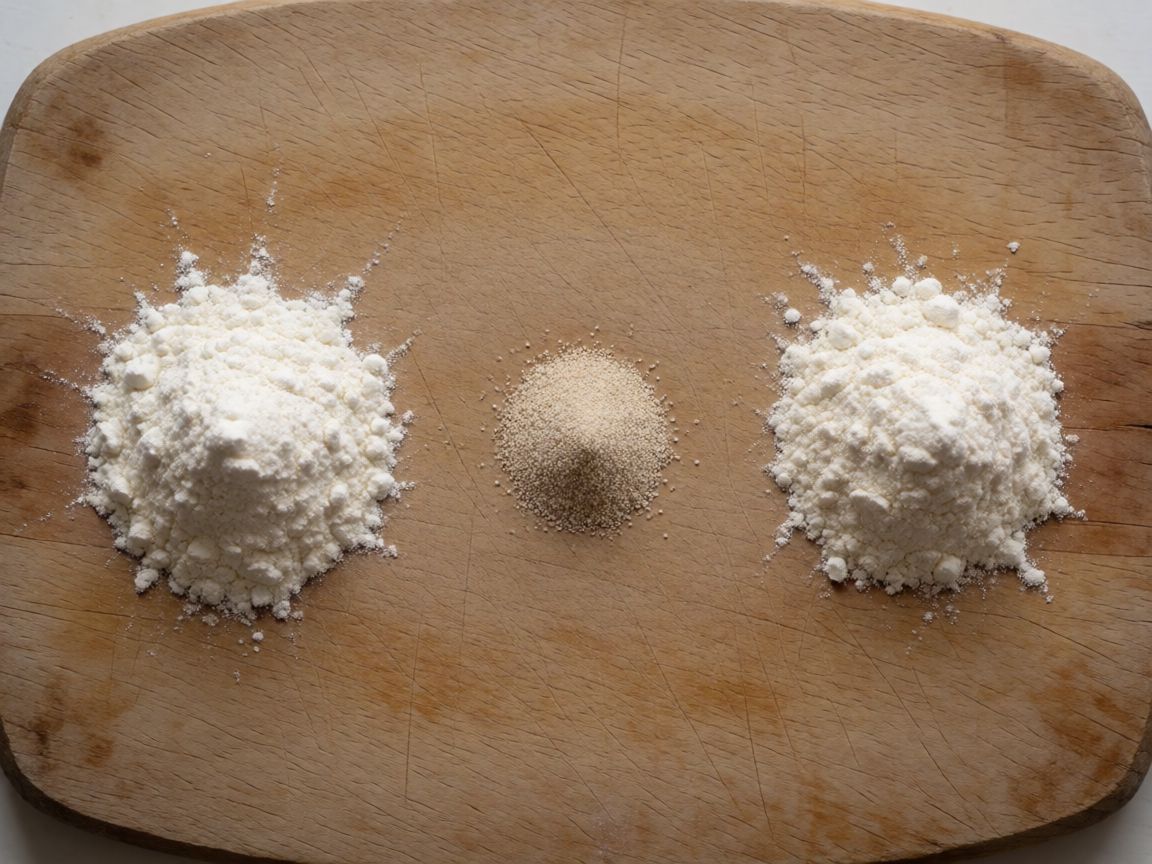
- 430 g Strong white bread flour
- 5 g Yeast
- 10 g Olive oil
- 8 g Salt
- 310 ml Water
- Durum flour as needed
- 30 ml Water
- 30 g Olive oil
- Coarse salt to taste






Steps
Tip the flour into a bowl, add the yeast, rubbing it in with your fingers. Gradually pour in the water, stirring with a spoon. Add the salt and olive oil.
Cover the bowl with cling film and leave the dough to rise at room temperature.
30 minTurn the dough onto the worktop and fold it from all four sides, pulling it towards you by hand to strengthen the gluten.
Cover with cling film and leave to rise.
20 minRepeat the folding twice more, leaving time between each for rising.
Leave the dough to rise at room temperature.
120 minPut the dough in the fridge.
60 minLet the dough rest at room temperature.
Turn the dough onto a worktop dusted with durum flour and stretch it with your fingers along the edges, then in the centre on both sides.
Transfer the dough to an oiled 30x40cm tin, spread it out evenly and leave it to rest.
Mix the water with olive oil and pour it over the focaccia, spreading it with your hands and pressing in dimples with your fingers. Sprinkle with coarse salt.
Bake in a fan oven preheated to 230–250°C, starting on the lower shelf, then moving to the top shelf.
20 min
Focaccia is a high-hydration bread that's been given a job most bread never gets: to taste of olive oil and salt before you've even put anything on it. The whole recipe is one argument running underneath it — that a wet, slack dough, handled gently and given time instead of muscle, ends up with the big, irregular holes and the soft, almost custardy crumb that a tighter dough simply cannot produce. Everything else — the folds, the fridge, the dimpling — exists to let that wet dough behave.
What decides whether it works isn't skill, it's patience, and specifically whether you let the dough do its rising in stages rather than one long sit. Some people assume you knead focaccia dough hard, like a baguette, to build strength. No — a dough this wet (water is roughly 72% of the flour weight here) can't be kneaded in the usual sense; it would just stick to your hands and to the worktop. Instead you fold it: stretch it out from the sides and bring it back over itself, which builds the gluten network in thin sheets without knocking out the gas the yeast is making. Do this with force and you tear the structure you're trying to build; do it with patience, three times, resting in between, and you get a dough strong enough to hold a sheet of big bubbles without collapsing.
Flour is the frame the whole thing hangs on, and it has to be strong — a bread flour with decent protein, not a soft cake flour, because that gluten is what has to stretch thin enough to trap all that water and gas without tearing. In a UK kitchen "strong white bread flour" off the supermarket shelf is exactly right; don't reach for plain flour thinking it'll be gentler on the dough, it'll just be weaker and the focaccia will spread flat and dense instead of rising into those open, uneven holes.
Yeast here is working slowly across hours, not minutes, so a small amount — 5g against 430g flour — is correct and not a mistake to compensate for. If you've only got active dry yeast rather than instant, dissolve it in a little of the water first rather than rubbing it straight into the flour; it needs that head start to wake up.
The 310ml of water against 430g flour is the real engine of this bread — a dough this wet is what gives focaccia its soft, moist crumb instead of a bread crumb. Resist the urge to add more flour when it feels unmanageably sticky on the worktop; that stickiness is the whole point, and durum flour on the worktop and your hands (not more bread flour worked into the dough) is how Italian bakers traditionally handle it, because durum's coarser grain doesn't absorb into the dough the way fine flour does — it just dusts the surface so things don't stick.
Olive oil appears twice and does two different jobs. The 10g worked into the dough softens the crumb and slows staling slightly; the 30g poured over the top before baking is what fries the surface in the oven, giving focaccia its characteristic glossy, almost crisp-chewy top. Use an oil with no strong flavour of its own for the dough if you want the bread to stay neutral, but for the topping, a good extra virgin is worth the spend — you'll taste it directly, with nothing baked into it to mute it.
Salt does double duty too: 8g worked into the dough for flavour and to tighten the gluten slightly (dough without salt rises faster but weaker), and coarse salt scattered on top at the end so you get little bursts of saltiness rather than an even seasoning throughout — crystals that don't dissolve into the oil, that's the test for whether your coarse salt is coarse enough.
As for the tin and the oven: a 30x40cm tray is a fine fit for a standard UK oven, and the lower-shelf-then-top-shelf move in the recipe is doing a real job, not fussing for its own sake — the lower shelf gets heat into the base quickly so it sets and doesn't turn gummy under all that oil and water, and the top shelf finishes colouring the surface once the base can hold its shape. A domestic oven won't hit the violent, all-sided heat of a commercial deck oven, so don't expect the same crust in four minutes — give it the full time and judge by colour, a deep gold rather than pale, and by the smell of the oil going slightly toasty, not by the clock alone.