Grains & legumes
Durum Flour
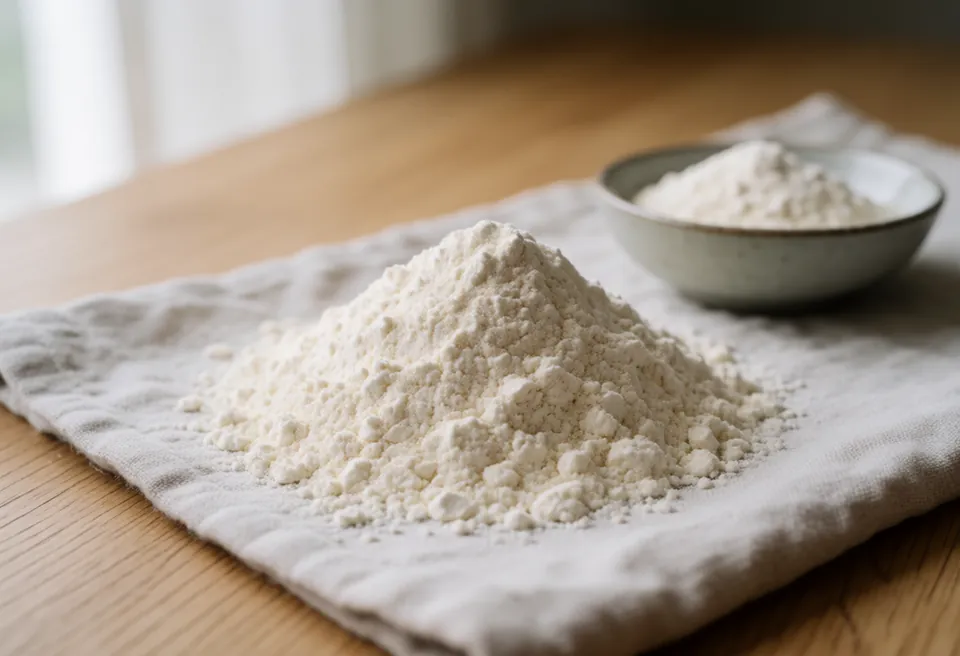
Durum flour is milled from hard durum wheat, giving it a creamy color and dense texture. It's used to make homemade pasta and certain breads.
357 kcal per 100 g
Nutrition per 100 g
357 kcal
| Protein | 11.7 g |
|---|---|
| Fat | 1.6 g |
| Carbs | 73.8 g |
| Fiber | 3.2 g |
Source: USDA FoodData Central (approximate, based on a similar product), 2026-10-03. Per 100 g of product.
Good to know: Durum Flour
Let me tell you about durum flour, and why it behaves nothing like the soft white flour sitting next to it on the shelf.
Durum comes from hard wheat, and hardness here is not a figure of speech — the kernel itself is dense. When it's milled, that hard endosperm breaks into gritty, granular particles, not the fine powder you get from soft wheat. Pasta made from durum holds its shape, keeps a springy resistance under the tooth, and doesn't turn to paste in boiling water.
Choose it by colour and by feel. Good durum is cream-coloured, almost golden, never pale white. Rub a pinch between your fingers — it should feel slightly coarse, almost like fine sand, not silky soft. Smell it: a clean, faintly sweet, wheaty smell, nothing musty.
Some people say durum flour is just "pasta flour" and nothing else — no! It also goes into good bread and flatbreads, where it gives a close and chewy, golden crumb instead of an airy one.
The mistake that misconception leads to: cooks keep it only for dough and ignore it for bread, then wonder why their everyday loaf has no character. Keep durum in the kitchen for more than one job, and it will reward you.