
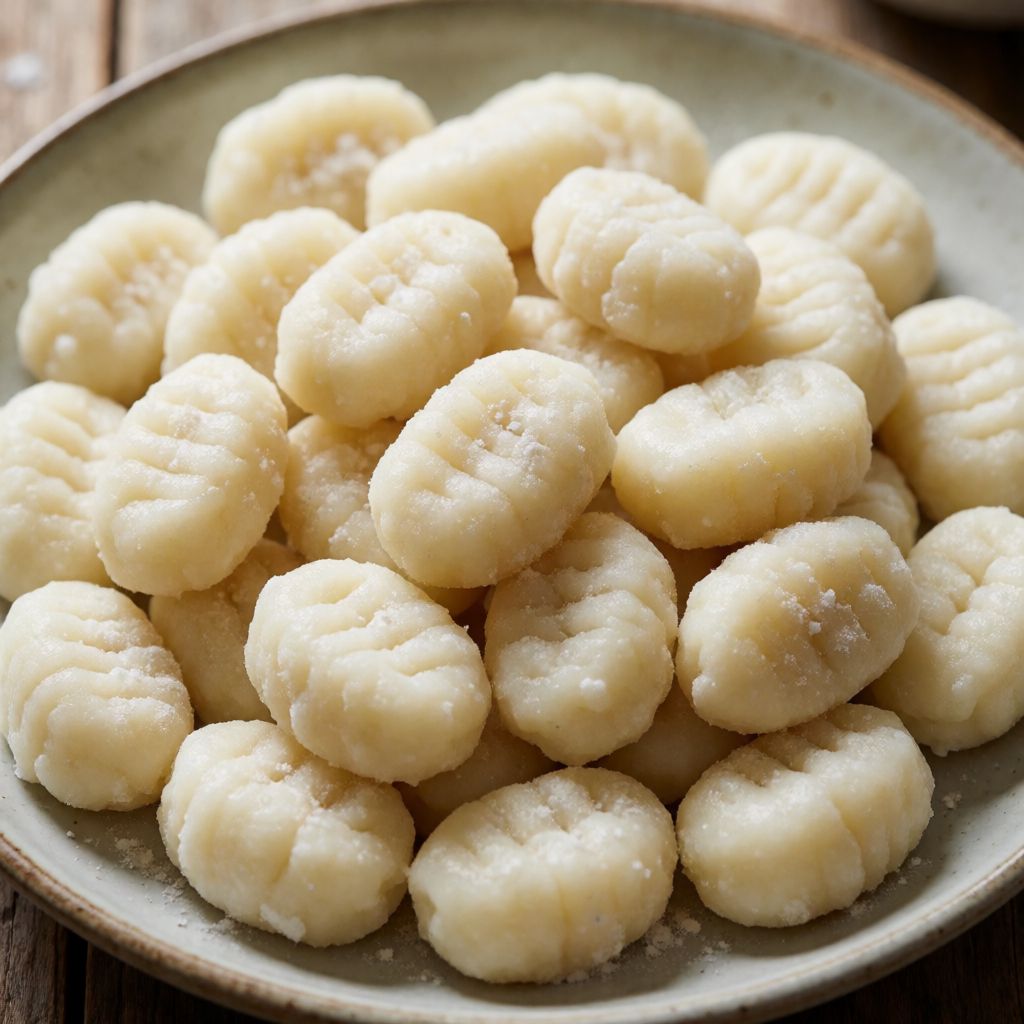
 AI photo
Egg-Free Potato Gnocchi
Soft potato gnocchi made without eggs, shaped by hand and boiled until they float.
Labels are worked out automatically from the ingredients and can be wrong. Check the packaging if it matters to you.
Ingredients
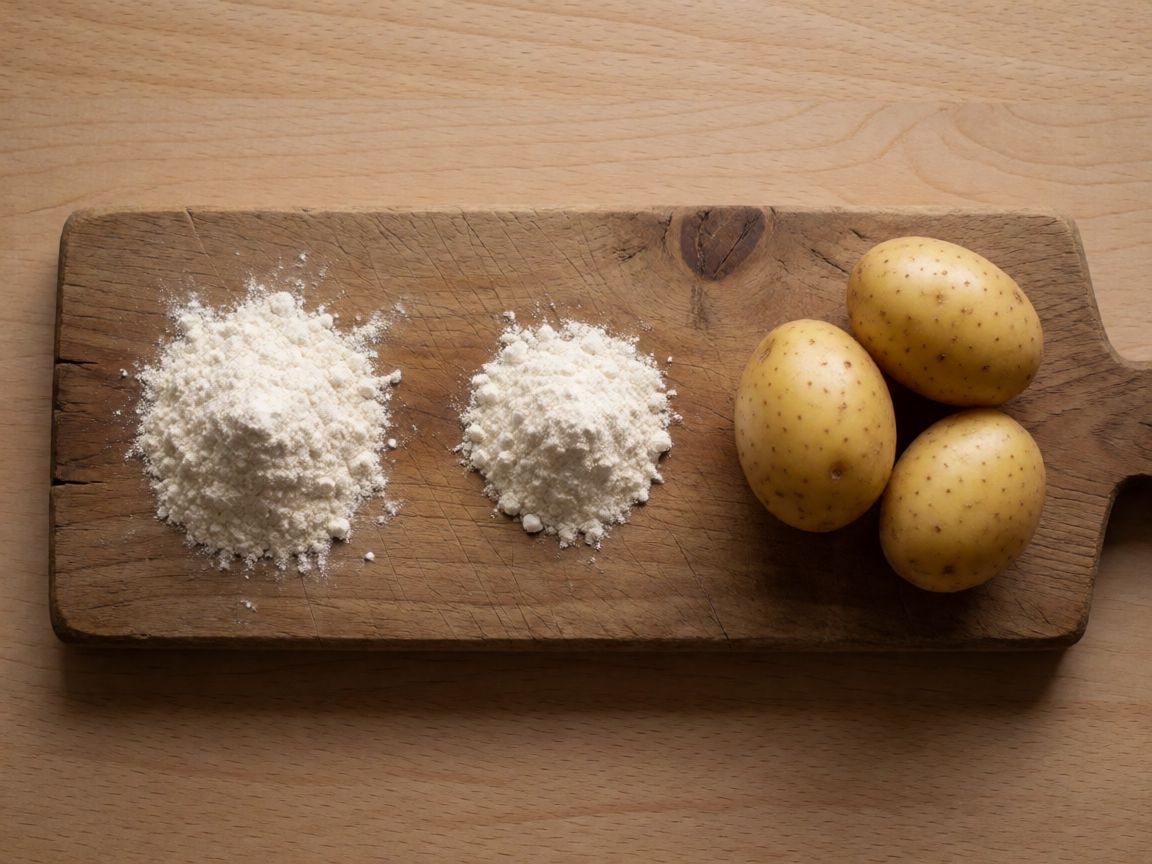
- 150 g Durum Flour
- 150 g Plain Flour
- 1 kg Potatoes
- 1 pinch Salt



Steps
Wash the potatoes under running water, place them unpeeled in a large pot and cover with cold water. Set over medium heat and bring to the boil.
Boil for about 25 minutes, then check if cooked by piercing a potato with a wooden skewer. Remove from the heat, drain and peel the potatoes.
25 minPass the peeled potatoes through a potato ricer. Leave the mash to cool for about 5 minutes.
5 minSift both types of flour onto the worktop. Add the mashed potato and a pinch of salt, then knead by hand into a soft, smooth dough and shape it into a ball.
Cut off pieces of dough and roll them by hand into long, thin ropes about as thick as a finger. Using a sharp knife, cut the gnocchi on the diagonal into pieces about 3 cm long. Place them on a tray dusted with flour.
Bring plenty of salted water to the boil in a large pot over high heat. Drop in the gnocchi and stir gently with a wooden spoon. As soon as they float to the surface, lift them out with a slotted spoon.
Egg-free potato gnocchi is a negotiation between potato and flour, and the whole recipe is built to make sure flour loses as little ground as possible. Potato wants lightness. Flour wants grip. Every extra spoonful of flour you're forced to add — because the potato came in wet — turns a cloud into a bullet. Boiling the potatoes whole, in their skins, and passing them through a ricer rather than mashing them, are both there for one reason: keep the moisture down so you need the least flour possible to make a dough that holds together.
Some say you can't make real gnocchi without egg — no, because egg is insurance for a mash that's too wet to bind on its own. A potato that's dry enough won't need it. Starch does the binding job unaided; add egg on top of a correctly dried dough and you've made something heavier, closer to a dumpling than a gnocco, and you've paid for that egg for no reason.
What decides whether this works isn't a clock, it's water content, start to finish. Skin left on during boiling means the potato cooks in its own moisture instead of taking on water through cut surfaces. The five minutes of resting after ricing isn't idle time, it's letting steam escape from hot mash before you trap it under flour — skip it and you knead wet heat straight into the dough, which asks for more flour to compensate, which is the whole problem again.
Potatoes: you want the floury kind, not the waxy one, and this isn't snobbery, it's starch content. A floury potato — Maris Piper, King Edward, even a Rooster — breaks down into dry, fine flesh when boiled and riced. A waxy salad potato, the kind sold as new potatoes or Jersey Royals or Charlotte, holds its water in tight cells and gives you a wet, slightly gluey mash that will fight you for every extra tablespoon of flour it forces into the dough. If you only have waxy potatoes, you can still manage, but expect to need more flour and accept a firmer, chewier gnocco — not a failure, just a different animal.
The ricer matters more than people think. It pushes the cooked potato through small holes under gentle, even pressure, breaking cells apart without tearing them open the way a masher, a fork, or — worst of all — a food processor does. Shear the cells too hard and they release extra starch and extra moisture into the mix, and that's the straight road to gluey gnocchi. No ricer at home? A fine wire sieve and the back of a spoon does the same job, just slower. Patience is the ingredient here, not equipment.
Durum flour and plain flour are doing two different jobs, not one job twice. Durum is high in protein and low in starch, so it gives the dough backbone — it's what stops a gnocco falling apart the moment it hits boiling water. Plain flour is softer, lower in protein, and it's what keeps the bite tender rather than tough. Together they split the difference: structure from one, tenderness from the other. If you've no durum flour in the cupboard, a strong bread flour stands in for it reasonably well, because what you're borrowing is the protein strength, not the particular wheat.
Salt is doing double duty across the recipe, and it's worth noticing where it's absent. The potato-boiling water in step one has none — seasoning the water there would mostly season the water, since the skin is in the way. The pinch in the dough and the generous salt in the final boiling water in step six are where the seasoning actually lands on the gnocchi themselves, so don't be shy with the pasta water; under-salted gnocchi water is the quiet reason a lot of homemade gnocchi tastes of nothing but flour.
Rolling the ropes to a finger's width isn't a cosmetic measurement, it's about even cooking — a thicker rope cooks hard in the centre while the outside's already soft, a thinner one turns to mush before the inside has set. You're aiming for a cross-section that cooks through at roughly the same rate all the way to the middle, and 'about as thick as a finger' is simply the size a human hand naturally rolls to when it isn't overthinking it.
A British kitchen doesn't have a kazan or a pasta pot the size of a bucket, and it doesn't need one — use the biggest pot you own for both the potato boil and the gnocchi boil, and make sure the water genuinely covers everything with room to spare. A crowded pot cools the water down the moment the gnocchi go in, and gnocchi that sit in water that's dropped off the boil absorb more water instead of just setting — which, by now, you'll recognise as the one mistake this whole recipe is built to avoid making twice.