
 AI photo
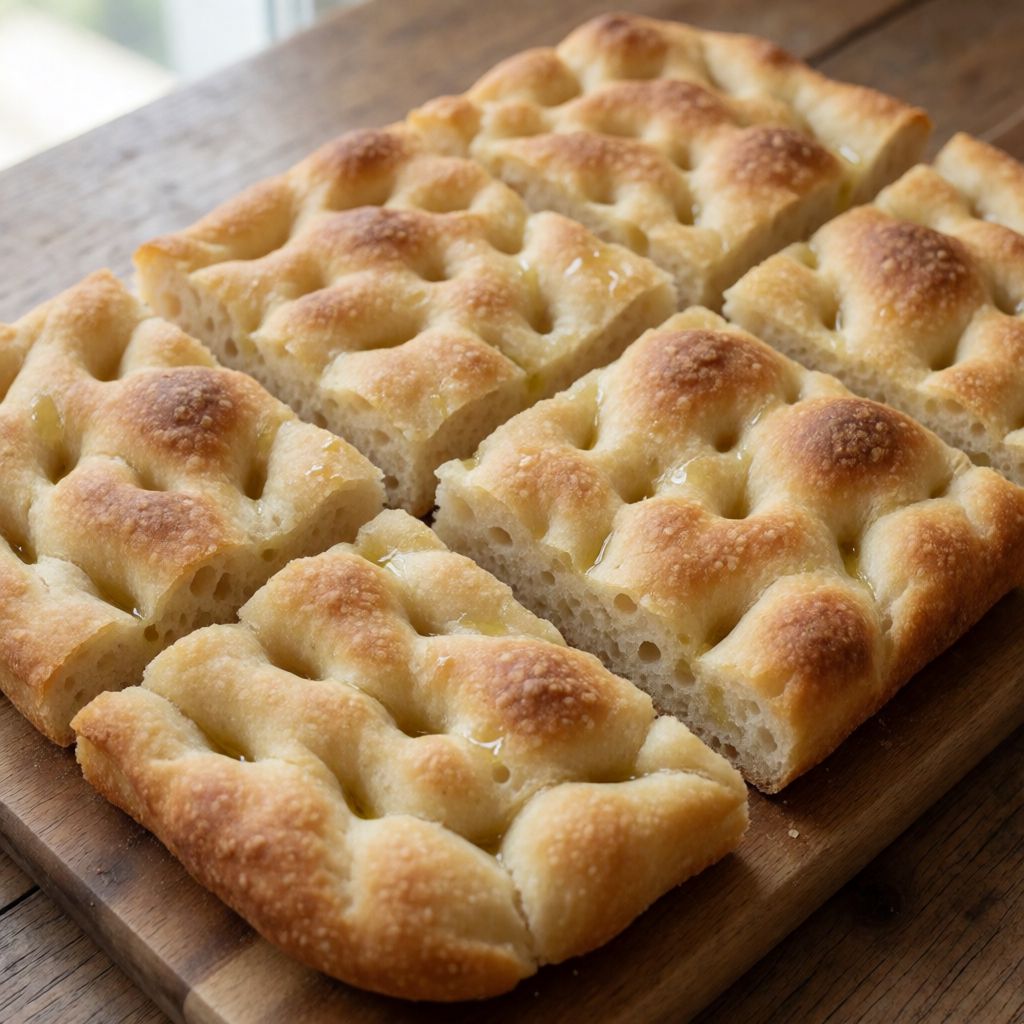
No-Rise Focaccia
A quick focaccia that skips the rising time, ready to bake straight after mixing the dough.
Labels are worked out automatically from the ingredients and can be wrong. Check the packaging if it matters to you.
Ingredients
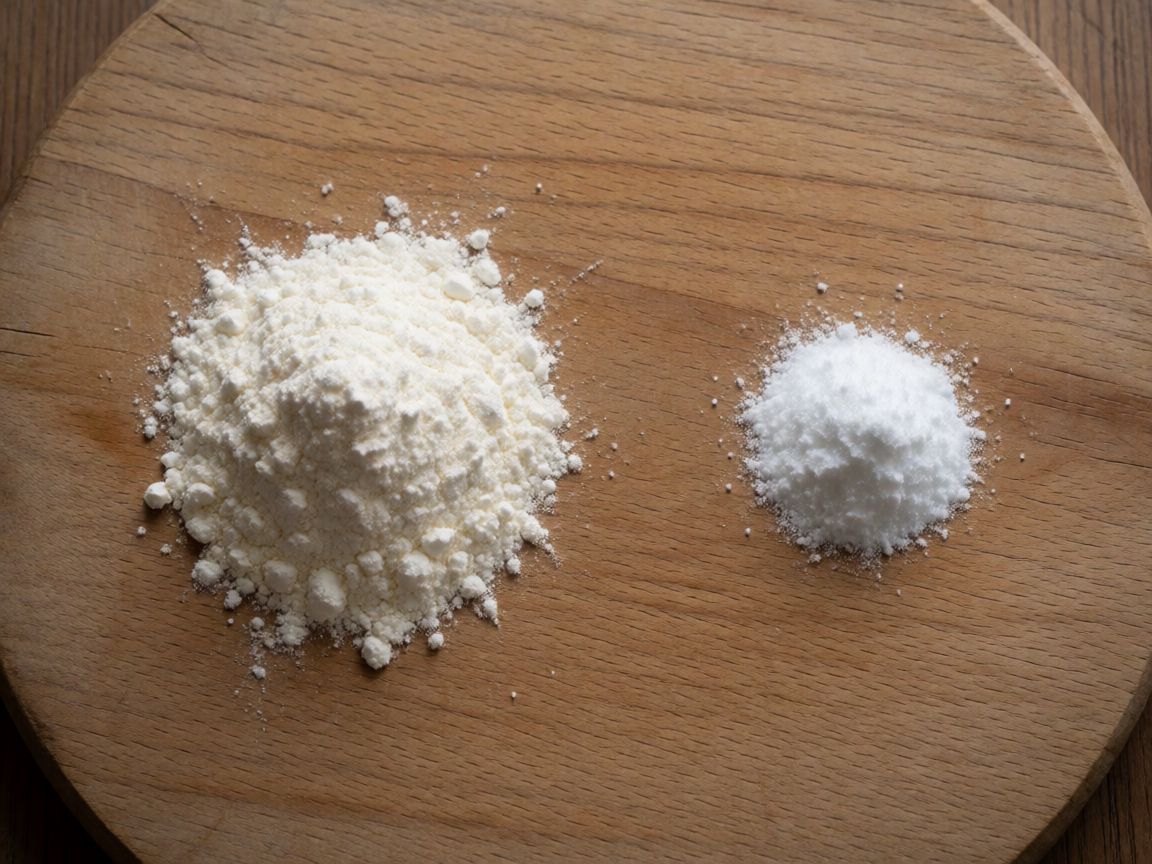
- 500 g Plain flour
- 10 g Salt
- 250 ml Water
- 100 ml Olive oil
- 15 g Baking powder





Steps
Tip the flour into a large bowl and gradually add the water, mixing with your hands.
Add the olive oil and baking powder.
Knead the ingredients by hand, and only once the dough becomes compact, add the salt.
Continue kneading the dough energetically.
Take a round or rectangular baking tin and grease it with olive oil.
Place the dough in the tin and stretch it out by hand so it covers the whole surface of the tin.
Drizzle the surface with a thin stream of olive oil and season with your favourite herbs.
Preheat the oven to 210°C.
Bake the focaccia for about 30-40 minutes, until done.
35 min
This is focaccia without the wait: instead of yeast fermenting slowly for an hour or three, you push the lift in with baking powder, a mix of bicarbonate and a dry acid that fizzes the moment it meets water. That's the whole trick of the dish, and it decides everything that follows.
Because the reaction starts the second the powder touches liquid, the clock you actually care about isn't the oven timer, it's the gap between mixing and baking. Every minute you dawdle after kneading, you're bleeding off gas you'll want later. Baking powder is double-acting — it puffs a little in the bowl, then puffs again when the oven heat hits it — and you only get the second, bigger puff if there's still something left to react when it goes in. So don't rest this dough. Shape it, oil it, and get it in while the oven's hot.
Some say a focaccia without proper proving can't have the right texture, no bread worth eating skips the rise — and they're right that it won't have the irregular, big-holed crumb of a proper Ligurian loaf. But that's not what you're making here. You're making something closer in spirit to a savoury soda bread wearing focaccia's clothes: a tighter, more cake-like crumb, oil-crisp underneath, with none of the slight sourness fermentation gives. Judge it on its own terms and it holds up fine for a Tuesday.
Flour: plain, not strong bread flour, and that's deliberate. In a yeasted dough you want gluten to develop so the dough can trap gas for hours and stretch thin without tearing. Here there's no long fermentation to support, so a higher-protein flour just gives you something chewier to fight with for no return. Plain flour keeps the crumb soft, which is what you want in something baked and eaten the same hour.
Water at roughly half the weight of the flour gives a dough that's workable by hand without turning into porridge — compact enough to hold shape, wet enough to stretch into the tin. If it feels stiff and tears when you try to push it out to the edges, that's usually under-hydration or a flour that's drunk more water than expected; a splash more water fixes it faster than more kneading will.
Salt goes in once the dough is already holding together, and that's not fussiness — salt pulls water toward itself, so thrown in too early it competes with the flour for the water you're trying to work in, and you fight a sticky, uneven dough for longer than you need to. Wait until the dough is compact, then salt it and knead hard; that energetic kneading afterwards is doing the job fermentation would normally do in a slow dough — building a bit of structure mechanically, since you haven't got the hours to let it build itself.
Baking powder: 15g against 500g flour is a fair dose for a flatbread this size — enough to lift it without leaving a chemical, metallic edge on the taste, which is what happens if you overdo it. Don't swap it for plain bicarbonate of soda alone; soda needs an acid to react with, and baking powder already carries its own, which is exactly why it fizzes on contact with water rather than sitting inert. If you only have self-raising flour to hand — most British kitchens do, for scones and Yorkshire puddings — you can lean on that instead and go lighter on separate baking powder, since the leavening's already baked into the flour.
Olive oil here is doing two jobs, not one. Mixed into the dough it tenderises the crumb the way fat always does, by getting between gluten strands. Brushed into the tin before the dough goes in, it fries the underside in direct contact with the hot metal — that's what gives you a crisp, almost shallow-fried base instead of a pale, soft one that sticks. If you want a neutral substitute for the dough itself, any oil with no smell of its own will do the tenderising job, but for brushing on top, stick with olive oil — its flavour is the point here, not just its fat.
Herbs on top: anything that survives dry heat at 210°C without turning bitter — rosemary, thyme, oregano, all tough enough to crisp rather than scorch. Soft, leafy herbs like basil will just burn black; save those for after baking. Bake this in whatever tin or wide roasting dish you've got — there's no stone hearth in a flat, and a domestic oven won't give you the blast of heat a wood-fired one does, so don't expect quite the same blistered top. Torn warm alongside a Sunday roast instead of regular bread, it does the job of mopping gravy perfectly well, and it feeds four without anyone needing a second loaf on standby.