
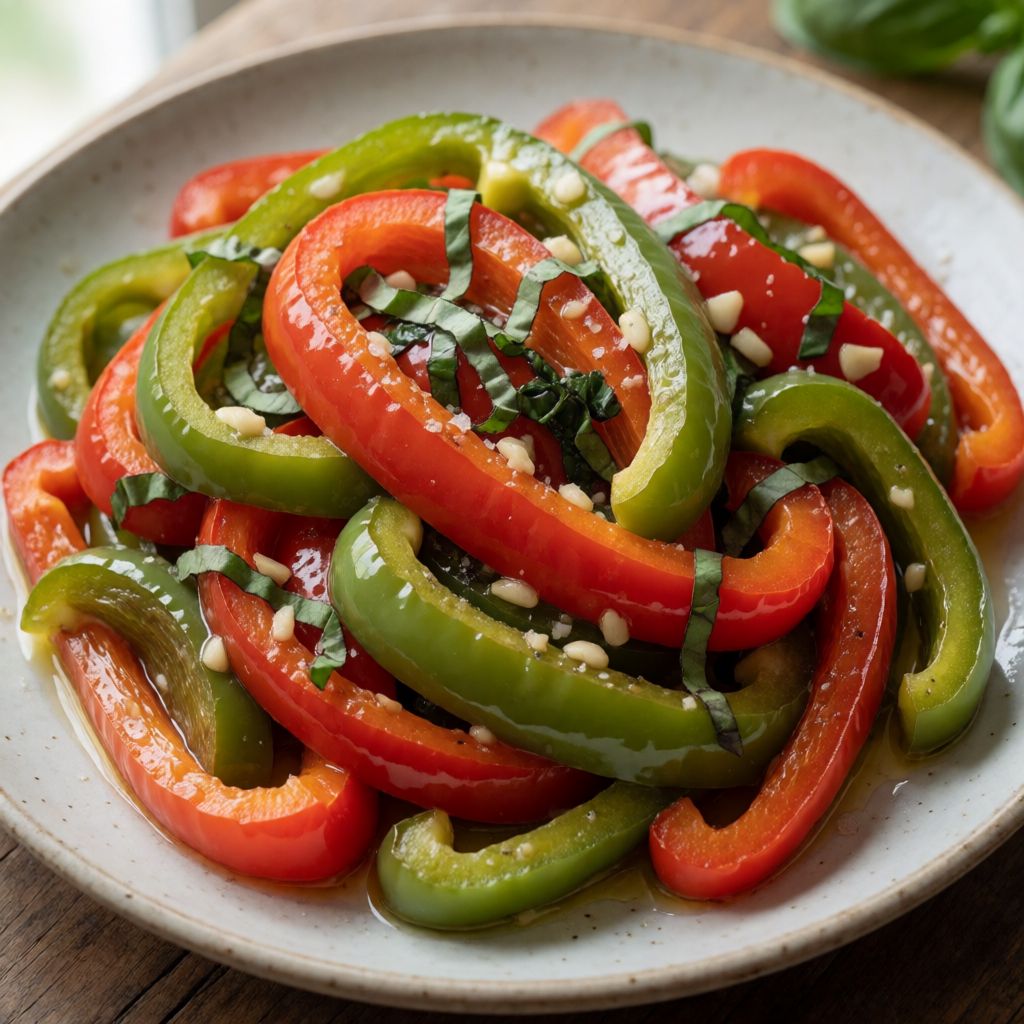
 AI photo
Pan-Fried Peppers
Sweet peppers gently fried with garlic and basil, a simple vegetable side dish.
Labels are worked out automatically from the ingredients and can be wrong. Check the packaging if it matters to you.
Ingredients
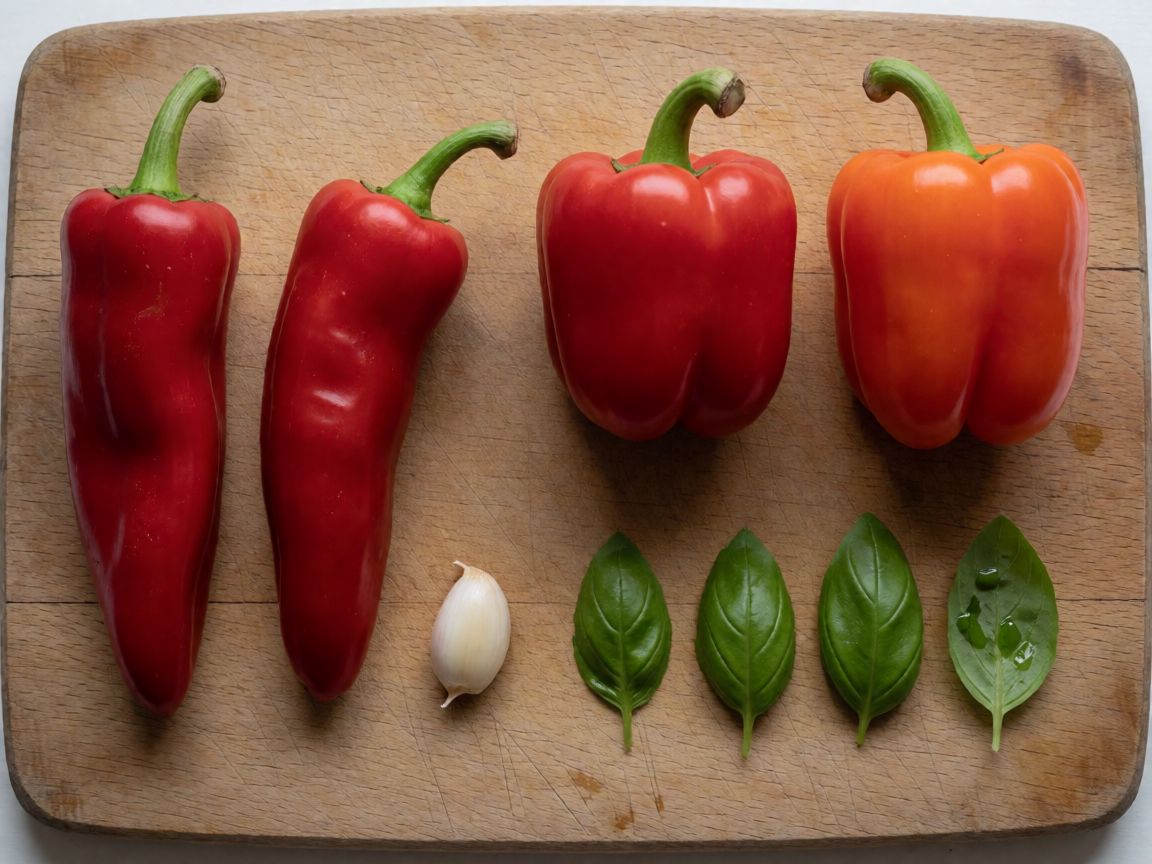
- 2 pcs Red pepper
- 2 pcs Bell pepper
- 1 clove Garlic
- 4 pcs Basil washed
- 4 tbsp Olive oil
- Salt to taste





Steps
Wash the peppers under running water, cut off the stem and halve them. Remove the seeds and inner membranes. Cut into strips a few centimetres wide.
Pour the olive oil into a frying pan, add a peeled garlic clove cut in half. Turn on the heat and let the garlic brown slightly.
Add the peppers and fry over high heat for a few minutes.
Reduce the heat so the peppers don't burn. Add a pinch of salt and the previously washed basil.
Cover with a lid and cook, stirring often with a wooden spoon.
20 minShortly before it's ready, remove the lid, take out the garlic, increase the heat and let the peppers brown slightly.
Serve hot as a side dish with a main course, or on its own, on a shared platter.
This is a stovetop version of what Italians would call peperonata's plainer cousin — strips of sweet pepper cooked down in good oil until they go soft and a little sweet, with garlic and basil doing the talking instead of meat or sauce. It's a side dish built entirely out of three heat changes, not out of a clock.
First the garlic sits in cold oil and the whole pan warms up together — that's the trick, not an accident. Garlic dropped into oil that's already hot burns at the edges before it's given anything back; garlic that rises in temperature alongside the oil has time to bleed its flavour in gently. Then the peppers go in hard and fast, high heat, to seize the surface before the vegetable's own water has a chance to turn it grey and limp. Then you pull the heat right down and cover the pan — now you're not frying, you're braising in the peppers' own juice, which is the only way strips this thick get properly soft without the outside charring to ash. Right at the end you uncover and blast the heat back up, because the liquid that built up under the lid has to go somewhere before you can brown anything again — water on a hot pan surface just steams, it doesn't caramelise.
On the peppers themselves — buy them firm, with skin that's tight and has a bit of resistance when you press a thumb into it. A soft or wrinkled pepper has already lost water sitting in the shop, and it'll give you less of that initial hard sear and more of an immediate sweat. Bell peppers, any colour, are what you want; don't reach for a hot chilli variety thinking "pepper is pepper" — the whole dish depends on sweetness, not heat. Four peppers for four people as a side is honest, not generous — they lose roughly half their bulk to water loss during the covered stage, so what looks like a full pan at the start looks modest on the plate at the end. If you're feeding this as more than a side, buy more, don't cook what you have for longer.
Garlic: one clove, halved, left whole-ish rather than minced, is deliberate — a whole half-clove gives off flavour slowly and evenly through the cooking, where a crushed or chopped clove would dump all its flavour into the oil in the first thirty seconds and then burn to bitterness by the time the peppers are even in the pan. That's also why it comes out before the final high-heat blast — by then it's given what it has, and anything left in the pan at that heat just turns brown and acrid.
Basil: it goes in early, with the peppers, not scattered on top at the end as a garnish — the point is for it to cook into the oil and juice, not to sit there looking fresh on a plate. If you've no basil, don't substitute parsley expecting the same job done — parsley doesn't survive heat with any aroma left, it just goes green and flat. Oregano or thyme, used sparingly, can take the heat and still give something back; they're not the same flavour, but they're doing the same work.
Olive oil: four tablespoons sounds like a lot for a vegetable side, but the oil isn't just a cooking medium here, it's half the flavour of the finished dish — the peppers drink it as they soften. Use an olive oil you don't mind the taste of; this isn't the place for your good finishing oil, because heat will burn off whatever made it special, but it also isn't the place for an oil with no character at all, since here the oil's flavour is meant to show. If all you've got is sunflower or a light vegetable oil, it'll fry the peppers just fine — you'll just lose that background fruitiness that olive oil leaves behind.
Salt: a pinch, added once the heat's already turned down for the covered stage, not before. Salt pulls water out of vegetables — add it too early, while the heat is still high and aggressive, and you help the peppers sweat out their moisture right when you're trying to sear the surface dry. Added at the braising stage, it just seasons the juice that's already forming.
On kitchen reality: you don't need a lid that fits perfectly. A plate set over the pan, or even foil pressed down at the edges, holds enough steam in to do the braising job — the mechanism only needs trapped moisture, not a tight seal. And give the covered stage the patience it asks for; stirring it every thirty seconds to check doesn't speed up water escaping from pepper flesh, it just lets heat out and lengthens the whole thing. Leave the lid alone, stir now and then with a wooden spoon so nothing catches on the bottom, and let the peppers do what water and heat do on their own.