
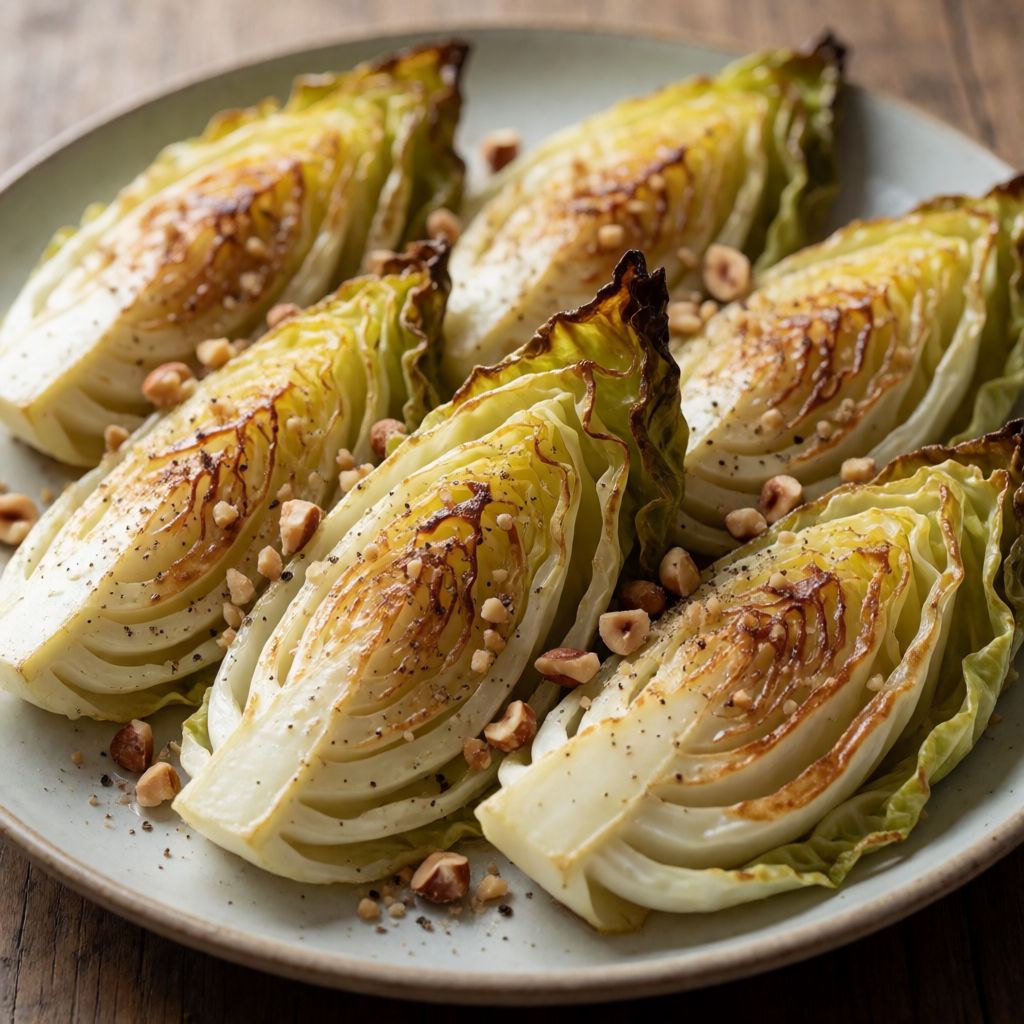
 AI photo
Fried Pointed Cabbage with Lemon and Hazelnuts
A simple side of pan-fried pointed cabbage with caramelised lemon, toasted hazelnuts and black pepper.
Labels are worked out automatically from the ingredients and can be wrong. Check the packaging if it matters to you.
Ingredients
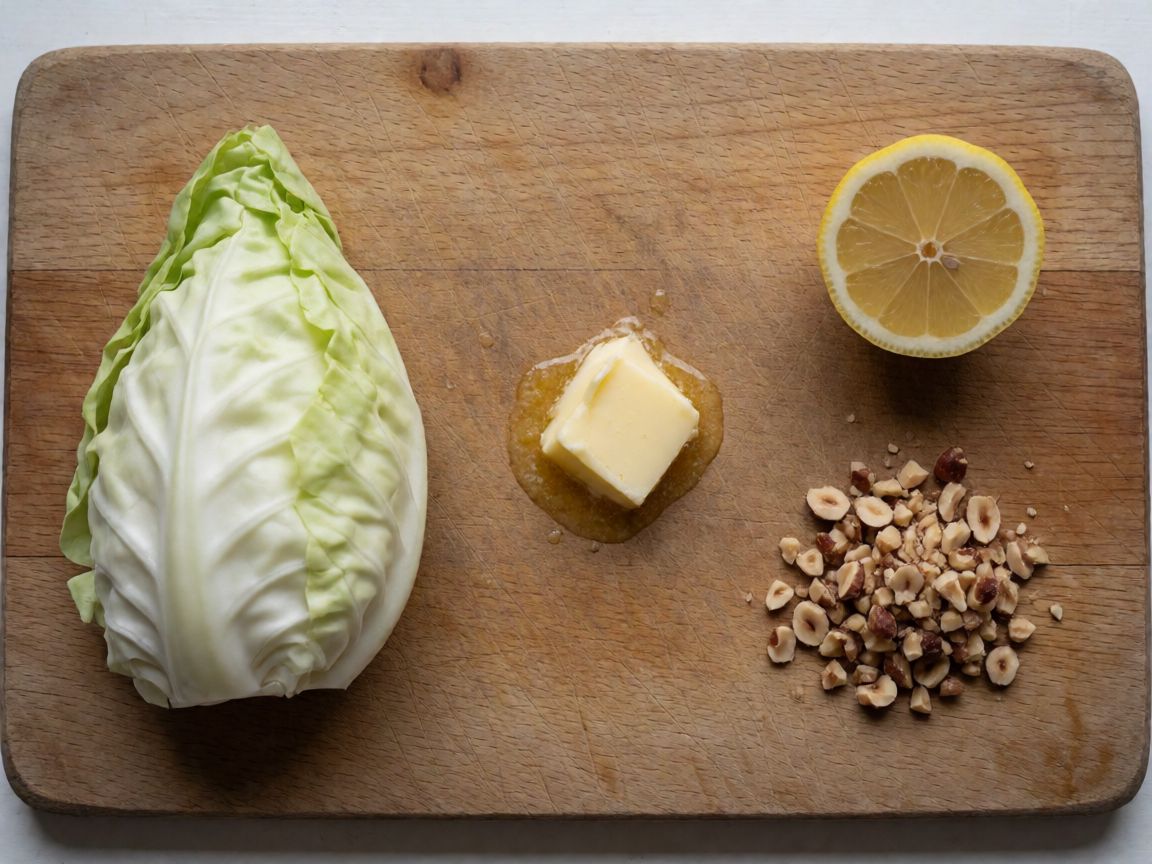
- 1 pcs Pointed cabbage
- 30 g Butter melted
- 1 pcs Lemon halved
- 20 g Hazelnuts roughly chopped
- Salt to taste
- Black pepper freshly ground




Steps
Melt the butter in a frying pan.
Place the lemon cut-side down in the pan, and add the cabbage cut into quarters alongside it.
Fry the cabbage and lemon over medium heat for about 10-15 minutes, turning the cabbage a few times.
15 minThe cabbage is ready when it turns soft and tasty, and the lemon has caramelised on the surface.
Transfer the cabbage to a serving plate and drizzle with the juice of the caramelised lemon.
Sprinkle with the roughly chopped hazelnuts, flaky salt and black pepper.
Fried pointed cabbage with lemon and hazelnuts is cabbage treated like a steak - cut into flat wedges, laid into fat, left alone until it browns, then dressed, not boiled into surrender. What decides whether it works is heat and patience, not a clock. Pointed cabbage - sometimes sold as sweetheart cabbage, the pointed-hat, tight-but-loose-leaved one you'll find at a UK greengrocer from late spring onward - has thinner leaves and real sweetness that a big round winter cabbage doesn't, simply because it's picked younger and carries less of the sulphur compound that fills the kitchen when a cabbage is boiled too long and too hard. Quarter it keeping the core attached - that core is the hinge holding the leaves together while they soften; cut it away first and you'll be chasing loose leaves round the pan instead of turning four manageable wedges.
If pointed cabbage isn't in the shop, don't panic and don't reach for a whole round white cabbage as if it's the same vegetable with a different haircut - it isn't. Round cabbage is tighter-packed, tougher, and more sulphurous when heated slowly, so if it's all you've got, cut the wedges thinner than you would pointed cabbage, to give the heat less distance to travel before the inside softens, and expect a slightly more mustardy edge to the flavour. That's the honest trade, not a disaster.
Butter is doing two jobs - carrying heat and browning into flavour on its own - so the criterion for a substitute is a fat that can colour without burning too fast and still tastes of something. Ghee works and is more forgiving, because the milk solids that scorch in butter have already been strained out of it. A neutral oil will get you cooked cabbage, but none of the nutty depth the butter adds, so don't swap it in and expect the same dish.
Lemon should be unwaxed if you can find it, or scrubbed well if not - you're caramelising the cut face, pith and all, and a waxed rind leaves a faintly chemical sheen in the fat. If you've genuinely got no lemon, the criterion for a stand-in is a thin-skinned citrus whose pith will caramelise rather than just sit there being bitter rind - a small, well-ripened orange halved can stand in, but it shifts the dish toward sweet rather than sweet-sharp, so treat it as a different balance, not a like-for-like swap.
Hazelnuts want to stay crunchy against the softened cabbage, so any nut with a little background bitterness to cut the sweetness will do - walnuts or almonds both work. Toasting them first deepens the flavour further, but then you're adding a step the recipe as written doesn't ask for; roughly chopped and raw is the simpler, weekday version, and there's no shame in simple.
Salt goes on at the very end, as flakes, not stirred into the pan early - add it while the cabbage is cooking and it pulls water out of the leaves by osmosis, which means more steam in the pan and less browning on the surface. That's the actual mechanism behind the step, not just habit. On a domestic hob you're working with a wide frying pan, not a kazan, and that's fine here - this is an open fry, nothing needs covering, so a lid or the usual plate-and-paper-towel stand-in doesn't come into it at all.
If the context is a British Sunday table, this cabbage is a quiet argument against the boiled, grey-green side that's given cabbage its bad name in this country for decades - not because boiling is wrong, but because it's usually done too long, past the point of bend into the point of mush. One cabbage this way feeds four as a side. Give it the full ten to fifteen minutes as a floor, not a ceiling - the char at the edges you're tempted to call burnt is where most of the flavour actually lives, and rushing it to save five minutes is the one real way to ruin it.