
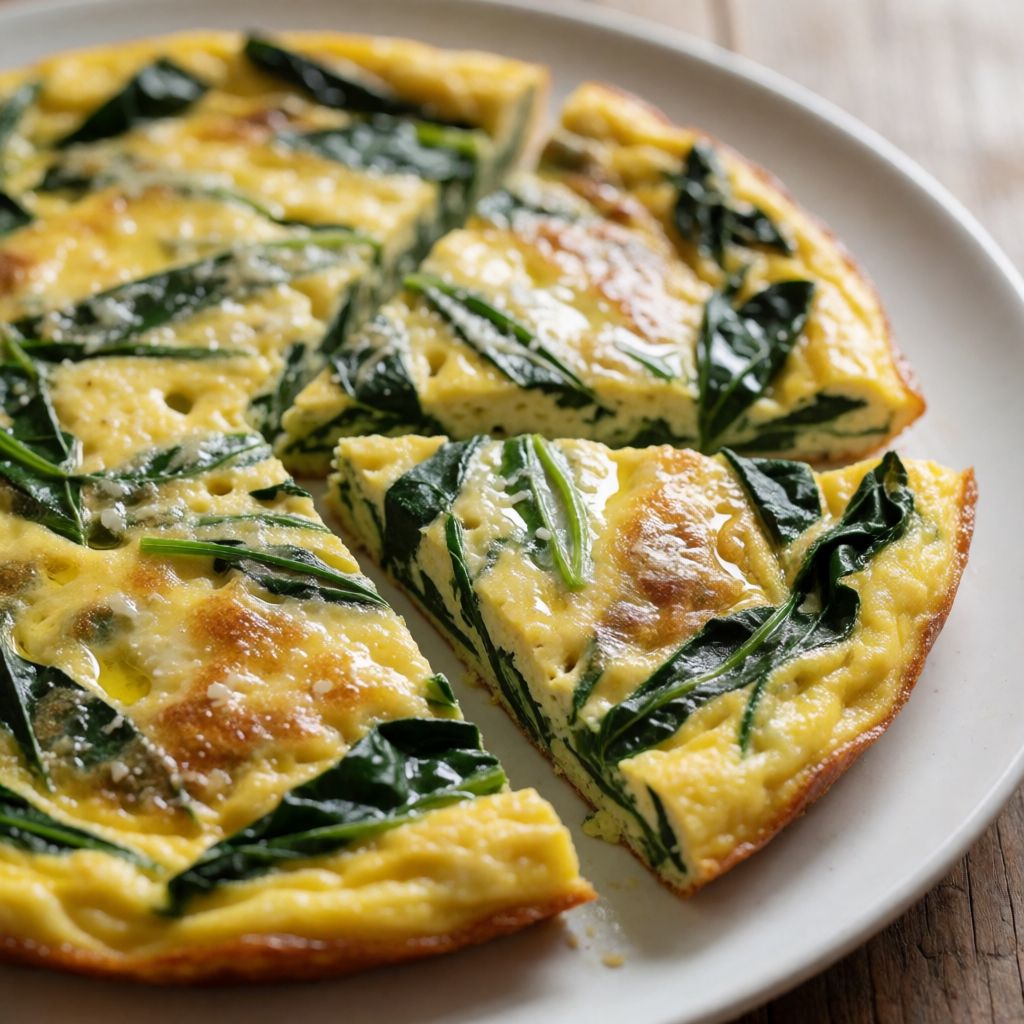
 AI photo
Swiss Chard Frittata
A simple frittata made with Swiss chard, eggs and Parmesan, cooked in olive oil until golden on both sides.
Labels are worked out automatically from the ingredients and can be wrong. Check the packaging if it matters to you.
Ingredients
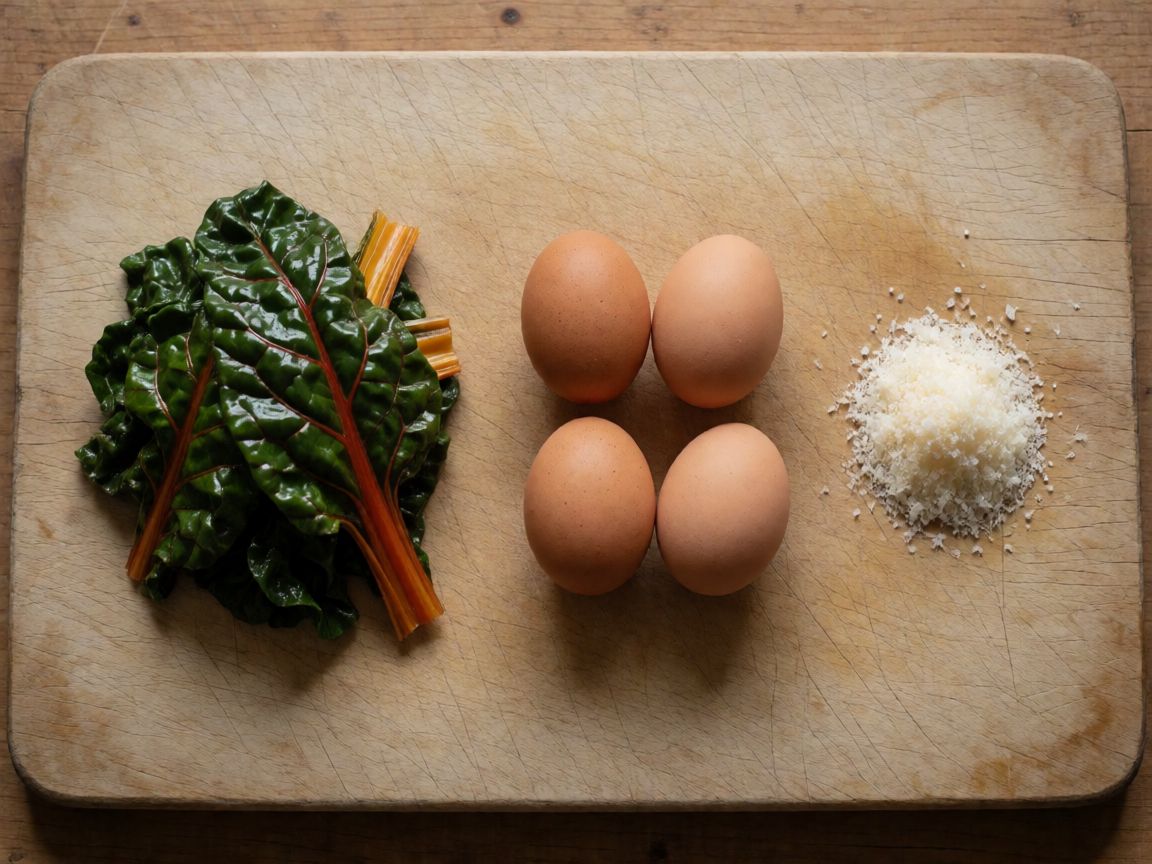
- 500 g Swiss Chard
- 4 pcs Eggs
- Salt to taste
- Black Pepper to taste
- 50 g Parmesan
- Olive Oil to taste






Steps
Pick over the chard, discard any damaged leaves, wash well and trim off the tough part of the stems.
5 minPour water into a pot, bring to a strong boil, salt it and cook the chard until tender.
10 minDrain the chard in a colander and let it cool, then squeeze out the moisture and chop finely.
5 minBreak the eggs into a bowl, add salt, pepper and the grated Parmesan, and beat with a fork.
3 minAdd the chopped chard to the egg mixture and stir.
2 minPour olive oil into a frying pan, heat over high heat and pour in the egg and vegetable mixture.
2 minCook the frittata covered for a few minutes.
5 minFlip the frittata and cook for another two to three minutes until done.
3 minTransfer the frittata to a serving plate and serve hot.
A frittata is not scrambled eggs with vegetables thrown in — some say it is, no, because scrambled eggs are stirred until they curdle into soft lumps, and a frittata is poured once and left alone to set like a custard. That difference decides everything that follows: the heat under it, the lid over it, even how you get it out of the pan.
What makes this one work is moisture control. Chard holds water in its cell walls the way a sponge holds it in its pores — boil it, and some of that water escapes into the pot, but plenty stays behind in the leaf until you physically squeeze it out. Skip that squeeze and the egg mixture goes thin and grey at the edges; it never sets properly, because the chard keeps weeping into it while it cooks. The squeeze isn't fussiness, it's the one step standing between a firm frittata and a wet one.
The second thing that decides it is heat, and the recipe's "high heat" needs a sense-cue, not a number: the oil should shimmer, and a drop of egg should hiss and go white the instant it touches the pan. That's the signal you want — a fast seal on the bottom so nothing sticks. But that same heat, held too long, scrambles the bottom and leaves the middle raw. So the real trick, the one experience teaches you fast, is to seal hard for a few seconds and then pull the heat right down, covering the pan so trapped steam finishes the top while the bottom stays gentle.
Swiss chard, 500 g for two people, is mostly water and cell wall — that's why it boils down to almost nothing and why squeezing it dry afterwards isn't optional. If you only have spinach, use it, but know it holds even more water and needs an even harder squeeze, with a shorter boil since it collapses almost at once. Kale goes the other way: tougher, so it wants a bit longer in the water before it bends easily rather than resists. The test for any of them is the same — a stem that bends without snapping back, not a clock.
Boiling in a strong boil of salted water does two jobs at once: it seasons the leaf from the inside, the way pasta water does, and it carries off some of the sharp, slightly metallic bite that raw chard and spinach both have. Some cooks skip the pot and just wilt greens straight in the pan with the eggs — that works for a milder green, but chard's stems are thick enough that they stay fibrous unless they get real boiling water around them first.
Four eggs for two people is a generous ratio — the eggs here are less the main event and more the binder that turns a pile of cooked greens into something you can cut into wedges. If you're short an egg or two, you'll get a frittata that holds together more loosely, closer to a vegetable omelette; not wrong, just a different texture.
Parmesan isn't there for flavour alone — grated fine, it melts into the egg and seasons it with salt you don't need to add twice, so go easy on the extra salt if your Parmesan is a strong one. Any hard, aged cheese that behaves the same way under heat does the job — Pecorino, Grana Padano, even a mature Cheddar if that's what's in the fridge, though it will pull the dish away from its Italian accent and towards something closer to a British cheese-and-egg bake, which is no bad thing on a Sunday.
Olive oil here is doing a mechanical job as much as a flavour one: a thin, even film that stops the egg sticking and carries the heat without scorching. Any oil with no strong smell of its own will do that job — sunflower, a light rapeseed — but olive oil's own taste is part of what makes this dish taste like itself, so use it if you have it and save the neutral oils for when you'd rather the dish stayed quiet.
And give it the time it asks for, especially the cooling before squeezing and the low, covered minutes after the flip. Rush the first and you'll burn your hands and bruise the leaf; rush the second and you'll cut into a frittata that's set on the outside and loose in the middle. Patience isn't decoration here — it's the difference between a dish that holds its shape on the plate and one that doesn't.