
 AI photo
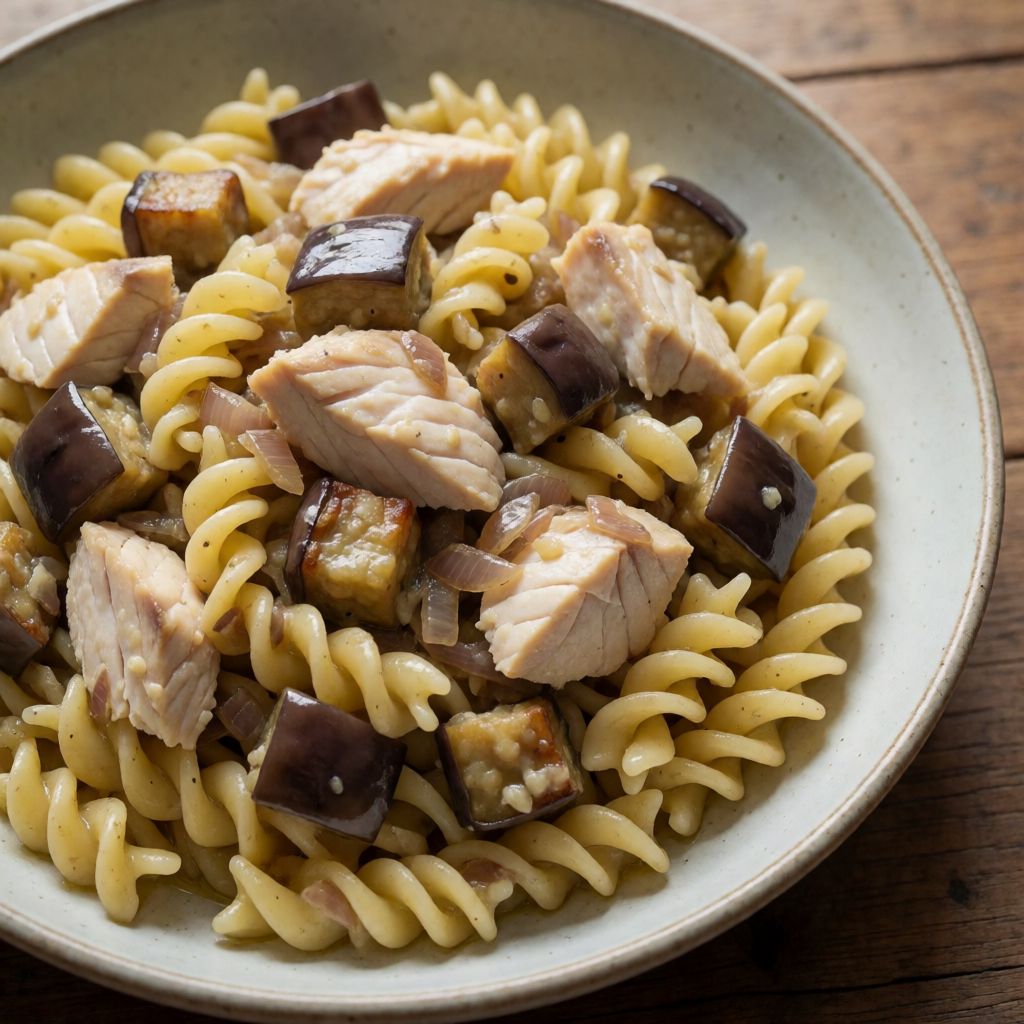
Fusillotti with Swordfish Sauce
A quick pasta dish of swordfish, aubergine and cherry tomatoes in a light tomato sauce.
Labels are worked out automatically from the ingredients and can be wrong. Check the packaging if it matters to you.
Ingredients
- 150 g Swordfish
- 1 pcs Aubergine
- 1 clove Garlic
- 400 g Fusillotti or large fusilli
- 2 tbsp Olive oil
- 1 pcs Shallot
- 200 g Tomato passata
- 100 g Cherry tomatoes
- 1 pcs Fresh chilli pepper fresh
- 125 ml White wine
- 1 tbsp Black olives
- Parsley to taste
- Salt to taste













Steps
In a pan, fry the finely chopped shallot in olive oil, add the diced aubergine, and cook for 10 minutes.
10 minAdd the diced swordfish and continue frying; the swordfish is done when it reaches a safe internal temperature of 63°C. Pour in the white wine and let it evaporate.
Sprinkle with chopped parsley and garlic, add the cherry tomatoes cut in half, and the fresh chilli pepper, deseeded and chopped.
Pour in the tomato passata, season with salt to taste and lower the heat.
Simmer gently for a further 15 minutes.
15 minAdd the black olives, meanwhile cook the fusillotti in plenty of salted boiling water.
Drain the pasta al dente, transfer to the pan, mix well and serve, sprinkled once more with parsley.
This is a Sicilian pasta, really — swordfish, aubergine, tomato, a little chilli and olive, the kind of sauce coastal kitchens make when the fish stall sells you the odd steak that's too thick for grilling but perfect for cutting into cubes. It is not a fish-and-cream thing, and it is not meant to taste "of the sea" in that heavy way. It tastes of aubergine that has drunk oil and shallot, with swordfish sitting through it like firm little parcels, not shredded, not dissolved.
What decides whether it works is restraint with the fish. Swordfish is dense and lean — almost no fat running through it — so it goes from tender to dry-cardboard in the time it takes to answer the phone. You are not cooking it until it "looks done" by colour; colour lies, because the outside cooks before the inside. The only honest marker is temperature: 63°C at the centre is safe and still juicy. Past that you're eating rope. If you don't own a thermometer, cut a cube open — the centre should just lose its raw sheen, no more.
The second thing that decides it is the aubergine's ten minutes before the fish ever goes in. Aubergine is a sponge full of air and bitter juice; thrown in late it steals oil, stays spongy, and never breaks down into the soft, almost-melting texture that carries the sauce. Give it its own time in the pan first and it collapses properly, taking on the shallot and oil instead of fighting them.
Swordfish: buy it as a steak, ask for 150g cut into rough 1.5–2cm cubes yourself, or get the fishmonger to do it. Frozen swordfish loin works fine here — thaw it slowly in the fridge, pat it properly dry before it goes in the pan, because wet fish steams instead of browning and you lose what little flavour-building you get from contact with hot oil. If swordfish isn't on the counter that day, tuna steak or a firm white fish like monkfish will take the same cube-and-watch-the-centre approach; oily fish like salmon will behave quite differently and isn't really the same dish.
Aubergine: one, diced small enough that it can actually soften in ten minutes rather than just char on the outside. No need to salt and drain it first — that ritual is for aubergine you're frying whole or in thick slices to force out bitterness and excess water before contact with hot fat; in small dice, in a sauce that's going to simmer another fifteen minutes, the moisture just cooks off and the mild bitterness that's left is gone before anyone notices.
Olive oil, two tablespoons, is doing the job of carrying flavour and letting the shallot soften without catching — any oil with no smell of its own would do the mechanics, but one with actual olive character is worth having here because there's no butter, no cream, nothing else contributing fat or richness. Don't swap in a strongly flavoured oil like sesame; it'll fight the tomato rather than support it.
Shallot rather than onion: milder, sweeter, dissolves into the sauce rather than leaving sharp fibrous bits — if you only have onion, use less of it, cut it finer, and give it slightly longer before the aubergine goes in.
Tomato passata plus cherry tomatoes: the passata gives body and a cooked, smooth base; the cherry tomatoes, added raw and halved, give pockets of fresh acidity that survive the simmer because they go in late and aren't pulverised. Don't substitute one for the other entirely — tinned chopped tomato in place of passata is fine if that's what's in the cupboard, just expect a slightly chunkier sauce.
White wine: its job is to deglaze — lift the browned bits stuck to the pan after the fish and aubergine have been sitting in the heat — and to add acidity before the tomato arrives. Let it actually evaporate, don't rush it off the heat half-boiled, or the sauce carries a raw alcohol sharpness that no amount of salt fixes later. No wine in the house: a splash of water with a squeeze of lemon does the deglazing job, minus the flavour.
Black olives and fresh chilli go in near the end precisely because they're flavour, not cooking — olives just need warming through, chilli (deseeded, so you control heat rather than let seeds decide it for you) needs only enough time to release its oils into the sauce, not to cook soft.
On the pasta itself: fusillotti or any large, deeply ridged fusilli is chosen because those grooves trap the chunky bits — aubergine, olive, fish — in a way smooth pasta shapes can't; penne rigate is the honest substitute if fusillotti isn't on the shelf. Cook it in plenty of well-salted water — the pasta's only seasoning chance before it meets the sauce — and pull it before it's fully soft, because it finishes in the pan, absorbing a little sauce as it sits, and that last minute of cooking happens off the boil, where you have far more control than in furiously bubbling water.
And patience is doing real work twice here: once in the ten minutes the aubergine needs to actually break down rather than stay crunchy, and once in the fifteen-minute simmer that lets passata, wine and fish juices reduce into something coherent rather than a watery tomato soup with pasta dropped in. Neither step forgives being rushed — you can't get that time back by turning the heat up, you just get burnt edges and a raw centre.