
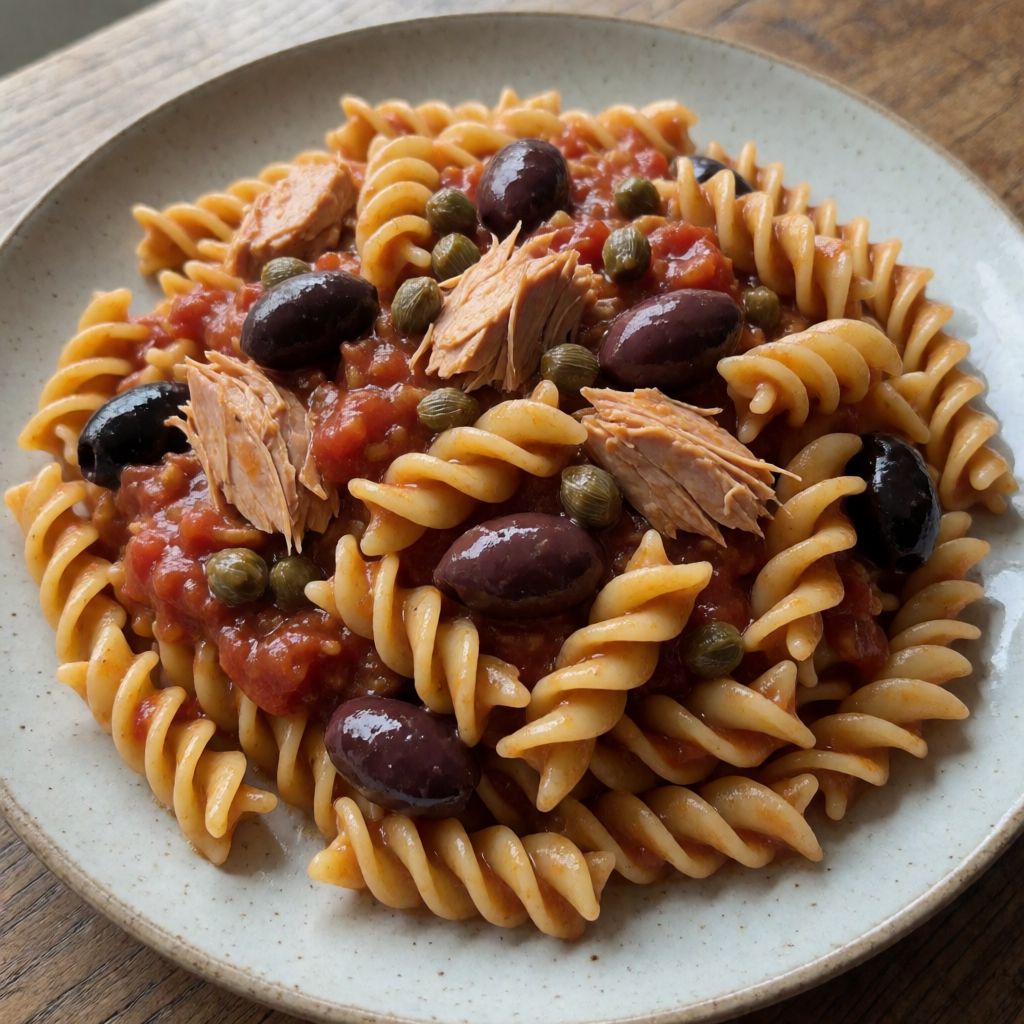
 AI photo
Fusilli with Tuna, Capers and Olives
A quick pasta sauce of tuna, tomatoes, olives and capers, simmered with onion, garlic and a splash of white wine.
Labels are worked out automatically from the ingredients and can be wrong. Check the packaging if it matters to you.
Ingredients
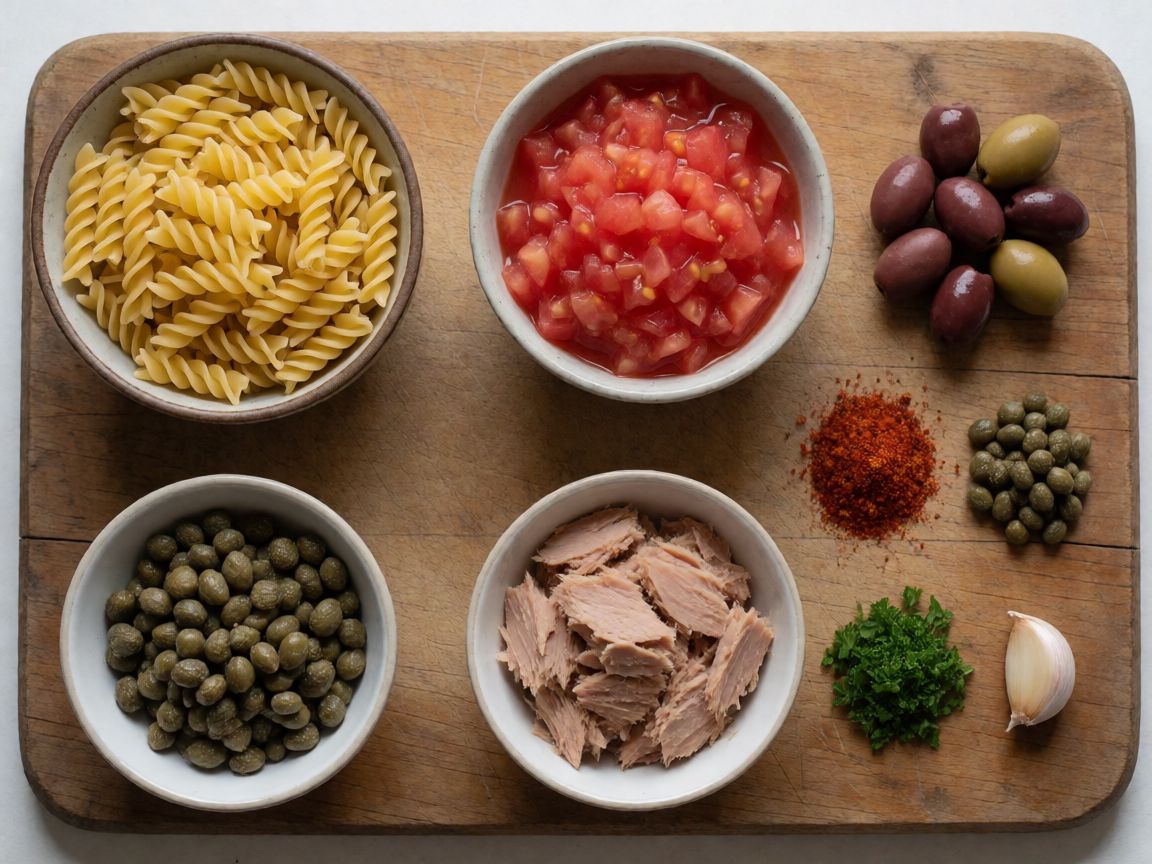
- 400 g Fusilli
- 200 g Canned chopped tomatoes
- 2 tbsp Olive oil
- 1 tbsp Taggiasca olives
- 1 tbsp Capers in vinegar
- Salt to taste
- Chilli powder to taste, optional
- 120 g Tuna
- Parsley to taste
- 1 clove Garlic
- 1 pcs Onion
- 120 ml White wine











Steps
In a pan, fry the onion, garlic and parsley in olive oil.
Add the tuna, breaking it up, and pour in the wine.
Let the wine evaporate.
Add the chopped tomatoes, Taggiasca olives and rinsed capers.
Add salt to taste and, if liked, a pinch of chilli powder.
Cook the fusilli until al dente, drain and transfer to a serving bowl.
Toss the pasta with the sauce, mix well, sprinkle with fresh parsley and serve.
This is a sauce built on an argument, not a recipe — the old quarrel between fresh fish and tinned fish for pasta. Tuna from a tin wins here, and not out of poverty. It's already cooked, already salted by its own oil, and it breaks apart into the sauce instead of sitting on top of it like a trophy. Fresh tuna seared and then simmered again would just turn to sawdust. So "some say real sauce needs real fish" — no, because the sauce needs fish that disappears into it, and a tin does that job better than a fillet.
What decides whether this works is the wine stage, not the tomato stage. You fry onion, garlic and parsley until the onion goes from pale and sharp-smelling to soft and sweet-smelling — that's the cue, not a clock. Then tuna and wine go in together, and the wine has one job: lift the browned bits off the pan and carry their flavour into the fish, while its own raw alcohol smell burns off. You know it's done when the sharp vinous smell is gone and what's left smells like stock, not booze. Rush this and you get a sauce that tastes of the bottle, not the pan.
The tomatoes, olives and capers are added, not cooked — this isn't a long-simmered ragù, it's a quick coating. Capers come packed in vinegar or salt; either way they carry too much of their brine's personality, so you rinse them, otherwise the sauce tastes of pickling liquid, not of capers. Taggiasca olives are there for a specific small, oily bitterness — not the size or the stone, but that they're cured in oil rather than brine, which keeps them from fighting the tuna's own saltiness.
On an ordinary UK hob there's no flame licking up the side of a wok, so "fry" here just means a wide pan, oil shimmering but not smoking, heat high enough that onion sizzles the instant it lands rather than stewing in its own water. If it stews, you get sweetness without the gold colour, and the base of the sauce ends up flat. A splatter guard or a plate over the pan at the wine stage saves your hob, since 120 ml going in hot will spit.
Fusilli is the right shape because its ridges and curls catch the broken-up tuna and the small bits of olive and caper — a smooth pasta like spaghetti would let them slide off onto the plate. Any short, twisted pasta does the same job: penne, rigatoni, even gemelli if that's what's in the cupboard. Don't swap to a long thin pasta unless you're prepared for a different dish, not the same one.
Canned chopped tomatoes are a convenience built on a real piece of food economics: tomatoes ripen once a year, tins ripen all year round, and chopped saves you the knife work a whole tin would demand. If you've only got whole plain tomatoes, crush them by hand in the pan — it takes thirty seconds and nobody will know.
Olive oil here isn't optional flavour, it's doing double duty as the fat the onion fries in and as a carrier that lets the tuna's oil blend rather than float separately on top. Use a plain olive oil, not your good finishing one — the extra-virgin peppery kind gets wasted once it's heated and reduced with wine. Any neutral oil with no smell of its own will carry the onion fine, but you lose the small olive-oil backbone that ties the dish together with the olives.
The onion and garlic are there for savour, not bulk, so they should more or less vanish into the sauce — finely chopped, cooked till soft, not left in visible rings. Garlic goes in with the onion rather than after, because garlic burns fast and bitter if it hits a dry hot pan alone; cooking it alongside the slower, wetter onion protects it.
White wine's acidity is what cuts through the tuna's oiliness — this is the same logic as squeezing lemon over fish, just cooked in rather than added raw. If you've no wine open, a splash of dry vermouth does the same acidic job, or even water with a squeeze of lemon, though you lose some depth. What you shouldn't do is skip the liquid entirely: without it, the fond stuck to the pan from frying stays stuck, and so does half the flavour.
Tuna itself — go for tuna in olive oil rather than tuna in water if you want the dish to taste of itself rather than of virtue. The oil-packed kind holds together better when you break it with a fork and keeps the sauce from drying out as it cooks down. Capers and olives are seasoning, not vegetables, so a tablespoon each is a ceiling, not a floor — more, and they stop seasoning the tuna and start competing with it. Parsley at the end is for the smell as much as the taste, so chop it close to serving, not an hour before, or it just wilts into green water.