
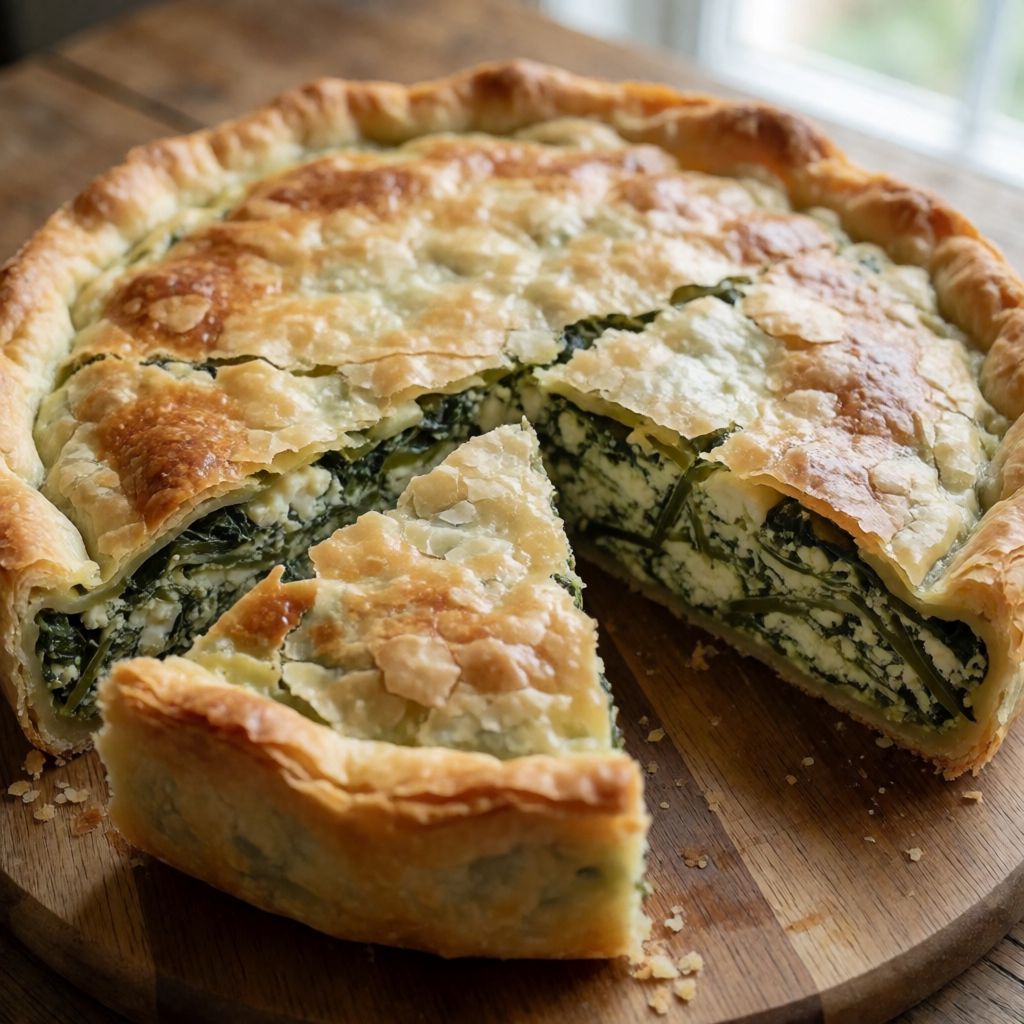
 AI photo
Genoese Swiss Chard and Ricotta Pie
A Genoese-style savoury pie with Swiss chard and ricotta, wrapped in thin olive oil pastry.
Labels are worked out automatically from the ingredients and can be wrong. Check the packaging if it matters to you.
Ingredients
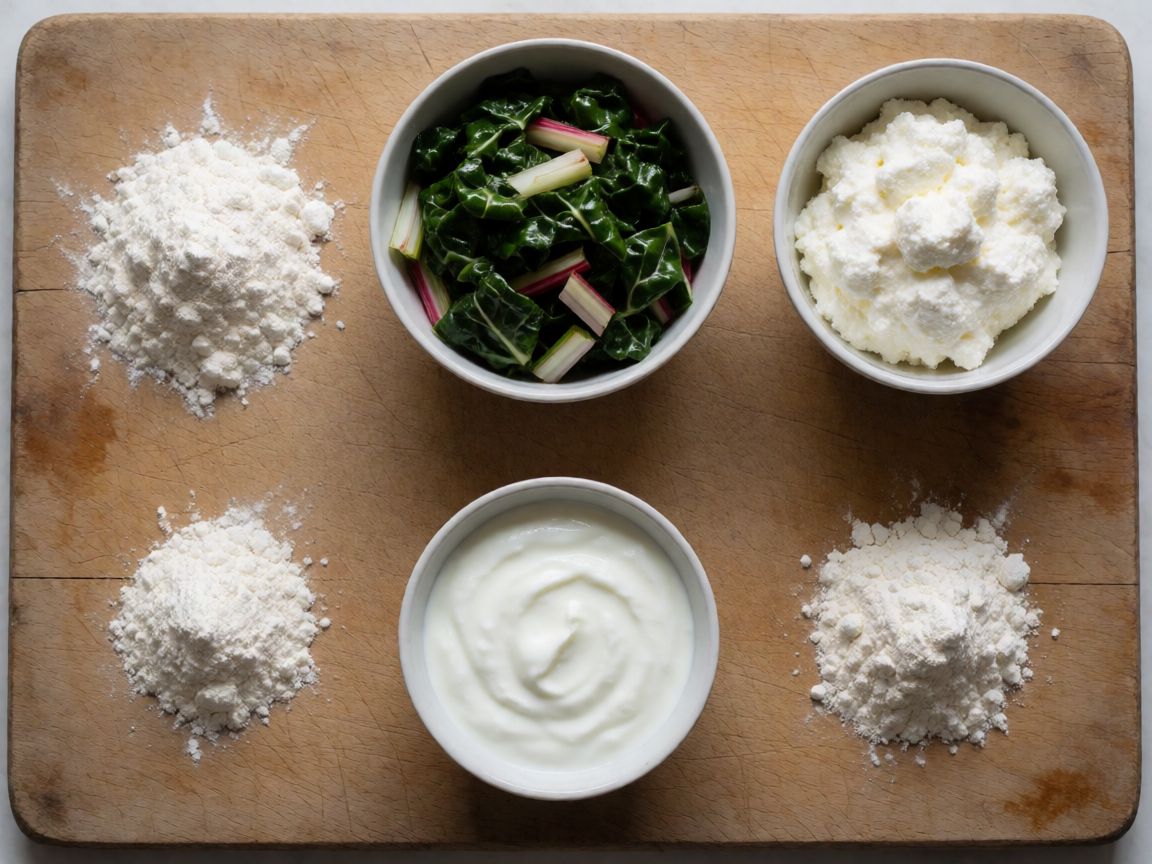
- 125 g Plain flour
- 125 g Strong white flour
- 1 tsp Salt fine
- 2 tbsp Olive oil
- 120-125 ml Water warm
- 500 g Swiss chard cleaned, tough stalks removed
- 250 g Ricotta
- 250 g Yoghurt
- 1 pinch Salt
- 2 tbsp Plain flour
- 1 tbsp Olive oil
- 1 tbsp Water



Steps
Combine both types of flour with the fine salt, add the olive oil and warm water, and mix to a smooth, soft dough.
Knead the dough on a floured surface until smooth, cover with film and leave to rest.
Wash, dry and roughly chop the Swiss chard, then mix with a pinch of salt and the flour.
Mix the ricotta with the yoghurt until you have a thick, smooth, creamy mixture.
Divide the dough into 2 parts and roll out the first to a thickness of 1-2 mm.
Line an oiled tin with the first sheet of dough so the edges hang over the sides.
Place the Swiss chard in the centre and press down well.
Spread the cheese mixture over the chard and smooth it out evenly.
Roll out the second sheet of dough, cover the filling with it, and seal the edges together.
Prick the surface with a fork and brush with the water and oil emulsion.
Bake at 180°C in a fan oven.
45 minRemove the pie and let it rest before serving.
30 min
This is torta di erbette's Genoese cousin — two thin sheets of oiled flatbread dough wrapped round a filling of chard and a loosened ricotta. No eggs, no pastry fat worked into flakes, no cream. The whole point of the dough here is that it behaves like a bedsheet, not like shortcrust: you want it thin enough to see your hand through, strong enough not to tear when you drape it over the tin with the edges hanging off. That is what the two flours are doing — plain flour alone goes limp and tears, strong white flour alone fights you like a shirt that won't iron flat. Mixed together you get something stretchy enough to roll thin and obedient enough to drape.
What decides whether it works is moisture management, not flavour. Chard releases water as it cooks — a lot of it, straight into your base, and a soggy base is the one way to ruin this. That's why the flour goes directly onto the chopped leaves before anything else: it's not there for taste, it's there to soak up the juice as it bakes, the same trick as flouring fruit for a crumble. Skip it and you get a pie that's wet pastry on the bottom and dry on top — structurally sound on paper, miserable on the fork.
Some say ricotta needs squeezing dry through muslin first, the way you'd treat it for cheesecake. No — here you want it loose. Beating it with yoghurt isn't padding out an expensive ingredient, it's building a sauce that can flow around the chard and fill the gaps air would otherwise leave, so the pie doesn't collapse into a hollow dome when you cut it.
On the flours: this isn't a flex, it's physics. Plain (soft) flour has less gluten-forming protein, strong white has more. A dough of only plain flour rolled to 1-2mm will split like wet paper when you lift it. A dough of only strong flour will spring back and refuse to stay thin — it remembers its shape and fights you. Half and half gives you something elastic enough to drape over an oiled tin with overhang, yet soft enough to roll by hand on a kitchen table, no pasta machine needed. If you only have plain flour, add a spoon less water and knead longer to build what strength you can; if you only have strong flour (bread flour), rest the dough longer before rolling — the resting is what relaxes gluten, and here patience really is doing a job, not just filling time while you wait.
The olive oil in the dough replaces the butter or lard you'd expect in British pastry. That's not a health choice, it's a climate one — this dough comes from a coast where butter was never cheap and olive oil always was. Use any oil with no smell of its own if you're out of olive oil — a mild vegetable or sunflower oil works, because the oil's job here is to coat the gluten strands and stop them bonding into something tough, not to flavour the dough. A strongly flavoured oil will just announce itself through the chard.
Swiss chard: the stalks are removed because they're structural, fibrous, and take real heat and time to soften — the kind of cooking this pie's quick bake in a domestic oven doesn't give them. The leaves alone wilt and release their water fast, which is exactly what the flour-coating step is managing. No chard? Spinach is the obvious swap but it's wetter still, so if you use it, squeeze it hard after chopping, salt and flour second. Cavolo nero or even shredded leeks (pre-softened in a pan first) will get you closer to chard's texture than raw spinach ever will.
Ricotta and yoghurt: ricotta alone is grainy and a bit dry once baked; yoghurt loosens it into something that spreads like a thick sauce and holds moisture without turning to liquid in the oven the way single cream would. If ricotta isn't to hand, cottage cheese blitzed smooth with a stick blender gets close. Full-fat natural yoghurt is what you want for the second ingredient — low-fat yoghurt splits and weeps under heat, which gives you watery pockets instead of a creamy filling.
The water-and-oil brush on top isn't decoration. It's what stops the top sheet drying into cardboard before the inside has had its 45 minutes to set — an egg wash would do the same job with more shine, but then you're back to eggs, which this version deliberately does without. The fork pricks let steam from the chard's released water escape upward rather than building pressure and splitting your seal at the edges — the actual cause of a pie that bursts open down one side is trapped steam, not "the oven being too hot".
On your oven: 180°C fan is a genuinely hot domestic setting, hot enough to set egg-free pastry and firm the filling in 45 minutes without the top burning before the centre's done — don't open the door early to check, you'll just let heat and steam out and slow the whole thing down. The 30-minute rest after baking isn't optional lounging about. The ricotta-yoghurt filling is still loosely set when it comes out; it firms as it cools, the way a quiche does. Cut it hot and it runs all over the tin — not a failure of the recipe, just impatience winning.