
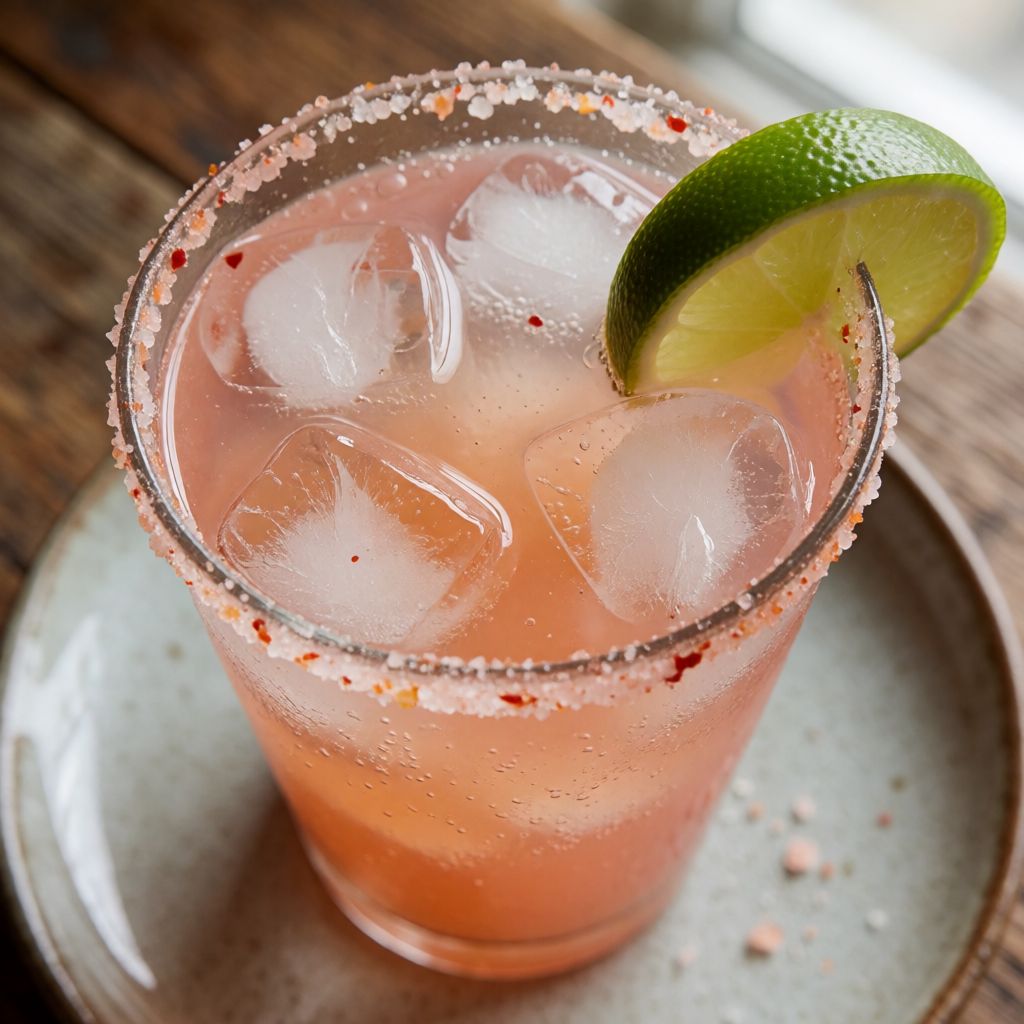
 AI photo
Grapefruit and Tequila Cocktail
A zesty grapefruit and tequila cocktail with a salted, chilli-dusted rim.
Labels are worked out automatically from the ingredients and can be wrong. Check the packaging if it matters to you.
Ingredients
- 0.5 tsp Golden syrup
- 1 pcs Lime juice only
- 0.5 tsp Chilli flakes
- 0.5 tsp Salt
- 40 ml Tequila
- 100 ml Grapefruit juice
- 50 ml Sparkling water
- 0.5 pcs Grapefruit organic or unwaxed
- 4 pcs Ice cubes








Steps
Moisten the rim of the glasses with syrup and lime juice, then dip into a plate of salt mixed with chilli flakes.
Put the tequila, lime juice and ice into a shaker and shake well.
Pour into the glass, add a wedge of grapefruit and top up with grapefruit juice and sparkling water.
What was changed
The grapefruit soda was replaced with Grapefruit juice and Sparkling water to keep the true taste of this grapefruit cocktail.
This is not a recipe you cook — it's one you balance. Three sour-bitter-salty elements fight for the same five seconds on your tongue: grapefruit's bitterness, lime's acid, and tequila's raw edge. What decides whether it works is not the tequila brand, it's whether you shake properly and in what order you add things.
The shake isn't theatre. Ice in a shaker does two jobs at once — it chills the tequila and it dilutes it, knocking the raw alcoholic sharpness off the spirit before it ever touches a glass of fruit juice. Skip the shake, just stir tequila and lime over ice in the glass, and you get a drink that tastes thin on top and fierce underneath, because the dilution never happened properly. The cue for "done shaking" isn't a stopwatch, it's the shaker itself — once the metal (or the glass, if that's what you've got) frosts over on the outside and feels painfully cold in your hand, the ice has given up as much water as it's going to in a hurry. That's maybe ten to fifteen seconds of real effort, not a gentle swirl.
The salt-and-chilli rim looks decorative. It isn't. Grapefruit is bitter by nature — it's a defence the fruit evolved, same reason unripe fruit tastes sharp — and salt is one of the few things that genuinely mutes bitterness on the tongue rather than just distracting from it, the same trick as salting watermelon or a slice of raw onion. The chilli flake rides along for aromatic heat, not real burn; it hits your nose before your tongue and makes the whole glass smell more alive before you've drunk a thing.
Tequila: go for a silver or blanco, not a reposado or añejo. The pale ones are unaged or barely aged — they taste clean and vegetal, which is what you want fighting grapefruit, not competing with it. An aged tequila brings vanilla and oak sweetness that just muddies the citrus. If tequila genuinely isn't in the house, mezcal will do the job differently — smokier, more assertive — but it changes the drink, it doesn't just stand in for it.
Lime: fresh, squeezed just before you shake. Bottled lime juice has usually been pasteurised and sat in a bottle for months — it's flatter, sometimes with a faint cooked taste, and in a drink this small (one lime's worth split across rim and shaker) that flatness is the whole difference between bright and dull. There's no real substitute for lime here; lemon is more sour and less floral and will throw the balance toward sharp rather than fresh.
Golden syrup: its only job is to make the rim sticky enough that salt and chilli actually cling to the glass, with a faint sweetness that softens the first sip. Any thick, mild syrup works the same way — maple syrup, a simple sugar syrup. Avoid honey; it has its own strong flavour and will argue with the chilli instead of just holding it in place.
Salt and chilli flakes: use a plain salt, not one bulked out with anticaking agents that taste chalky when they hit your tongue dry. The salt-rimmed glass tradition itself isn't ceremony — it comes from Mexican cantinas serving rough, inconsistent tequila, where salt (and a lime wedge to suck on) was there to get you through a bad pour. Good tequila doesn't need rescuing, but the flavour trick still works, so it stuck around as a style even once the spirit got better.
Grapefruit juice and the wedge: fresh-squeezed juice tastes more bitter and more alive than carton juice, which is usually sweetened or heat-treated to last on a shelf — either is fine, but know which one you're drinking. The wedge of grapefruit that actually sits in the glass, peel and all, is why the recipe asks for organic or unwaxed fruit: ordinary grapefruit often carries a wax coating and pesticide residue on the skin meant to survive shipping, not to be bitten through. If you can't get unwaxed, scrub the peel hard under hot water before you cut the wedge — not perfect, but better than nothing.
Ice: four cubes sounds mean, but remember the ice is doing double duty — chilling and diluting in the shaker, then sitting again in the glass to keep things cold without drowning the drink in meltwater. If your freezer only makes small, fast-melting cubes, use a few more; what matters is enough mass of cold, not a number. And if you don't own a shaker, a clean jam jar with a tight lid does exactly the same job — the tequila doesn't know the difference, only your arm will.