
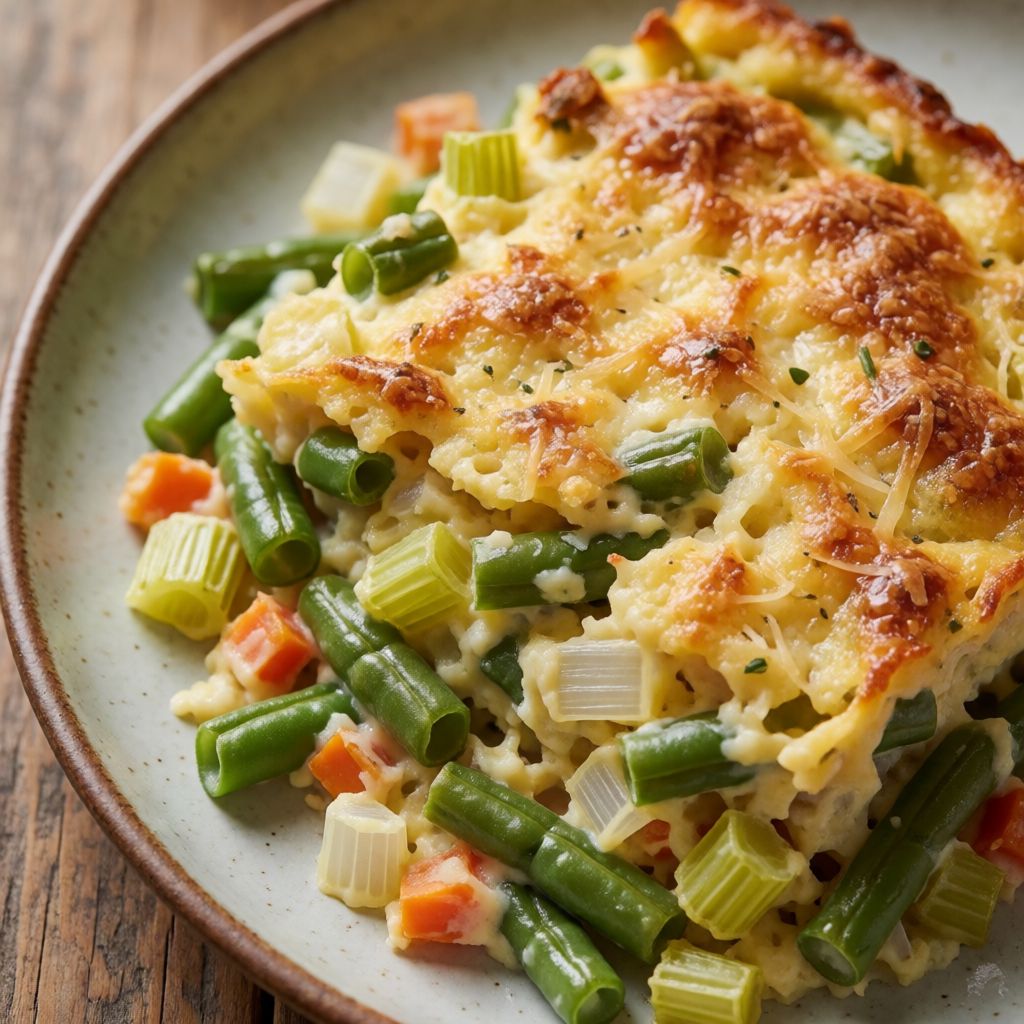
 AI photo
Green Bean Bake
A comforting baked green bean dish with a creamy béchamel and parmesan topping.
Labels are worked out automatically from the ingredients and can be wrong. Check the packaging if it matters to you.
Ingredients
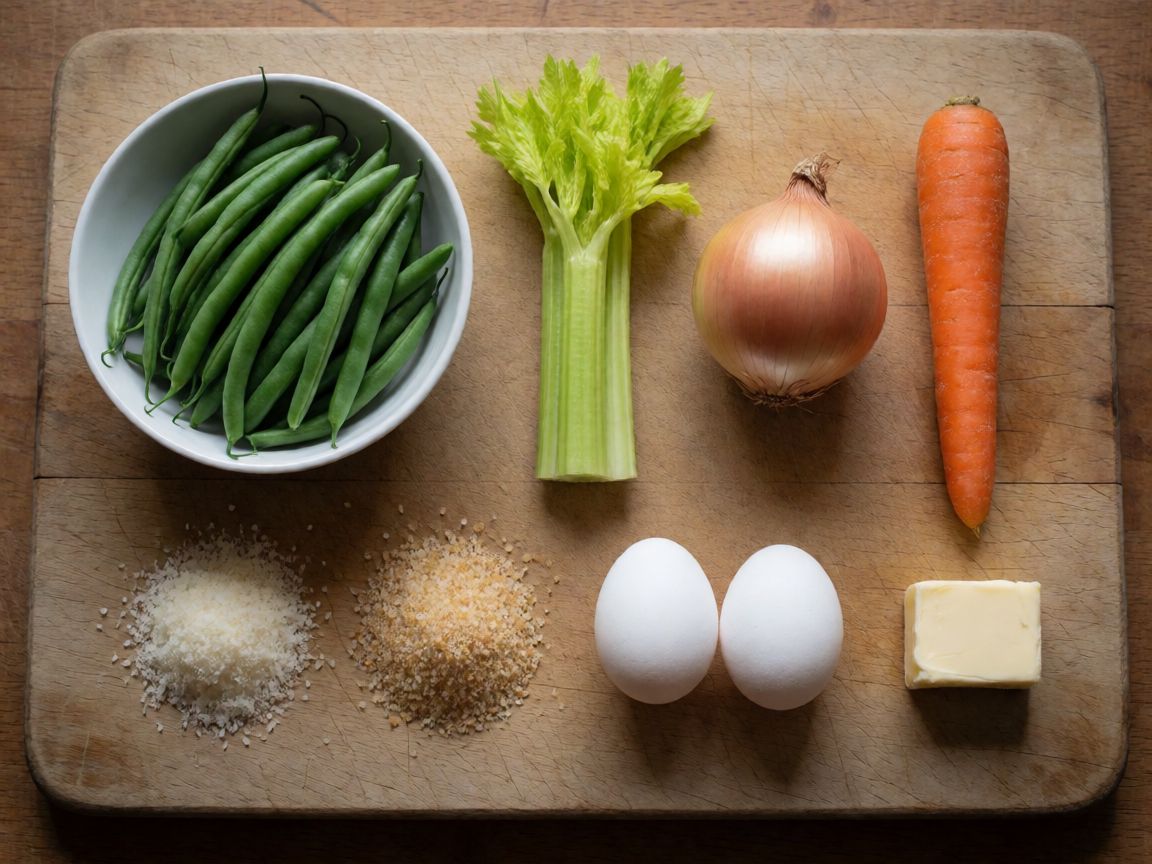
- 600 g Green Beans
- 1 pcs Celery Stick
- 1 pcs Onion
- 1 pcs Carrot
- 50 g Parmesan
- 2 pcs Eggs
- 50 g Breadcrumbs dried
- 1 pcs Butter for greasing and frying
- 200 ml Béchamel Sauce
- 1 tbsp Olive Oil
- Salt to taste
- Black Pepper to taste












Steps
Trim the ends of the green beans, wash them and boil in plenty of salted water for about 15 minutes.
15 minDrain in a colander and set aside.
Finely chop the carrot, celery and onion.
Fry the vegetables in a large pan with olive oil and butter until golden.
Add the green beans and a little water, season with salt and pepper to taste.
Simmer gently until the liquid has evaporated.
Whisk the egg whites to stiff peaks.
In a bowl mix the béchamel, parmesan and egg yolks, then gently fold in the whisked egg whites.
Grease a baking dish with butter and coat with breadcrumbs.
Drizzle any remaining béchamel over the breadcrumbs in the dish.
Spoon the beans into the dish.
Pour the béchamel, parmesan and egg mixture over the beans.
Bake at 180°C for about 45 minutes.
45 minHalfway through baking, sprinkle with extra parmesan, or add processed cheese slices if you prefer.
Serve the bake hot.
This is a vegetable gratin pretending to be humble — green beans and a soffritto sitting under a béchamel lightened with whipped egg whites, baked until it puffs and sets like a loose, savoury soufflé. The whole thing works or falls apart on three moments: how hard you boil the beans, how dry the pan is before the custard goes on, and how gently you fold the egg whites in.
Boil the beans properly first, in water salty enough to taste like the sea — that's not seasoning, it's science, the salt slows the chlorophyll breakdown so the beans stay green instead of going khaki. Fifteen minutes is the floor, not the law: the bean should bend without a fight and taste cooked through, not squeak between your teeth. Some say green vegetables lose all their colour the moment they hit boiling water — no, they lose it when they're left in there too long, or cooked in too little water that cools the moment the beans go in. Plenty of water, kept at a proper boil, is what keeps the green.
The fried vegetable base — carrot, celery, onion, finely chopped — isn't decoration, it's the sofrito, and "until golden" here means the onion itself, not the oil. You want ginger-brown, soft, sweetened by its own sugars caramelising, not translucent and raw-tasting. This is where most of the dish's flavour actually lives, since the beans themselves are mild and the béchamel is just a carrier.
Green beans: 600g for four as a side is generous — this isn't a few spoonfuls next to your Sunday roast, it's meant to hold its own as a dish. Fresh, snap-crisp beans are best, but frozen ones work fine here since they're going to be boiled and then simmered down anyway; just don't thaw them first, drop them straight into the boiling water and let the water do the work.
The trio of carrot, celery, onion is the base nearly every savoury European dish starts from — the French call it mirepoix, the Italians soffritto, but it's really just the three vegetables that were cheap, kept well in a cellar, and sweeten rather than overpower when cooked slowly. If you're missing celery, a stick of leek does something similar — greenish, slightly sulphurous sweetness — but don't skip the onion, it's doing most of the savoury heavy lifting.
Béchamel is flour, butter and milk cooked into a sauce — if yours is thin, it won't set around the beans and you'll get soup under a cheese lid instead of a bake that holds a slice. It should coat a spoon and sit, not run off it.
Parmesan here is for salt and that specific nutty sharpness as much as melt — any hard, aged grating cheese with no sweetness to it will do if parmesan's not in the fridge; a mature cheddar gets you closer to a different but still honest result, since Britain has excellent hard cheeses of its own and there's no shame using one.
The eggs do two separate jobs, which is why they're split. Yolks go into the béchamel to enrich it and help it set in the oven like a loose custard. Whites, whipped separately, are the only reason this bake has any lift at all — without them you'd just have beans under baked béchamel, perfectly nice, but flat.
Butter for greasing and breadcrumbs for dusting the dish isn't fussiness — it's what stops the egg-and-cheese crust from welding itself to the baking dish, which is the usual way a gratin's bottom gets sacrificed to the washing-up. In a standard UK oven, 180°C means your dial setting if it's a fan oven, lower it by about 20 degrees, since fan ovens run hotter than the number suggests; forty-five minutes is where to start checking, and what you're checking for is a top that's gone from wet-looking to proudly domed and faintly browned at the edges — that's the egg whites telling you they've set.